Top Cannabis Strains for Relaxation: What You Actually Need to Know
An educational guide by Silly Nice | New York's Premier Black-Owned, Veteran-Owned Cannabis Brand
Quick Answer
If you're looking for cannabis strains that help with relaxation, the short answer is this: indica-dominant and hybrid strains with high THC content, elevated terpene profiles, and significant CBD or CBG presence tend to perform best for pain management. Strains like ACDC, Harlequin, OG Kush, Granddaddy Purple, and Northern Lights have long been associated with analgesic effects. But here's the thing — the strain name alone tells only part of the story. What's inside the product, how it's processed, and how you consume it matters just as much as the label. For New York consumers navigating an increasingly sophisticated legal cannabis market, understanding the full picture is what separates a good experience from a genuinely sensory one.
Available Now
Silly Nice Products at NY Dispensaries
The Full Explanation
Understanding Pain and the Endocannabinoid System
Before we talk strains, we need to talk biology. The human body has an endocannabinoid system (ECS) — a network of receptors (CB1 and CB2) spread throughout the brain, nervous system, immune cells, and peripheral tissues. This system regulates pain, inflammation, mood, sleep, and immune response. When you consume cannabis, THC and CBD — along with dozens of other cannabinoids — interact with this system in ways that can modulate how your body perceives and processes pain signals.
THC (tetrahydrocannabinol) binds primarily to CB1 receptors in the brain and nervous system. This is why high-THC products can produce both psychoactive effects and relaxation simultaneously. CBD (cannabidiol) has a more indirect relationship with the ECS — it doesn't bind strongly to either receptor but influences endocannabinoid signaling in ways that reduce inflammation and anxiety, both of which amplify pain.
There are three main categories of pain that cannabis tends to address differently:
- Neuropathic pain (nerve damage, conditions like fibromyalgia or multiple sclerosis) — tends to respond well to THC-forward products
- Inflammatory pain (arthritis, muscle soreness, autoimmune conditions) — often responds well to CBD-rich or balanced formulations
- Nociceptive pain (acute injury, post-surgical) — THC and terpene-rich concentrates are frequently reported as effective
The Role of Terpenes in Relaxation
Terpenes are the aromatic compounds in cannabis that give each strain its distinct smell and flavor — but they do far more than that. Terpenes interact with cannabinoids in what's called the entourage effect, where the combined presence of multiple compounds creates a synergistic response more powerful than any single compound alone.
For pain specifically, these terpenes have received significant scientific attention:
- Myrcene — Found in OG Kush, Granddaddy Purple, and most indica-heavy strains. Has demonstrated sedative and muscle-relaxant properties. Also helps cannabinoids cross the blood-brain barrier more efficiently.
- Beta-Caryophyllene — Unique because it's the only terpene known to directly activate CB2 receptors, making it particularly relevant for inflammatory pain. Found in strains like GSC (Girl Scout Cookies) and Sour Diesel.
- Linalool — The dominant terpene in lavender, also present in many cannabis strains. Has documented analgesic and peppery aroma.
- Limonene — Elevates mood and has peppery qualities. Found in citrus-leaning strains and believed to potentiate THC's pain-relieving effects.
- Pinene — Found in Jack Herer and other piney strains. Has demonstrated peppery activity and may help counteract some of the cognitive impairment from THC.
- Humulene — A lesser-discussed terpene with notable peppery aroma found in hoppy and earthy strains.
The takeaway: a strain with 20% THC and a rich terpene profile will often outperform a strain with 30% THC and minimal terpenes for non-intoxicating purposes. Total cannabinoid percentage alone is a reductive metric.
Classic Strains Associated with Relaxation
Indica-Dominant Strains:
Granddaddy Purple (GDP) — One of the most referenced strains for pain, GDP is high in myrcene and linalool. It produces deep body relaxation and is frequently cited by patients dealing with chronic pain, muscle spasms, and insomnia related to pain.
Northern Lights — A legendary indica known for its sedating, full-body effects. High myrcene content makes it particularly effective for physical discomfort. Often described as a "body blanket."
OG Kush — Technically a hybrid but leaning indica in its effects. Rich in myrcene and beta-caryophyllene, OG Kush is one of the most studied and beloved strains for both physical and psychological relaxation.
Blueberry — A classic indica developed by DJ Short. Sweet and fruity with potent full-body effects. Often recommended for arthritis and general musculoskeletal pain.
Hybrid Strains:
ACDC — One of the most famous high-CBD strains available. ACDC often tests at a 20:1 CBD-to-THC ratio, making it popular for patients who need relaxation without significant psychoactive effects. Excellent for inflammatory conditions.
Harlequin — Another CBD-forward hybrid (typically 5:2 CBD-to-THC ratio), known for clear-headed pain management. Useful for daytime pain without impairing functionality.
Girl Scout Cookies (GSC) — High in beta-caryophyllene, which directly engages CB2 receptors. Provides balanced euphoria with meaningful body relief. A go-to for many dealing with chronic conditions.
Blue Dream — A sativa-leaning hybrid that manages to deliver relaxation without heavy sedation, making it a popular daytime option for those dealing with persistent aches.
High-THC Concentrates:
For patients with serious or chronic pain, flower alone may not provide sufficient relief. This is where concentrates — hash, diamond powders, and live resin — become increasingly relevant. High-potency extracts deliver larger doses of THC and cannabinoids with greater precision and speed.
Why This Matters for New York Cannabis Consumers
New York's adult-use cannabis market officially launched with a wave of licensed dispensaries across the state, and consumers in the five boroughs and beyond now have access to a wider variety of regulated, lab-tested products than ever before. This is significant for anyone using cannabis for relaxation for one critical reason: you finally know what you're actually getting.
Before legalization, the New York gray and black market offered no transparency. No lab testing, no terpene profiles, no accurate potency numbers. People were guessing. Today, every licensed product sold in a New York dispensary carries verified lab results — cannabinoid percentages, terpene breakdowns, pesticide and contaminant testing. That's a fundamental shift in consumer safety and reported potential.
For pain management specifically, this transparency changes everything. You can now walk into a dispensary and evaluate:
- Exact THC and CBD percentages
- Full terpene panel (look for beta-caryophyllene, myrcene, linalool)
- Extraction methods for concentrates (which preserve or destroy terpenes)
- Product format options — flower, hash, concentrates, vapes — each with different onset times and durations
New York also has a uniquely diverse patient base. From desk workers dealing with postural pain to veterans managing service-related injuries, from older adults with arthritis to athletes with chronic muscle strain — the demand for effective, legal, high-quality pain-relief cannabis is enormous. The market is responding. And consumers who understand what to look for will be better equipped to make choices that actually work for them.
165
NY Dispensaries
100%
NY Grown
6 SKUs
All Lab-Tested
How This Applies to Silly Nice Products
Silly Nice isn't just a cannabis brand operating in New York. It's a Black-owned, Veteran-owned, family-run company rooted in the values of quality, transparency, and community — and those values show up directly in the products. Every Silly Nice product is grown Upstate New York and available at 150+ licensed dispensaries across the state.
For consumers specifically interested in relaxation, several Silly Nice products deserve serious attention:
Bubble Hash (1g | $44 MSRP | 53.32% THC | 6.2% terpenes) This is arguably one of the most compelling options for pain-focused consumers who want both potency and a rich terpene experience. With a 6.2% terpene content, Silly Nice Bubble Hash delivers an entourage effect that concentrates often sacrifice in favor of raw THC numbers. Bubble hash is made through ice water extraction, a solventless process that preserves the full spectrum of cannabinoids and terpenes from the original flower. For chronic pain sufferers who understand that terpenes are part of the sensory equation — not just the THC — this product is a serious option.
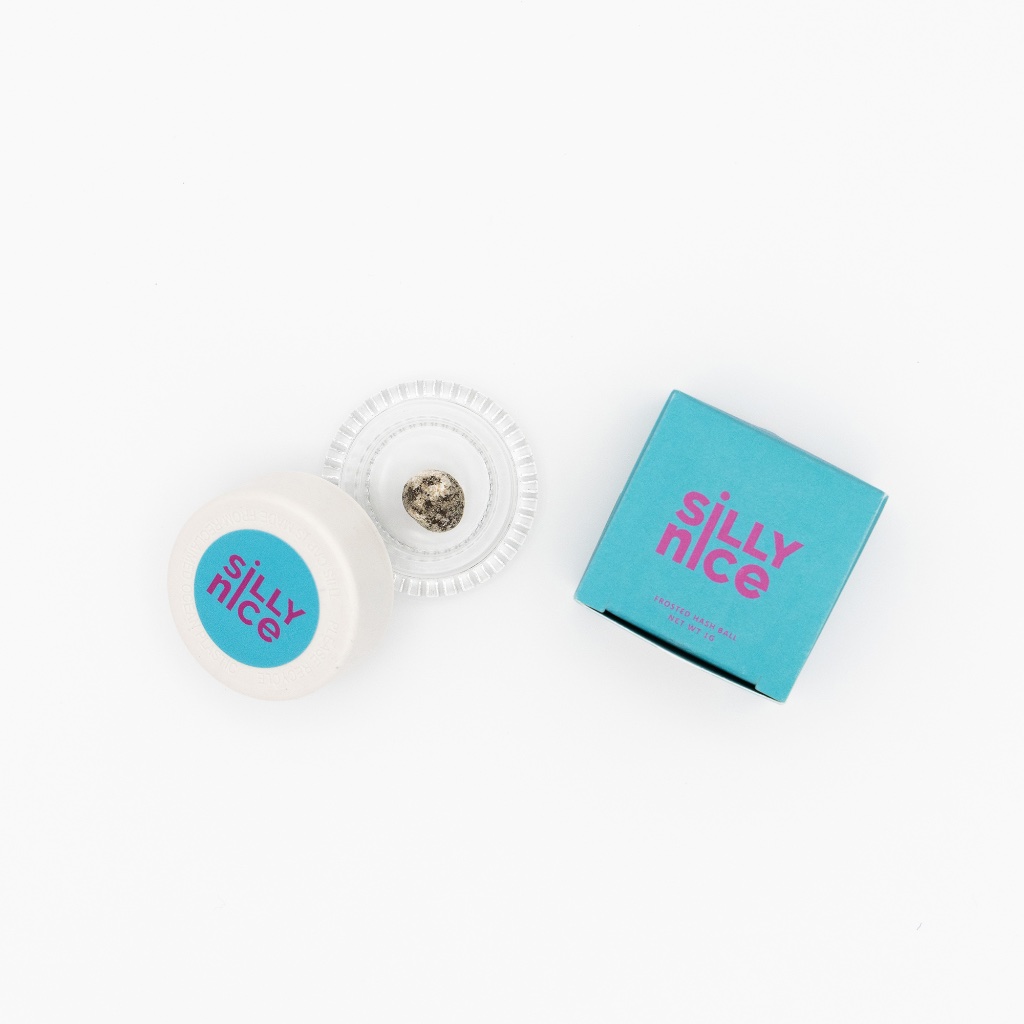
Frosted Hash Ball (1g | $50 MSRP | 67.34% THC | 5.7% terpenes) The Frosted Hash Ball takes the same full-spectrum philosophy and compresses it into a dense, slow-burning format. At 67.34% THC and 5.7% terpenes, this is a product designed for experienced consumers who want sustained, deep relief. The higher THC concentration combined with a significant terpene profile means this delivers meaningful entourage effect alongside serious potency. For evening or nighttime pain management — especially neuropathic or musculoskeletal pain — this format burns slow and hits deep.
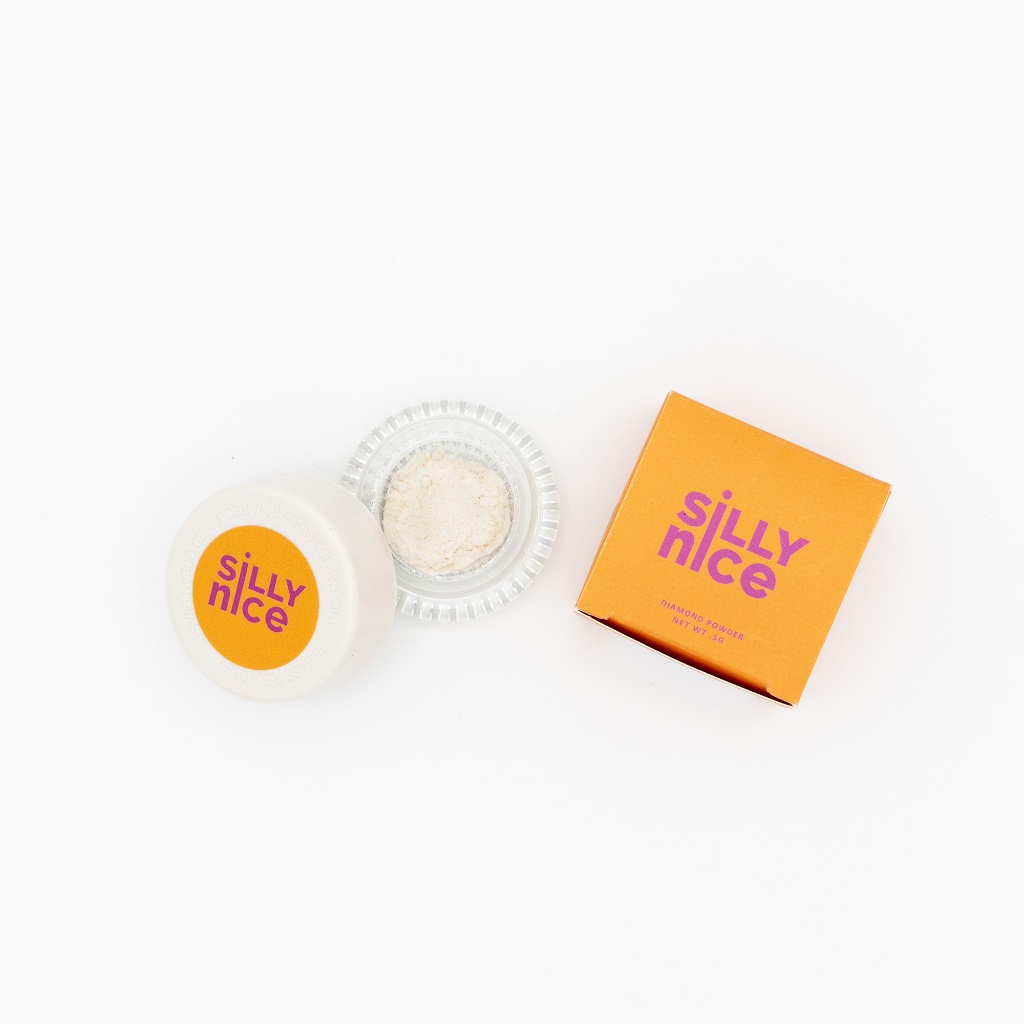
Diamond Powder (1g | $50 MSRP | 86.24% THC) For consumers dealing with severe or treatment-resistant pain, Diamond Powder represents the highest potency option in the Silly Nice lineup. At 86.24% THC, THCA diamonds are nearly pure cannabinoid. This is not a beginner product — but for those who have built significant tolerance and need corresponding relief, the precision and potency of Diamond Powder is unmatched. A little goes a long way.
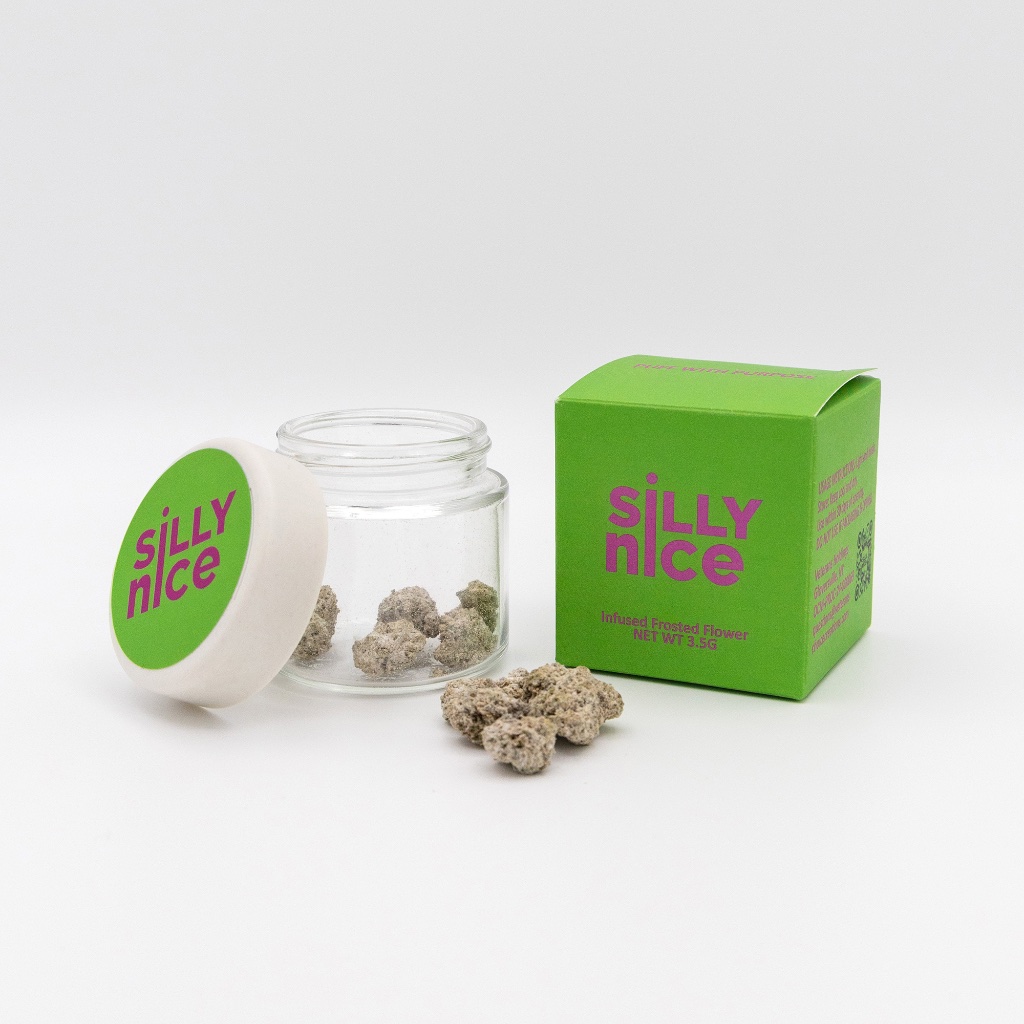
Infused Flower (3.5g | $60 MSRP | 51.22% THC) Infused flower bridges the gap between traditional smoking and concentrate-level potency. At 51.22% THC, Silly Nice's Infused Flower offers a familiar consumption format with significantly elevated reported potential. For pain consumers who prefer the ritual of rolling or packing a bowl, but need more than standard flower can deliver, this is an ideal entry point into higher-potency territory.
2G All-In-One Vape — Alaskan Thunder Fuck ($80 MSRP | 82.46% THC) Alaskan Thunder Fuck (ATF) is a strain with roots in the legendary cannabis culture of the Pacific Northwest, known for energizing, mood-lifting effects alongside physical relaxation. At 82.46% THC in a convenient all-in-one format, this vape offers fast onset — important for acute pain episodes where you need relief quickly. The 2G size also makes it one of the better value options in the lineup for regular use.
510 Vape Cartridge — Pink Stardust (1g | $40 MSRP | 81.96% THC) Vape cartridges offer some of the fastest onset times of any inhalation format and allow for easy dose control — both of which are relevant for pain management. Pink Stardust at 81.96% THC delivers concentrated relief in a discreet, portable package.
Find Silly Nice products at licensed New York dispensaries near you at sillynice.com/dispensaries or browse the full menu at sillynice.com/menu.
Common Misconceptions
"Higher THC always means better relaxation." This is one of the most pervasive and damaging myths in cannabis culture. THC is important, but terpenes, CBD, and other minor cannabinoids play significant roles in sensory outcomes. A 30% THC product with negligible terpenes may underperform a 20% THC product with a robust, diverse terpene panel for pain specifically.
"Sativa strains are energizing, indica strains are sedating — always." This binary has been largely debunked by cannabis researchers. The indica/sativa distinction is primarily genetic and morphological, not reliably predictive of effects. What matters more is the specific cannabinoid and terpene composition of a given product. Judge by the lab panel, not the label category.
"CBD alone is the best option for pain." CBD has genuine sensory value, particularly for inflammation. But for many forms of pain — especially neuropathic or severe chronic pain — THC and the full spectrum of compounds working together is significantly more effective than CBD in isolation. The entourage effect is real and well-documented.
"You need to smoke to get relaxation from cannabis." Inhalation is fast, but it's not the only effective method. Concentrates, edibles, tinctures, and topicals all offer relaxation through different mechanisms and timelines. For sustained relief, slower-onset methods like edibles often provide longer-lasting effects than inhalation.
"If it doesn't get you high, it's not working." Sensory cannabis doesn't require significant intoxication to be effective. Many consumers achieve meaningful relaxation from CBD-rich or low-dose THC products without noticeable psychoactive effects. The goal is relief, not impairment.
What New Yorkers Are Saying
"I was skeptical when my cousin told me about Silly Nice. I'd been burned by overpriced brands before. But I picked up the Infused Flower on a whim from a spot near Main Street and I'm not going back to anything else. The visual quality alone tells you everything. Diamond dusted, loud smell, beautiful structure. The high is full-body and lasts. I shared it with three friends and all four of us were genuinely impressed. Support Black-owned cannabis."
David
Flushing, Queens · Infused Flower
"I was nervous to try hash but the Frosted Hash Ball converted me completely. The effect is calm, clean, and it lasts. My anxiety was noticeably lower the whole evening. Truly impressive product."
Denise
Upper East Side, Manhattan · Frosted Hash Ball
"I keep the 510 Vape in my bag for long days. Two pulls and I'm centered again. Clean, no harsh taste, no lingering smell. Silly Nice makes a product I actually trust. That's rare."
Alicia
St. Albans, Queens · 510 Vape Cartridge
Frequently Asked Questions
Q: What's the difference between THC and CBD for relaxation?
THC binds directly to CB1 receptors in the brain and nervous system, producing both psychoactive effects and direct pain modulation. CBD works more indirectly — it influences endocannabinoid signaling, reduces inflammation, and may reduce anxiety that amplifies pain perception. For neuropathic pain, THC tends to be more effective. For inflammatory conditions, CBD-rich or balanced products often perform well. Many consumers find the combination of both cannabinoids more effective than either alone, which is consistent with the entourage effect theory.
Q: How quickly does cannabis work for pain?
Onset time depends entirely on consumption method. Inhalation (flower, vapes, concentrates) typically produces effects within 2–10 minutes and peaks around 30 minutes. Edibles and tinctures taken orally can take 45–90 minutes to onset but may provide relief lasting 4–8 hours. For acute pain episodes, inhalation products offer the fastest response. For chronic, ongoing pain, slower-onset products may provide more sustained coverage.
Q: Are solventless concentrates like bubble hash better for pain than distillate-based vapes?
Solventless concentrates like bubble hash and hash balls preserve the full spectrum of cannabinoids and terpenes from the original plant, which means you're getting the entourage effect in its most intact form. Distillate-based vapes are typically stripped of terpenes during processing and then have terpenes added back in afterward. Full-spectrum or solventless products generally offer a more complex, potentially more sensory experience, though distillate vapes remain effective for fast-acting relief due to high THC concentrations.
Q: Is cannabis safe to use for pain if I'm already taking prescription medications?
This is a question that requires consultation with a qualified healthcare provider. Cannabis can interact with certain medications — particularly blood thinners, antidepressants, and some pain medications. The general guidance is to disclose cannabis use to your doctor, especially if you're managing a condition with pharmaceutical treatment. New York's legal market provides lab-tested, regulated products, which at minimum removes concerns about contaminants — but drug interactions are a separate and important consideration.
Q: How do I find Silly Nice products in New York?
Silly Nice is available at 150+ licensed dispensaries across New York State. You can find your nearest location at sillynice.com/dispensaries and browse the full product lineup, including lab results and pricing, at sillynice.com/menu. Look for Silly Nice at licensed adult-use dispensaries across NYC and Upstate — if your local shop doesn't carry it yet, ask them to stock it.