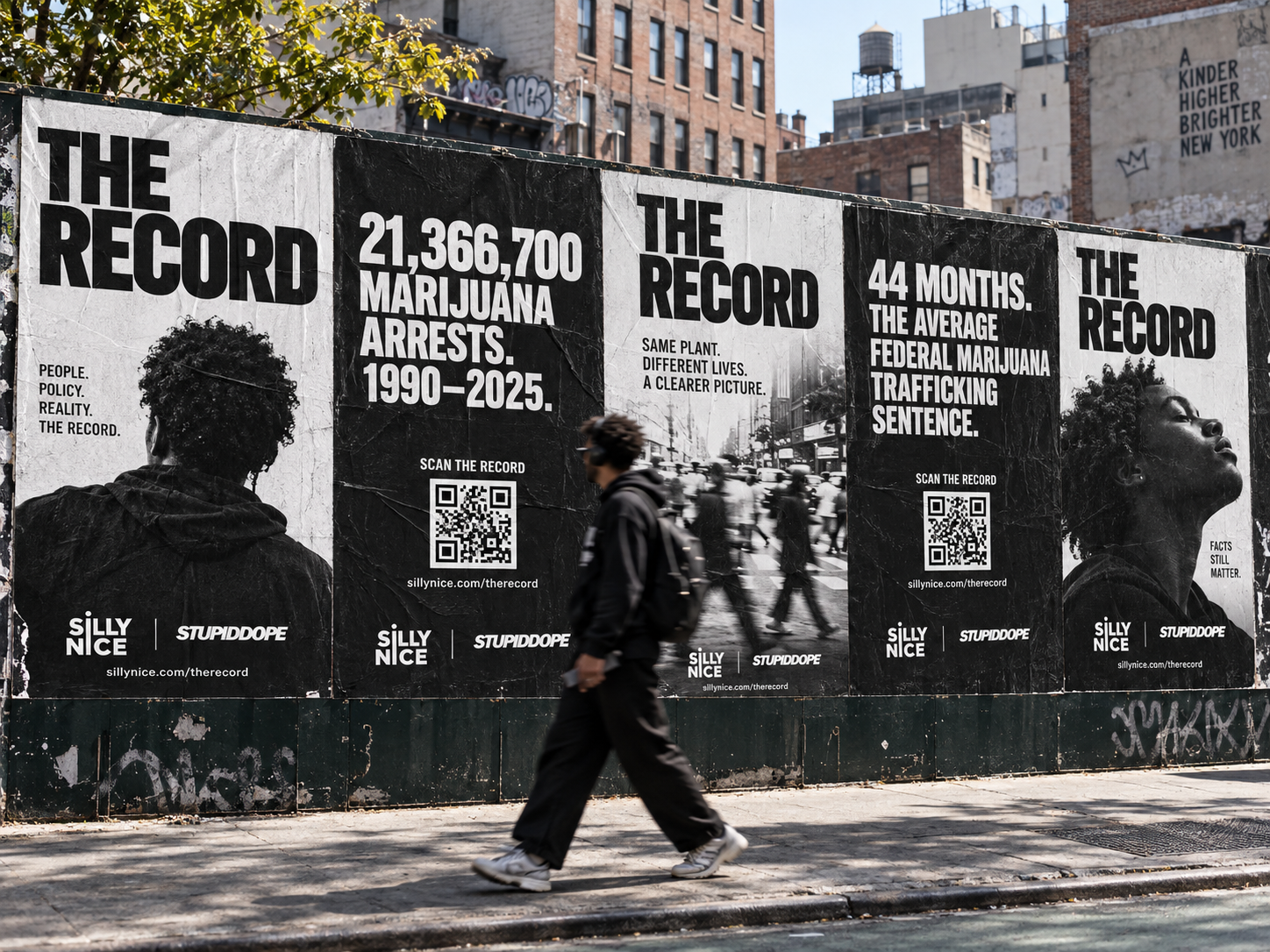
THE RECORD
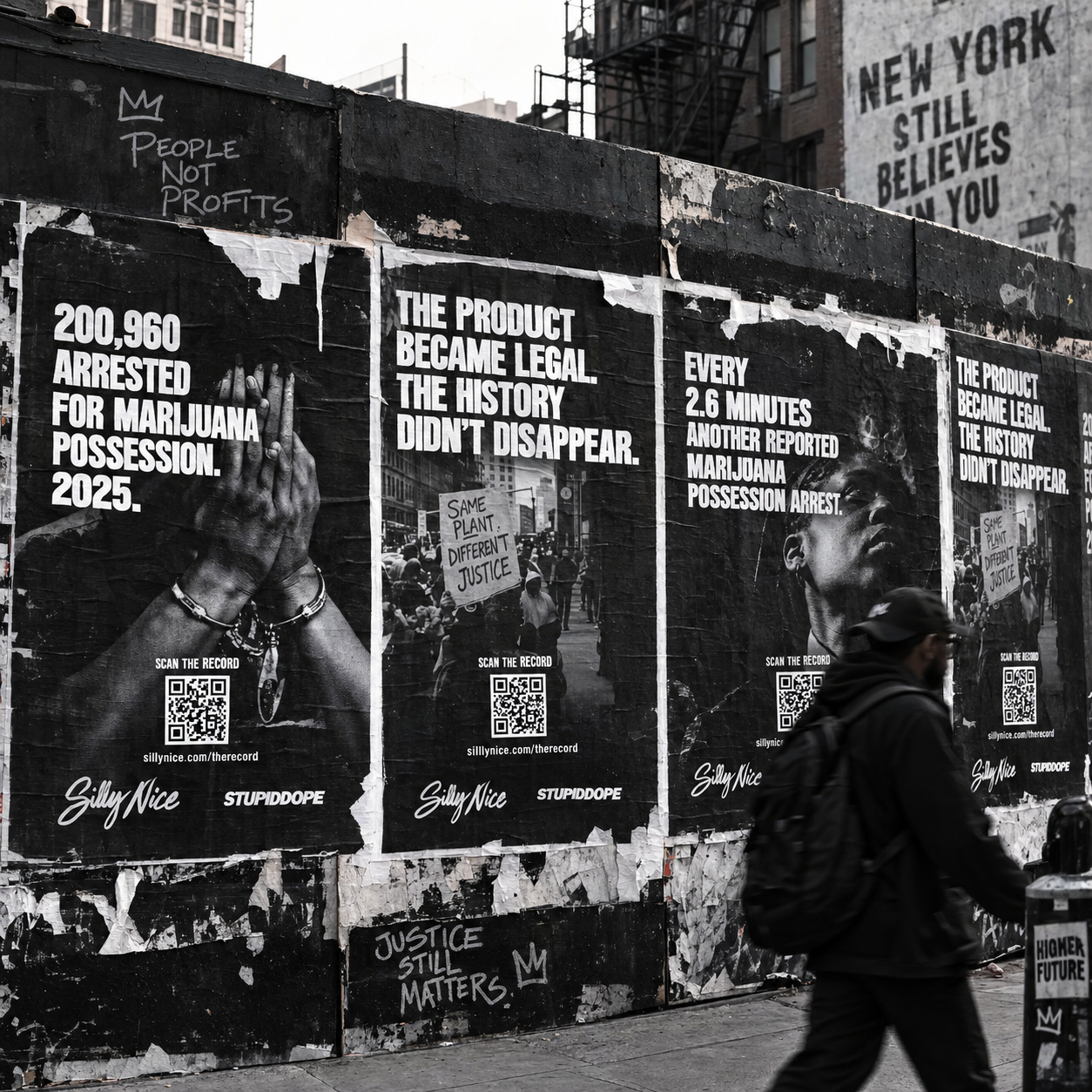
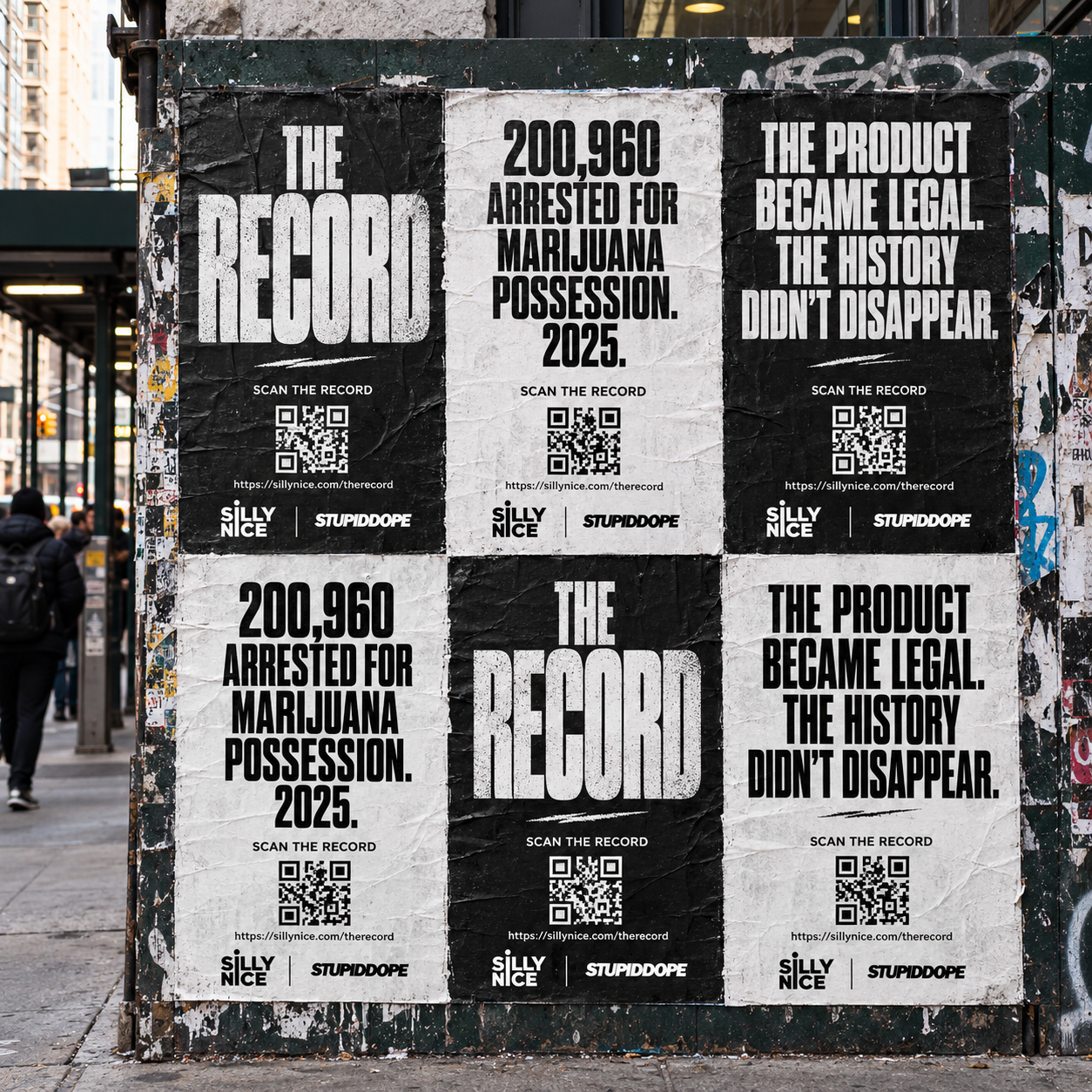
THE PRODUCT BECAME LEGAL.
THE HISTORY DIDN'T DISAPPEAR.
A public-information and editorial project examining the arrest records, sentences, policies, and consequences shaped by cannabis prohibition in America. Every statistic is sourced. Every claim is verified.
2025 REPORTED POSSESSION ARRESTS
0
TL;DR — KEY FACTS
200,960
reported marijuana possession arrests in the U.S. in 2025
SOURCE: FBI Crime Data Explorer
21,366,700
marijuana-related arrests reported 1990–2025
SOURCE: NORML compilation of FBI UCR data
44 months
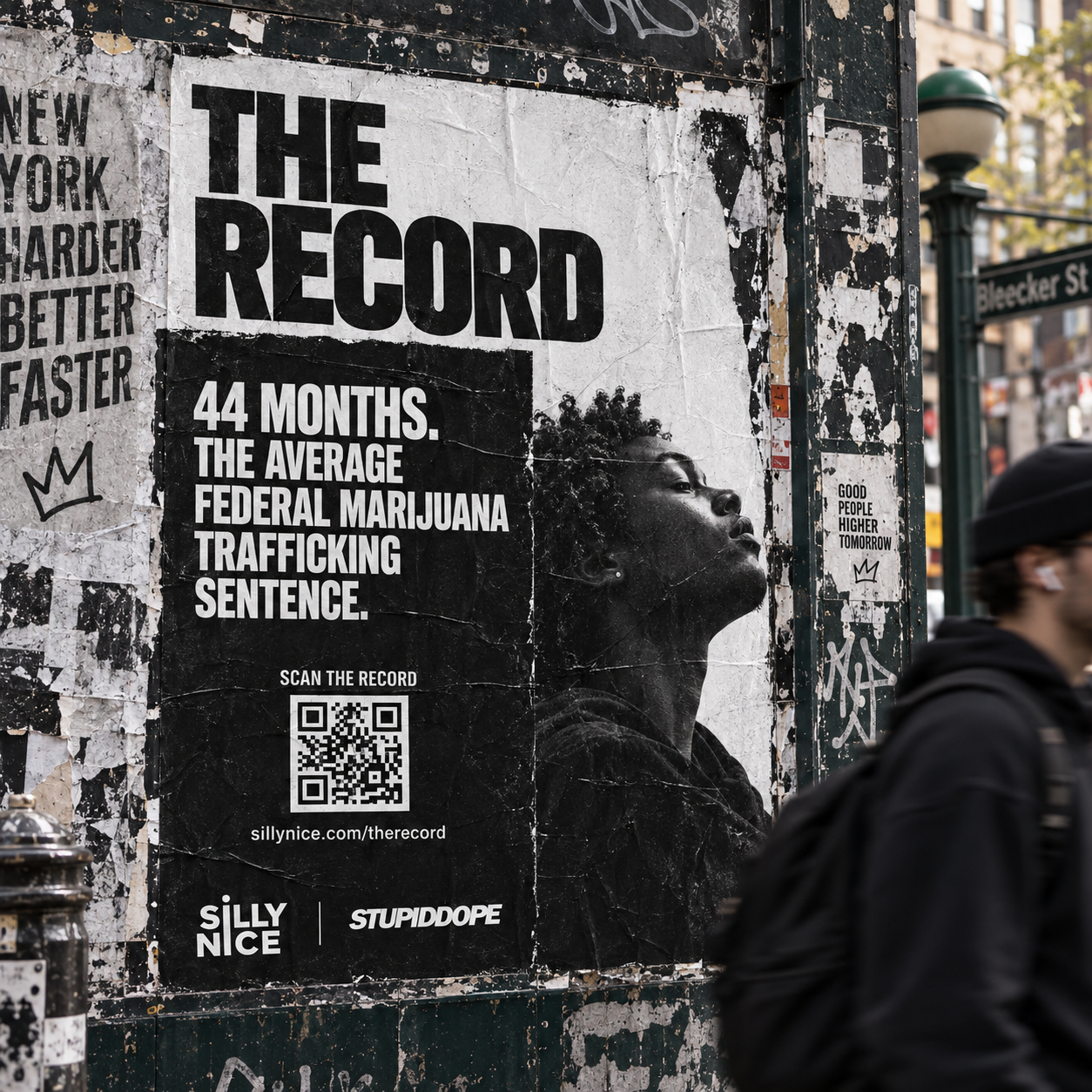
average federal marijuana trafficking sentence (FY2025)
SOURCE: U.S. Sentencing Commission
400,000+
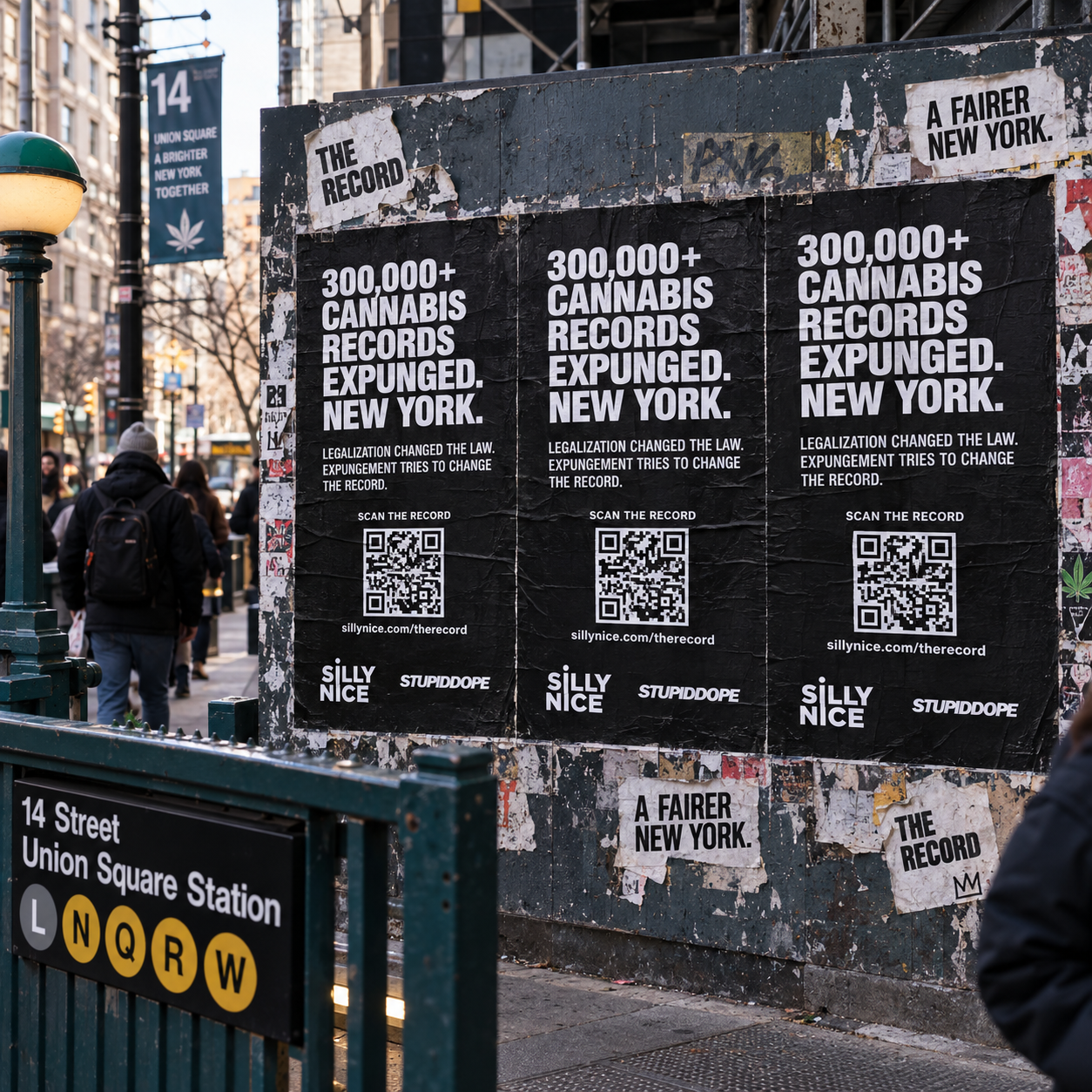
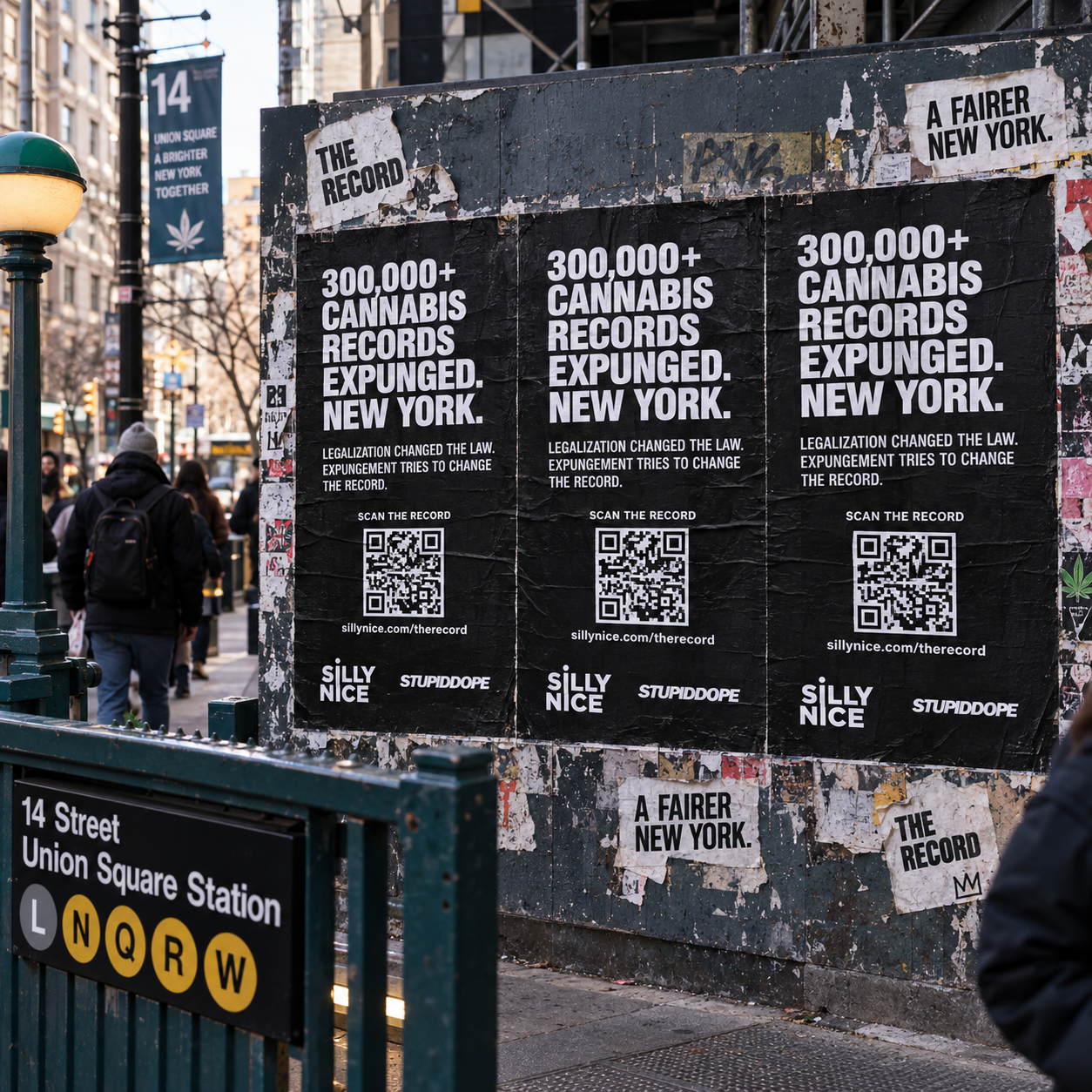
NY cannabis records identified for expungement under the MRTA
SOURCE: NY Office of Cannabis Management
EVERY NUMBER ON THIS PAGE IS SOURCED TO A PRIMARY GOVERNMENT DATASET OR TIER-1 COMPILATION. FULL METHODOLOGY AND LIMITATIONS ARE DOCUMENTED IN THE SOURCE LIBRARY BELOW.
§ 01 — WHY THE RECORD EXISTS
THIS IS NOT A CAMPAIGN ABOUT THE PAST.
THE RECORD examines how prohibition continues to affect people, families, employment, housing, reentry, public policy, criminal records, and the legal cannabis industry. It is a serious public-information project — not an advertisement, a sponsorship page, or a product catalog.
- 01We believe participating in the legal cannabis industry means understanding the history that made legalization necessary.
- 02We believe statistics should be sourced.
- 03We believe stories should have context.
- 04We believe criminal justice should not become a marketing slogan.
- 05We believe the public deserves to see the record.
EVERY IMPORTANT CLAIM ON THIS PAGE ANSWERS:
WHAT IS THE NUMBER?
Every statistic is stated precisely.
WHAT DOES IT MEAN?
Every figure is explained in context.
WHO DOES IT INCLUDE?
The population is clearly defined.
WHO DOES IT NOT INCLUDE?
Limitations are stated openly.
WHAT YEAR IS IT FROM?
The data year is always visible.
WHAT SOURCE PRODUCED IT?
Every number links to its primary source.
A NOTE ON WHO FUNDS THIS PROJECT
Silly Nice is a licensed New York cannabis company. We fund and publish THE RECORD as an independent public-interest project. Product sales are completely separate from this initiative. No statistic on this page is an advertisement, and no product is sold here.
THE RECORD is produced in collaboration with stupidDOPE. It is editorial and public-information work — not a marketing campaign.
§ 02 — HOW TO READ THESE NUMBERS
FOUR WORDS THAT ARE NOT THE SAME THING.
Before reading the statistics on this page, it is essential to understand the difference between four legal outcomes that are often used interchangeably in public discourse.
ARREST
A law enforcement officer takes a person into custody. An arrest does not automatically mean a conviction.
CONVICTION
A court finds a person guilty of an offense. A conviction does not automatically mean incarceration.
INCARCERATION
A person is sentenced to serve time in jail or prison. A marijuana trafficking case is not the same as possession.
EXPUNGEMENT
A legal process that treats an arrest, case, or conviction as though it never happened. The specific meaning varies by jurisdiction.
An arrest does not automatically mean a conviction. A conviction does not automatically mean incarceration. A marijuana trafficking case is not the same as possession. Expungement has a specific legal meaning that varies by jurisdiction.
§ 03 — THE CORE DATA
200,960 ARRESTS IN 2025.
21.3 MILLION SINCE 1990.
The scale of cannabis enforcement in the United States, drawn from FBI data and NORML's compilation of three decades of Uniform Crime Reporting. Where arrests happen depends on where the law is enforced — not where cannabis is consumed.
2025 REPORTED FIGURES
200,960
REPORTED MARIJUANA POSSESSION ARRESTS IN THE UNITED STATES IN 2025.
According to the FBI Crime Data Explorer, state and local law enforcement made at least 200,960 marijuana possession arrests in 2025, comprising approximately 23% of all drug-related arrests nationwide. An additional 17,192 arrests were for marijuana sales or manufacturing. These figures are reported arrests — approximately 13% of law enforcement agencies did not submit complete data to the FBI for 2025, meaning actual totals may be higher.
THE RATE
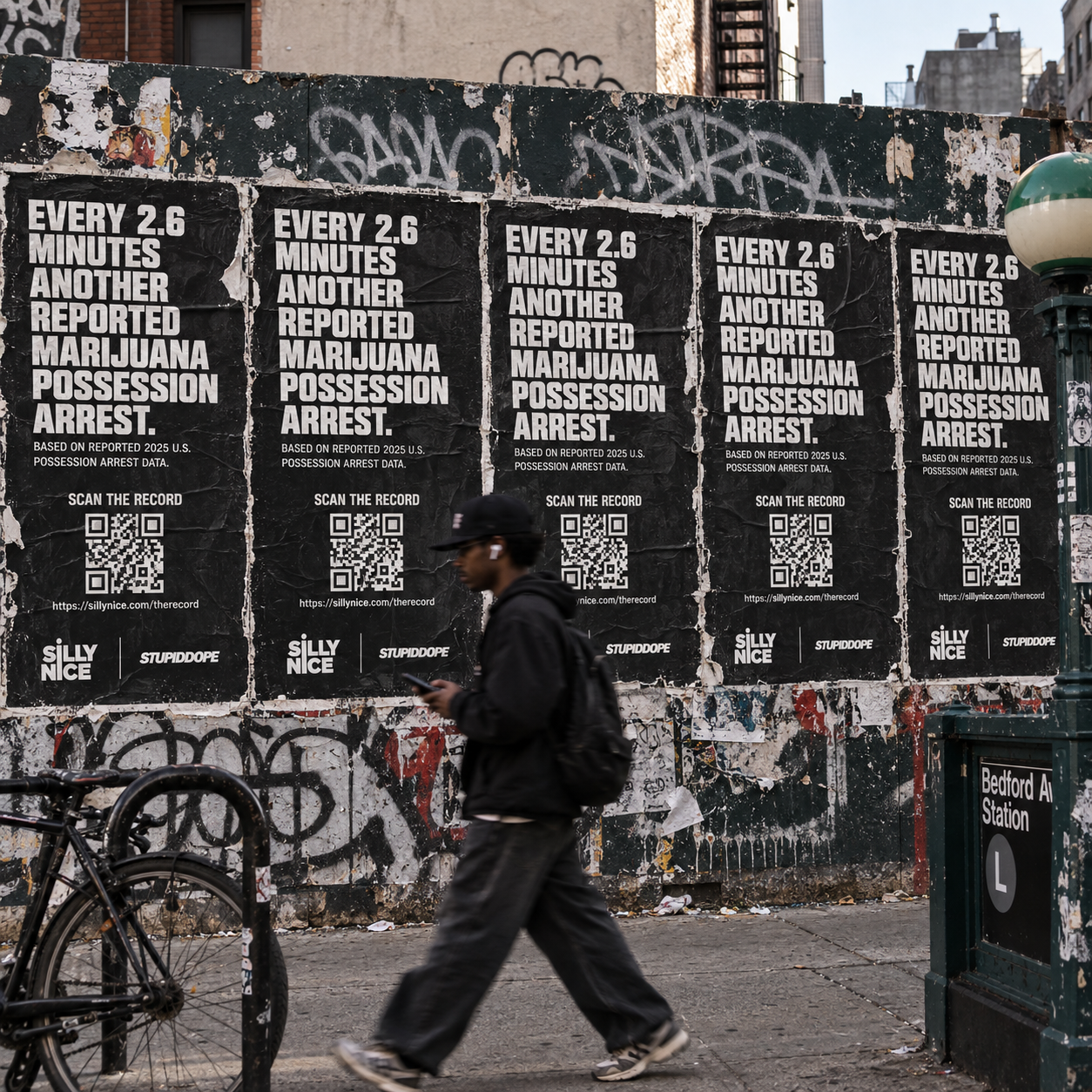
EVERY 2.6 MIN.
One reported marijuana possession arrest, on average, every 2.6 minutes in 2025.
CALCULATED FROM 2025 REPORTED FBI DATA. NOT A REAL-TIME COUNT.
1990–2025
21,366,700
MARIJUANA-RELATED ARRESTS. 1990–2025.
More than 21 million marijuana-related arrests were reported in the United States between 1990 and 2025, according to NORML’s compilation of annual FBI Uniform Crime Reporting data. This is a compilation of annual FBI-reported figures, not a cumulative total directly published by the FBI.
NOTE: A COMPILATION OF ANNUAL FBI FIGURES, NOT A CUMULATIVE TOTAL DIRECTLY PUBLISHED BY THE FBI. THE FBI CHANGED METHODOLOGY IN 2021.
1990–1999
Peak enforcement era
5,132,304
2000–2009
Highest decade on record
7,877,165
2010–2019
Arrests peaked in 2007 at 872,721
6,921,146
2020–2025
Decline amid state legalization
1,436,085
GEOGRAPHY OF ENFORCEMENT
5 STATES REPORTED OVER 11,000 ARRESTS EACH.
According to NORML’s compilation of FBI data, marijuana enforcement in the United States is geographically concentrated. Texas alone accounted for approximately 14% of the national total — over 29,000 reported marijuana-related arrests, or one every 18 minutes. Four other states each reported more than 11,000 possession arrests: Georgia (11,238), North Carolina (11,830), Tennessee (11,194), and Wisconsin (11,470). By contrast, five states that had legalized cannabis reported fewer than 100 possession arrests each: Alaska (92), Maine (96), Montana (35), Rhode Island (99), and Vermont (16).
~14%
of all U.S. marijuana arrests occurred in Texas alone — over 29,000 arrests
10 states
accounted for roughly 60% of all marijuana arrests nationwide — TX, NC, WI, GA, TN, PA, SC, IN, LA, AL
<100
arrests in Alaska, Maine, Montana, Rhode Island, and Vermont — all legal states
8×
more arrests in prohibition states than legalization states in 2025 (186,581 vs 22,357) — Marijuana Policy Project, 2026
6 states
where over 50% of all drug arrests were for marijuana — Louisiana, Idaho, Iowa, Wisconsin, Nebraska, Kansas (NORML, Sept 2026)
Cannabis use rates are comparable across states, regardless of legal status. Enforcement is not. Where arrests happen depends on where the law is enforced — not where cannabis is consumed.
THE LEGALIZATION WAVE
24 STATES LEGALIZED. THE ARRESTS DID NOT STOP.
While state after state legalized recreational cannabis between 2012 and 2026, federal prohibition and state-level criminalization in the remaining states continued to produce hundreds of thousands of arrests annually. The map of legal cannabis and the map of enforcement are not the same map.
2012
2
First states to legalize recreational cannabis by ballot initiative
2014
5
Legalization reaches the West Coast and the capital
2016
9
California legalizes — the largest cannabis market in the U.S.
2018
11
Vermont becomes first state to legalize by legislature
2020
14
Legalization accelerates amid pandemic-era reform
2021
17
New York legalizes via the MRTA — 400,000+ records identified for expungement
2022
19
Both states pass legalization via ballot and legislature
2023
21
Delaware and Minnesota join the legal map
2026
24
24 states + DC + Guam + Northern Mariana Islands as of March 2026
Every state that legalized cannabis reduced its possession arrests to near zero. Every state that did not, continued to arrest. The 200,960 arrests in 2025 happened almost entirely in states where cannabis remains criminalized. According to the Marijuana Policy Project's 2026 Cannabis Arrest Report, prohibition states made more than eight times as many cannabis arrests as legalization states in 2025 (186,581 vs 22,357), despite having a smaller total population.
On average, legalization states' cannabis arrest rates dropped 85.53% after legalization — possession arrests fell 84.61%, sales arrests fell 80.39%. Cannabis arrests dropped in every single state after legalization.
FEDERAL vs. STATE
LEGAL HERE DOES NOT MEAN LEGAL EVERYWHERE.
Federal classification
Schedule I controlled substance
Under the federal Controlled Substances Act (21 U.S.C. §§801 et seq.)
States with legal recreational cannabis
24 states + DC + Guam + Northern Mariana Islands
As of March 1, 2026
States with comprehensive medical cannabis laws
40 states + DC + Puerto Rico + Guam + U.S. Virgin Islands
As of March 1, 2026
States with no medical cannabis access
Idaho, Kansas, American Samoa
No medical or low-THC cannabis laws
SOURCE
FBI Crime Data Explorer
2025 Arrest Data
PERIOD: 2025
PUBLISHED: September 2026
Tier 1 — Primary Government Source
- WHAT THIS SOURCE MEASURES
- Reported marijuana possession arrests from participating law enforcement agencies.
- WHAT IT DOES NOT MEASURE
- Every arrest nationwide — approximately 13% of agencies did not report. Figures exclude unspecified drug abuse violations that may include cannabis.
SOURCE
NORML
U.S. Marijuana Arrest Charts (compilation of FBI UCR data)
PERIOD: 1990–2025
PUBLISHED: August 2026
Tier 3 — Specialist Source (compilation of Tier 1 data)
- WHAT THIS SOURCE MEASURES
- Cumulative marijuana-related arrests (possession + sales/manufacturing) compiled from annual FBI data.
- WHAT IT DOES NOT MEASURE
- A directly published FBI cumulative figure. The FBI changed reporting methodology in 2021, making cross-decade comparisons imprecise.
§ 04c — THE SCALE
EACH POINT = 334 ARRESTS · MOVE YOUR CURSOR THROUGH THE DATA
↓ KEEP SCROLLING TO REVEAL THE SCALE
Legal in 24 states. Arrested in all 50.
§ 07b — THE COST OF ONE ARREST
ONE ARREST.
A LIFETIME OF CONSEQUENCES.
Statistics measure arrests. They don't measure what happens after. Choose a scenario to see the cascading consequences of a single marijuana possession arrest.
You're 20 years old. You're stopped with a small amount of marijuana on your way home from class. Here's what happens next.
You're booked. Fingerprinted. Photographed. Held for hours or days depending on the jurisdiction. You miss work, class, or family obligations.
A criminal record is created. It appears on every background check for the rest of your life — unless you get it expunged.
70 million Americans have a criminal record. — NELP, 2017
A criminal record reduces job callback rates by approximately 50%. You may lose your current job. Finding new work becomes significantly harder.
50% reduction in callback rates. — NELP, 2017
Your public housing eligibility can be affected. Private landlords can deny your application based on your criminal record.
HUD guidance, 2016
Some states suspend or expel students for drug convictions. State financial aid may be affected. Private scholarships can be revoked.
Your child custody arrangements can be challenged. Child Protective Services may become involved, especially if the arrest occurs near your children.
Years later, the record still appears on every background check. It never goes away on its own. Expungement is the only remedy — and it's not guaranteed.
FROM THE LAST PRISONER PROJECT
A father released after 12 years.
Sentenced to 12 years for a cannabis offense, he missed his children's entire childhoods. Through Last Prisoner Project's clemency advocacy, his sentence was commuted. He returned home to grandchildren he had never met.
A record cleared, a job secured.
A decade-old cannabis conviction blocked her from every job she applied for. After her record was expunged through LPP's legal services, she was hired within weeks. Her first paycheck went to her daughter's college fund.
ILLUSTRATIVE COMPOSITES BASED ON LAST PRISONER PROJECT CASEWORK. NAMES WITHHELD FOR PRIVACY.
READ REAL CONSTITUENT STORIES AT LAST PRISONER PROJECT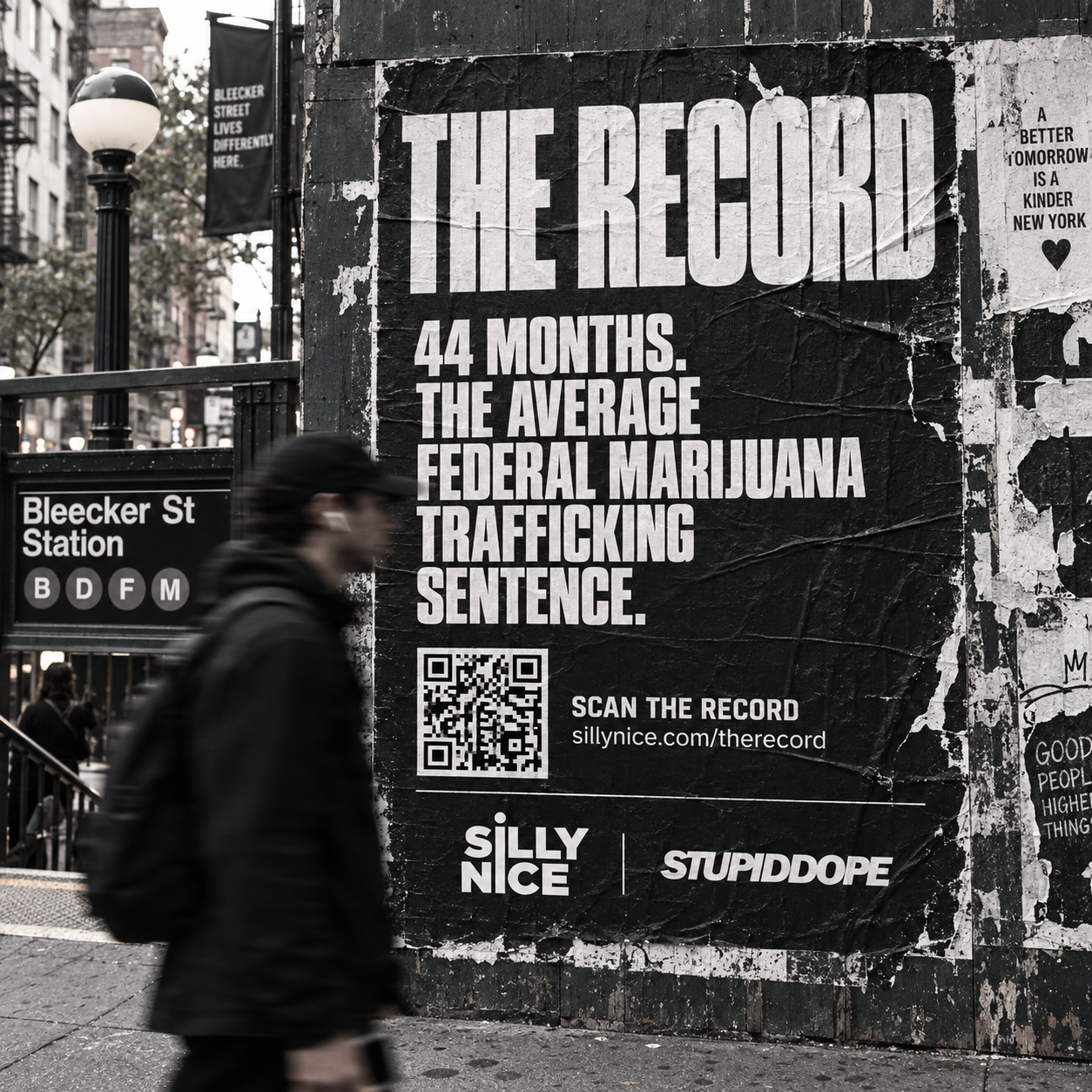
This is what 200,960 arrests look like —
not as numbers, but as lives.
§ 07 — FEDERAL SENTENCING
DATA YEAR: · LAST VERIFIED:
FEDERAL MARIJUANA TRAFFICKING CASES — FY2025
389
individuals sentenced for marijuana offenses under USSG Chapter Two, Part D in FY2025.
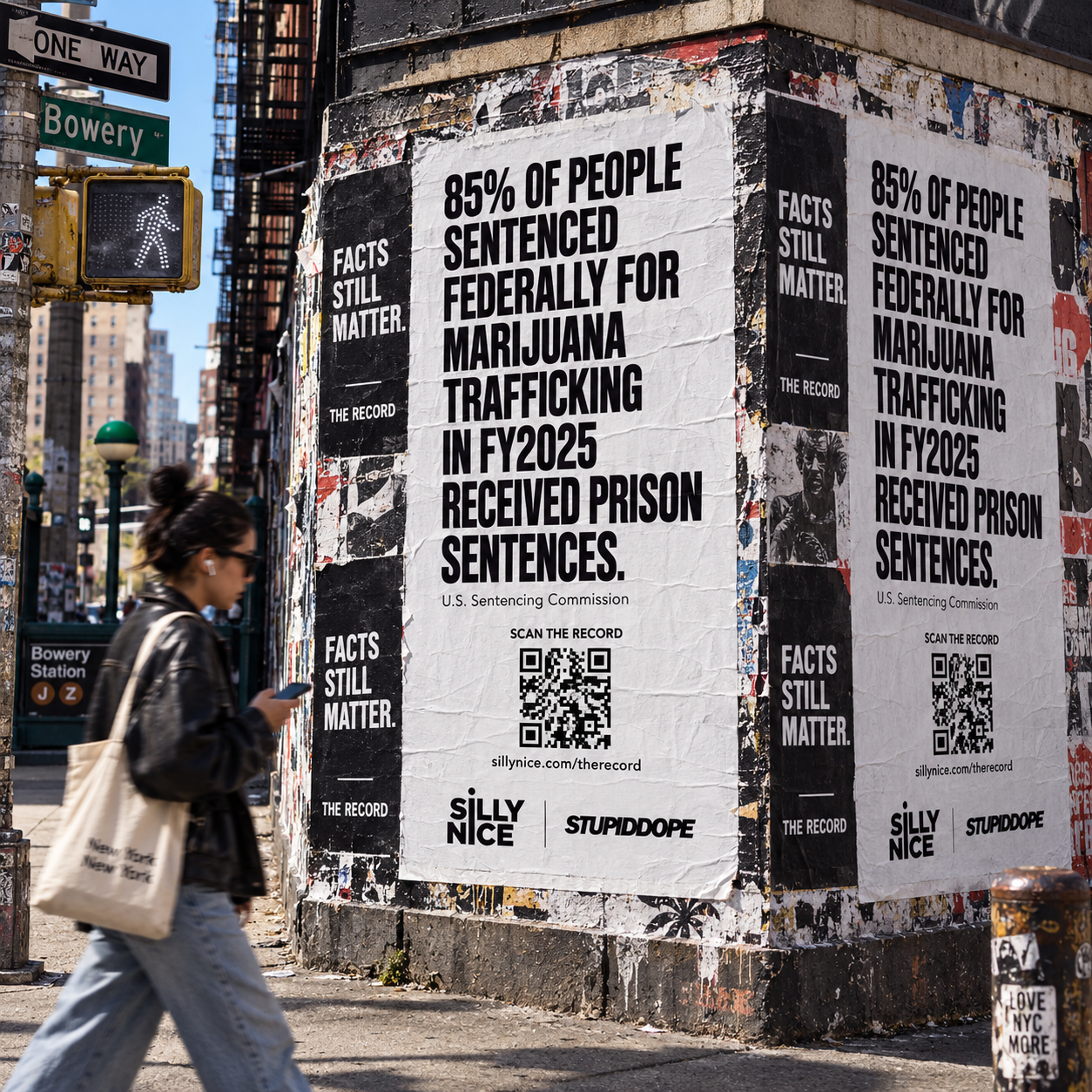
85%
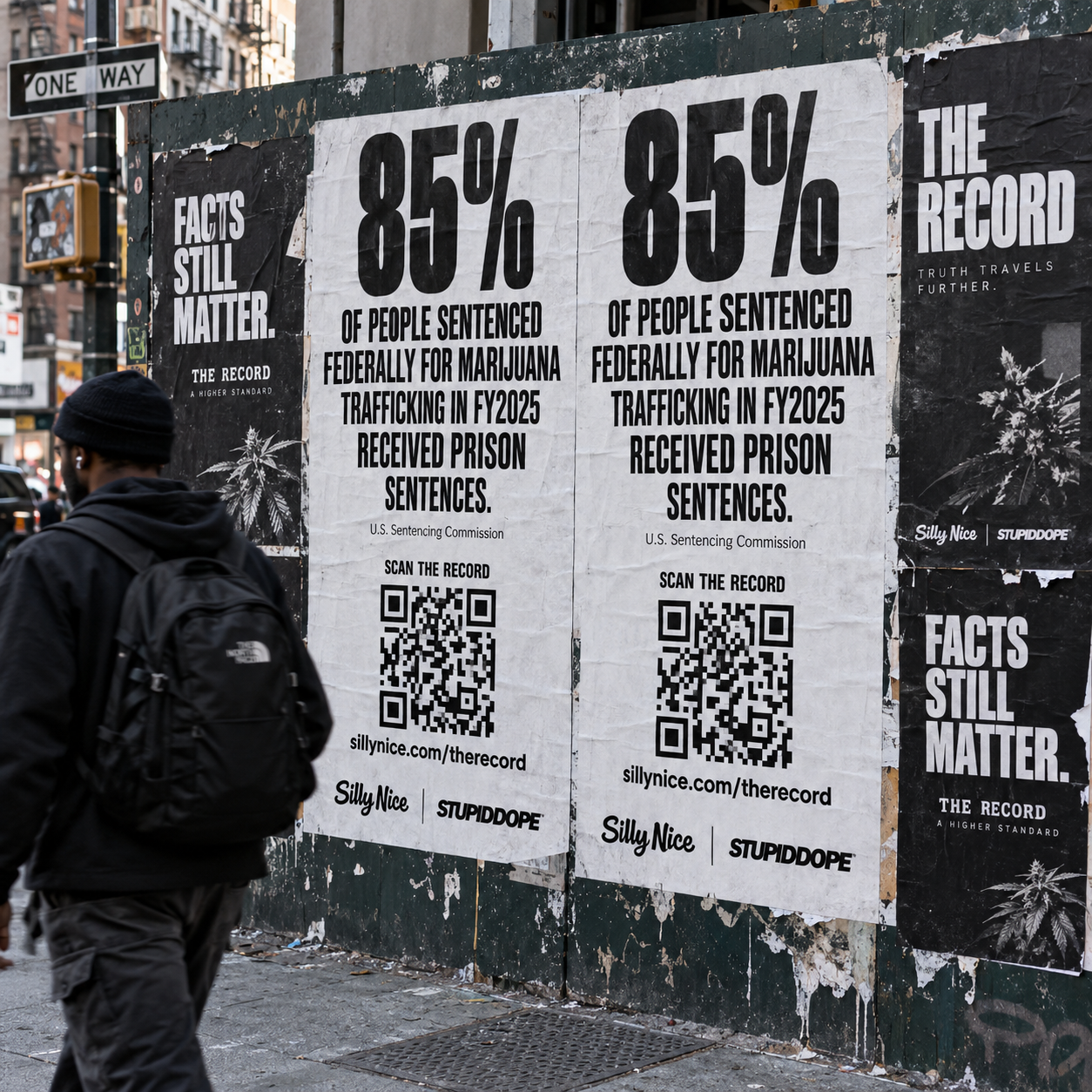
of those individuals received prison sentences.
44 months
average federal marijuana trafficking sentence in FY2025.
According to the U.S. Sentencing Commission, these figures refer specifically to federal marijuana trafficking cases sentenced under USSG Chapter Two, Part D in Fiscal Year 2025. They do not describe possession cases, all cannabis convictions, state prosecutions, or everyone incarcerated for cannabis.
COMBINED SENTENCE
389 individuals × 44-month average = 17,116 months of federal sentence — approximately 1,426 years of federal marijuana trafficking sentences imposed in a single fiscal year.
RACE / ETHNICITY OF THOSE SENTENCED
TOP FEDERAL DISTRICTS (FY2025)
WHO WAS SENTENCED
DISPARITY CONTEXT
According to the U.S. Census Bureau’s 2023 population estimates, Black Americans make up approximately 13.6% of the U.S. population but accounted for 42% of federal marijuana trafficking sentences in FY2025. Hispanic Americans make up approximately 19.5% of the population but accounted for 30% of sentences. White (non-Hispanic) Americans make up approximately 58.4% of the population but accounted for 15% of sentences.
| Demographic Category | Percentage |
|---|---|
| Men | 88% |
| Black | 42% |
| Hispanic | 30% |
| White | 15% |
| Other | 12% |
| U.S. citizens | 80% |
| Little or no prior criminal history | 64% |
Marijuana trafficking cases have declined 62% since FY2021 (from 995 to 383 cases).
TOP FEDERAL DISTRICTS
| Federal District | Number of Cases |
|---|---|
| Western District of Texas | 43 |
| Southern District of Texas | 38 |
| Eastern District of Virginia | 27 |
| Eastern District of California | 19 |
| Western District of Louisiana | 18 |
| Western District of Oklahoma | 18 |
SOURCE
U.S. Sentencing Commission
Marijuana Trafficking Quick Facts, FY2025 Datafile (USSCFY25)
PERIOD: Fiscal Year 2025
PUBLISHED: 2025–2026
Tier 1 — Primary Government Source
- WHAT THIS SOURCE MEASURES
- Federal marijuana trafficking sentences imposed under USSG Chapter Two, Part D.
- WHAT IT DOES NOT MEASURE
- Marijuana possession cases, state prosecutions, all cannabis convictions, or everyone incarcerated for cannabis.
§ 07a — THE DISPARITY
13.6% OF THE POPULATION.
42% OF THE SENTENCES.
According to the U.S. Census Bureau and the U.S. Sentencing Commission, Black Americans make up approximately 13.6% of the U.S. population but accounted for 42% of federal marijuana trafficking sentences in FY2025. Each dot below represents 1% of the U.S. population. The colored dots show the gap between who we are and who we sentence.
13.6%
BLACK AMERICANS IN THE U.S. POPULATION
U.S. CENSUS BUREAU, 2023
42%
BLACK AMERICANS IN FEDERAL MARIJUANA SENTENCES
U.S. SENTENCING COMMISSION, FY2025
THE GAP
3.1×
OVER-REPRESENTED IN FEDERAL MARIJUANA SENTENCING
FULL DEMOGRAPHIC BREAKDOWN
Black
POPULATION
~13.6%
SENTENCED
42%
Hispanic
POPULATION
~19.5%
SENTENCED
30%
White (non-Hispanic)
POPULATION
~58.4%
SENTENCED
15%
SOURCE
U.S. Census Bureau
Annual Population Estimates (2023)
Tier 1 — Primary Government Source
A sentence ends. The record doesn’t.
§ 07 — NEW YORK FOCUS
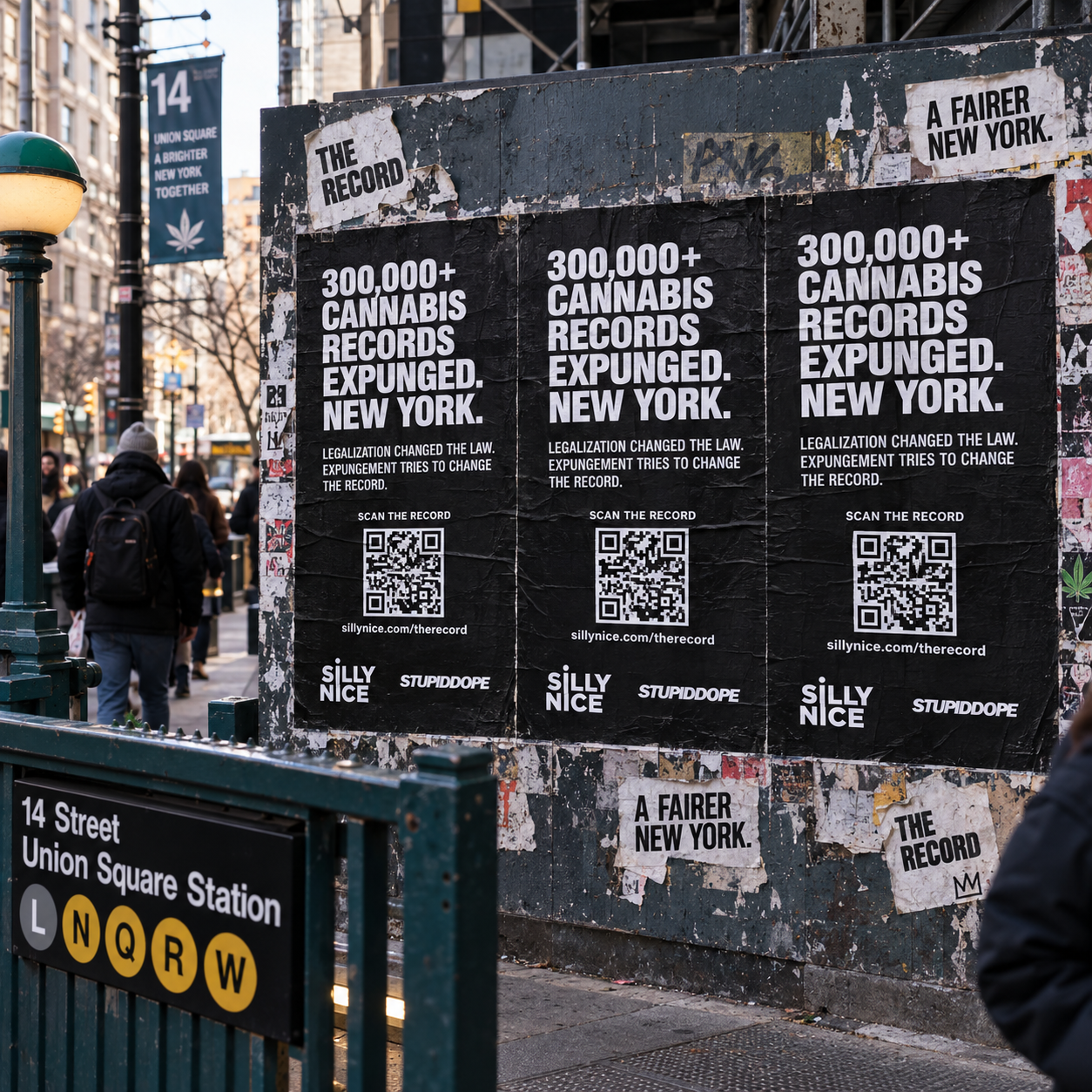
400,000+ RECORDS CLEARED.
THE SUPERVISION TRAP REMAINS.
New York legalized cannabis in 2021 and began clearing records under the MRTA. But expungement is only one part of the system — millions remain on probation and parole, where a missed meeting, not a new crime, can send them back to prison.
MRTA EXPUNGEMENT
400,000+
CANNABIS-RELATED RECORDS IDENTIFIED FOR EXPUNGEMENT UNDER NEW YORK’S MRTA.
New York’s 2021 Marijuana Regulation and Taxation Act (MRTA) initially identified approximately 300,000 cannabis-related records for expungement. By 2026, according to the Drug Policy Alliance marking five years of the MRTA, that figure had grown to over 400,000 records identified and processed. The number on the campaign poster reflects the initial 300,000 figure; the current verified total exceeds 400,000.
Under New York law, expungement means the arrest, the court case, and the conviction are treated as if they never happened (CPL 1.20(45)). Expunged charges will not appear on criminal history background checks, cannot be used against an individual when applying for housing, student loans, or a job, and do not have to be listed on job or school applications.
Expungement is legally distinct from sealing. Sealed records still exist but are restricted from public access. Expunged records are treated as though they never occurred. Destruction of certain underlying records may involve a separate process.
SOURCE
NY Office of Cannabis Management / NY Courts / Drug Policy Alliance
MRTA implementation data
PERIOD: 2021–2026
PUBLISHED: 2026 (5-year anniversary of MRTA)
Tier 1 — Primary Government Source
- WHAT THIS SOURCE MEASURES
- Cannabis-related records identified and processed for expungement under the MRTA.
- WHAT IT DOES NOT MEASURE
- Records from other states or federal cases. Only New York State records are covered.
THE SUPERVISION TRAP
3.7M
PEOPLE ON PROBATION OR PAROLE IN THE UNITED STATES — THE LARGEST SHARE OF PEOPLE IN THE JUSTICE SYSTEM.
According to REFORM Alliance, nearly 3.7 million people are on probation or parole in the United States. Many were placed on supervision for non-violent offenses, including cannabis possession. The supervision system was designed to keep people out of prison. Instead, it has become the largest feeder of people INTO prison — not for new crimes, but for technical violations of supervision rules.
01
ARREST
A person is arrested — often for a non-violent offense like cannabis possession.
02
SUPERVISION
Placed on probation or parole instead of prison. Subject to dozens of rules and conditions.
03
TECHNICAL VIOLATION
A rule is broken — not a new crime. Missing a meeting. Being unable to pay fees. Visiting a loved one.
04
RE-INCARCERATION
Revoked and sent to prison. Then released back to supervision. The cycle repeats.
The supervision system was designed to keep people OUT of prison. Instead, it has become the largest feeder of people INTO prison — not for new crimes, but for technical violations of supervision rules.
REFORM ALLIANCE — REFORM IS PASSING
188,000+
PEOPLE IMPACTED BY REFORM LEGISLATION IN 2025
3.7M
PEOPLE ON PROBATION OR PAROLE NATIONWIDE
72%
OF AMERICANS SUPPORT MODERNIZING PROBATION AND PAROLE
NEW YORK · 2021
Less is More Act
Immediate release of nearly 200 people held for technical parole violations on Rikers Island. Impacts 35,000+ people on parole statewide.
MARYLAND · 2025
SB 432 — Expungement Reform Act
Ends the practice of permanently barring people from clearing their records due to minor technical probation or parole violations — even those from decades ago.
GEORGIA · 2023
SB 105
Creates a pathway to early termination for tens of thousands of Georgians on probation.
CALIFORNIA · Ongoing
Multiple Reforms
Evidence-based limits on supervision terms, pathways for sick and elderly people to return home, and expanded alternatives to incarceration.
FLORIDA · 2023
SB 752 — Education & Workforce Credits
Education credits, workforce achievement credits, and a permanent infrastructure for remote reporting. Passed unanimously by both the Florida House and Senate. Signed by Governor Ron DeSantis.
VIRGINIA · 2026
HB 2252 & SB 936 — Smarter Probation Reform
Creates meaningful incentives for success on probation, giving more than 52,000 Virginians the opportunity to earn their way off supervision by demonstrating compliance and rehabilitation.
§ 11 — INFORMED ACTION CENTER
KNOW THE RECORD.
DECIDE WHAT YOU WANT TO DO NEXT.
THE RECORD does not tell you what political position to adopt. It gives you verified information and several factual pathways to act on it — in your own words, after reviewing the underlying data. This project is nationwide — operated from New York City.
FIND RESOURCES IN YOUR STATE
NATIONWIDE · SELECT YOUR STATE FOR LOCAL RESOURCES
THIS PROJECT IS NATIONWIDE. WE OPERATE FROM NEW YORK CITY, BUT THE DATA AND RESOURCES COVER ALL 50 STATES.
CHECK YOUR RECORD
State-by-state cannabis laws and record-clearing resources from NORML.
FIND YOUR STATE LEGISLATORS
Select your state above to find your state-level representatives.
FIND LEGAL AID
Legal Services Corporation — free legal help directory for all 50 states.
CHECK YOUR RECORD
Find official New York information about cannabis expungement, eligibility, and how to determine whether your record has been expunged.
HELP SOMEONE ELSE UNDERSTAND THEIR RECORD
Share legitimate legal-aid and government resources with someone who may be affected by a past cannabis conviction.
UNDERSTAND CURRENT LAW
Review the current federal and state legal landscape for cannabis, including the Congressional Research Service’s analysis.
FIND YOUR ELECTED REPRESENTATIVES
Use the official House and Senate lookup tools to identify your representatives. Contact them in your own words after reviewing the underlying information.
LEARN ABOUT REENTRY
Understand the collateral consequences of a criminal record and find credible reentry resources.
SHARE A SOURCE CARD
Share individual fact cards from THE RECORD containing verified statistics, methodology, and direct links to primary sources.
SUPPORT PUBLIC-INTEREST ORGANIZATIONS
A curated directory of credible nonprofit organizations working on record clearing, reentry, legal services, criminal justice research, and cannabis policy.
FIND YOUR REPRESENTATIVES
ENTER YOUR ZIP CODE · CONTACT IN YOUR OWN WORDS
ENTER YOUR 5-DIGIT ZIP CODE, THEN USE THE OFFICIAL HOUSE AND SENATE LOOKUP TOOLS TO IDENTIFY YOUR REPRESENTATIVE AND TWO SENATORS. CONTACT THEM IN YOUR OWN WORDS.
WRITE TO YOUR REPRESENTATIVE
COPY · PERSONALIZE · SEND
A pre-written email with verified statistics from THE RECORD. Copy it, personalize the bracketed fields, and send it in your own words.
Subject: Cannabis Arrest Data and Federal Policy — A Constituent's Request for Review

Dear [Representative / Senator Last Name],

I am writing to you as a constituent to share verified data about cannabis enforcement in the United States and to ask that you review it.

According to the FBI Crime Data Explorer, state and local law enforcement reported at least 200,960 marijuana possession arrests in 2025 — approximately one every 2.6 minutes. NORML's compilation of FBI Uniform Crime Reporting data shows more than 21 million marijuana-related arrests between 1990 and 2025.

Under federal law, cannabis remains a Schedule I controlled substance, while 24 states, DC, Guam, and the Northern Mariana Islands have legalized recreational cannabis and 40 states have comprehensive medical cannabis laws — creating a significant policy gap documented by the Congressional Research Service (IF12270).

In Fiscal Year 2025, the U.S. Sentencing Commission reports that 389 individuals were sentenced for federal marijuana trafficking, 85% received prison sentences, and the average sentence was 44 months.

I am not asking you to adopt a specific political position. I am asking that you review this data, consider the ongoing consequences of current federal cannabis policy, and let me know where you stand.

I will be voting with this issue in mind.

Sources:
- FBI Crime Data Explorer: https://cde.ucr.cjis.gov/
- U.S. Sentencing Commission — Marijuana Trafficking Quick Facts: https://www.ussc.gov/research/quick-facts/marijuana-trafficking
- Congressional Research Service — IF12270: https://www.congress.gov/crs-product/IF12270
- NORML — U.S. Marijuana Arrest Charts: https://norml.org/laws/us-marijuana-arrest-charts/

Data verified: September 2026

Sincerely,
[Your Name]
[Your Address]
[Your City, State ZIP]
THE RECORD provides this template as a starting point. Personalize it with your own words and concerns before sending. Your representatives respond best to individual, authentic messages.
TALKING POINTS — USE THESE WHEN YOU CALL OR WRITE
ENFORCEMENT IS ONGOING
In 2025, the FBI reports at least 200,960 marijuana possession arrests nationwide — roughly one every 2.6 minutes. This is happening today, not decades ago.
THE FEDERAL–STATE GAP
Cannabis remains a federal Schedule I substance, yet 24 states have legalized it. The Congressional Research Service documents this policy gap (IF12270). I want to know your position on closing it.
FEDERAL SENTENCING CONTINUES
In FY2025, the U.S. Sentencing Commission reports 389 federal marijuana trafficking sentences — 85% received prison time, averaging 44 months. 42% of those sentenced were Black.
RECORD-CLEARING WORKS
New York's MRTA has identified over 400,000+ cannabis records for expungement. I support similar record-clearing and reentry legislation in our jurisdiction.
PHONE SCRIPT — READ THIS WHEN YOU CALL
Copy it, fill in the bracketed fields, and read it to the staffer who answers.
Hi, my name is [YOUR NAME] and I'm a constituent from [YOUR CITY, STATE].

I'm calling about cannabis policy. According to the FBI, there were over 200,000 marijuana possession arrests in 2025. The U.S. Sentencing Commission reports 389 federal trafficking sentences with an 85% prison rate.

I'd like to know the [Representative/Senator]'s position on federal cannabis reform and record expungement. I'll be voting with this issue in mind.

Thank you.
THE RECORD and its creators, Silly Nice and stupidDOPE, are independent of the outside organizations listed above. Inclusion does not imply endorsement by those organizations.
§ 09 — FEATURED STORIES
THE STORIES BEHIND THE NUMBERS.
A selection of reported pieces examining cannabis prohibition, its consequences, and the people and policies shaped by it. Each is grounded in the primary data on this page.
ENFORCEMENT
Why Marijuana Arrests Still Happen in 2026
Twenty-four states have legalized recreational cannabis. Federal prohibition and state-level criminalization in the remaining states continue to produce hundreds of thousands of arrests annually.
24 states legalized. The other 26 produced nearly every one of the 200,960 arrests in 2025.
READDATA
21 Million Arrests: How to Read Three Decades of FBI Data
A guide to interpreting the FBI’s Uniform Crime Reporting data, the 2021 methodology change, and what the numbers do and do not capture.
The FBI changed its reporting methodology in 2021. Cross-decade comparisons are not exact — and the 21 million figure is a compilation, not a single published total.
READEDUCATION
Arrest vs. Conviction vs. Incarceration: What the Numbers Actually Mean
The four legal outcomes that are often conflated in public discourse, and why the distinction matters for policy.
An arrest is not a conviction. A conviction is not a sentence. A trafficking case is not possession. Conflating them distorts every debate.
READEXPUNGEMENT
What Happens When New York Expunges a Cannabis Record?
How the MRTA’s automatic expungement process works, what it means for individuals, and what it does not cover.
Under NY law, an expunged record is treated as if it never happened. It does not appear on background checks. The 400,000+ figure is real — and ongoing.
READPOLICY
Federal vs. State Cannabis Law: Why the Difference Still Matters
The Congressional Research Service’s analysis of the policy gap between federal classification and state legalization.
A Schedule I federal classification coexists with 24 state legal markets. The gap is documented by Congress itself.
READSENTENCING
44 Months: Inside Federal Marijuana Trafficking Sentences
A close look at the 389 individuals sentenced federally for marijuana trafficking in FY2025, the demographics, and the districts.
85% of the 389 people federally sentenced for marijuana trafficking in FY2025 went to prison. 42% were Black.
READ§ 14 — SOURCE LIBRARY
SOURCE LIBRARY.
Every statistic on this page is connected to a primary or highly reputable source. THE RECORD prioritizes accuracy over slogans.
LAST DATA AUDIT: September 2026
FEDERAL DATA
FBI Crime Data Explorer
2025 Arrest Data
SUPPORTS: 200,960 reported marijuana possession arrests
FBI Uniform Crime Reporting Program
Historical Arrest Data
SUPPORTS: Historical arrest trends
U.S. Sentencing Commission
Marijuana Trafficking Quick Facts
SUPPORTS: 85% prison rate, 44-month average sentence, 389 cases
Congressional Research Service
The Federal Status of Marijuana (IF12270)
SUPPORTS: Federal vs. state policy gap
NEW YORK DATA
NY Office of Cannabis Management
MRTA Implementation
SUPPORTS: 400,000+ records identified for expungement
NY Courts — Cannabis Expungement
Expungement Eligibility & Process
SUPPORTS: Definition of expungement under CPL 1.20(45)
NY Attorney General
Sealing Your Criminal Record
SUPPORTS: Record sealing resources
COURTS & RECORD CLEARING
LAW & POLICY
RESEARCH & CONTEXT
NORML
U.S. Marijuana Arrest Charts
SUPPORTS: 21,366,700 cumulative arrests (compilation of FBI data)
Drug Policy Alliance
MRTA 5-Year Report
SUPPORTS: 400,000+ records expunged under MRTA
Vera Institute of Justice
Criminal Justice Research
SUPPORTS: Enforcement and sentencing context
Brennan Center for Justice
Criminal Justice Research
SUPPORTS: Sentencing and incarceration analysis
Council on Criminal Justice
Criminal Justice Research
SUPPORTS: Enforcement trends and policy analysis
Last Prisoner Project
Impact Statistics & Constituent Stories
SUPPORTS: 400+ years saved, 250,000+ offenses cleared, $3.8M distributed, individual clemency cases
REFORM Alliance
2025 Impact Report and Policy Successes
SUPPORTS: 188,000+ people impacted by legislation, 3.7M on supervision, 72% public support, state victories
Marijuana Policy Project
2026 Cannabis Arrest Report
SUPPORTS: Prohibition states made 8× more arrests than legalization states (186,581 vs 22,357), 219,456 fewer arrests in legalization states, state-by-state arrest rate analysis
NORML
In Six States Over Half of All Drug Arrests Are for Marijuana
SUPPORTS: Louisiana, Idaho, Iowa, Wisconsin, Nebraska, and Kansas — states where >50% of drug arrests were for marijuana in 2025
All source links are canonical and free of tracking parameters. Statistics will be updated as new government data becomes available. If newer data exists, the number and source will be revised and the previous version archived.
§ 10 — METHODOLOGY & DATA NOTES
HOW THESE NUMBERS WERE COMPILED.
Every statistic on this page has a methodology. Understanding the limitations of the data is part of understanding the data itself.
FBI UNIFORM CRIME REPORTING
Arrest data comes from the FBI Uniform Crime Reporting (UCR) Program, which collects voluntary submissions from thousands of law enforcement agencies nationwide. Not every agency reports every year.
THE 2021 METHODOLOGY CHANGE
The FBI retired the legacy summary reporting system in 2021 and transitioned to the National Incident-Based Reporting System (NIBRS). This change affects how arrests are counted and reported, making cross-decade comparisons before and after 2021 imprecise.
NON-REPORTING AGENCIES
Approximately 13% of law enforcement agencies did not submit complete data to the FBI for 2025. The 200,960 figure is a minimum — actual arrest totals are likely higher.
NORML COMPILATION
The 21,366,700 cumulative arrest figure (1990–2025) is a NORML compilation of annual FBI-reported data, not a directly published FBI cumulative total. Annual figures are summed across the reporting period.
PER-MINUTE CALCULATION
The "every 2.6 minutes" figure is a mathematical average: 200,960 arrests ÷ 365 days ÷ 24 hours ÷ 60 minutes ≈ 0.38 arrests per minute. It is not a real-time count.
FEDERAL TRAFFICKING vs. POSSESSION
Sentencing data from the U.S. Sentencing Commission covers federal marijuana trafficking cases under USSG Chapter Two, Part D — not possession arrests, state prosecutions, or all cannabis convictions.
Last data audit: September 2026. Statistics on this page are updated when newer government data becomes available.
UPDATE & CORRECTIONS LOG
How this page stays current.
THE RECORD is reviewed against primary sources on a regular schedule. Material changes are logged here. If you believe a figure is inaccurate, please contact us — corrections are published and dated.
September 2026
Updated 2025 FBI arrest data (200,960 reported possession arrests). Refreshed USSC FY2025 sentencing figures. Added Marijuana Policy Project 2026 arrest report.
June 2026
Added REFORM Alliance 2025 impact data and the Safer Supervision Act. Updated NY MRTA expungement total to 400,000+.
March 2026
Refreshed Congressional Research Service IF12270. Updated state legalization count to 24.
NEXT SCHEDULED REVIEW: Q1 2027 · CURRENT VERIFICATION: SEPTEMBER 2026
\u00a7 16 \u2014 PARTNERSHIP
HELP PUT THE RECORD
ON THE STREETS
THE RECORD is already live. The reporting, public-information platform, campaign creative, media coverage, and digital distribution are in place. The next phase is physical: bringing THE RECORD to the streets of New York City through an ongoing wheat-paste poster campaign.
We are looking for a small number of aligned partners who want to help fund and grow this campaign while receiving meaningful visibility across the project. We are intentionally keeping the partner group limited so each organization has a real presence rather than becoming one logo among many.
EXAMPLE \u2014 NYC STREET CAMPAIGN
WHAT PARTNERS HELP MAKE POSSIBLE
Hundreds to thousands of 24" × 36" poster placements across New York City
Professional wheat-paste installation
Campaign photography and documentation
QR-driven traffic to THE RECORD
Continued public education and editorial reporting
Ongoing campaign opportunities rather than a one-time activation
PARTNER VISIBILITY
Participating partners may receive visibility across:
THE RECORD project portal
Campaign press releases
Street campaign recognition
Campaign photography and recap materials
Editorial coverage and project updates on stupidDOPE
Distribution through stupidDOPE’s Apple News and Google News channels
Search and AI discovery visibility generated by ongoing editorial coverage
Partners support the reach and distribution of THE RECORD. Editorial reporting, statistics, sourcing, and conclusions remain independent.
THE GOAL IS NOT A ONE-TIME POSTER DROP.
We want to build an ongoing street campaign that keeps THE RECORD visible, keeps people learning, and gives committed partners repeated exposure as the project grows.
INTERESTED IN BECOMING A PARTNER?
Reach out directly. We handle partnership conversations personally and respond to every legitimate inquiry.
We are available for in-person partnership meetings in New York City. Call or email us to set one up.
PEOPLE. POLICY. REALITY. THE RECORD.