This City Has Always Had a Complicated Relationship With Cannabis
We built Silly Nice right here in Harlem. Not in California, not in Colorado — in the same borough where cannabis has been smoked in parks, celebrated in music, policed in doorways, and mourned in courtrooms for over a century. For us, the history of cannabis in New York City isn't a textbook entry. It's personal. It's woven into the story of the communities that raised us, the neighborhoods we walk through every day, and the reason we felt called to start this brand in the first place.
Understanding how we got from prohibition to a legal adult-use market — and what that journey actually cost — matters deeply to us. So let's walk through it together, honestly and without sugarcoating a thing. Because if we're going to be part of this industry, we want our community to know exactly what came before us, and why the work we're doing now carries so much weight.
Cannabis Before It Was Criminalized
Cannabis was not always treated as a criminal matter. In the early 20th century, hemp was an agricultural staple, and cannabis tinctures sat on pharmacy shelves across the country. In New York City, the 1920s and 1930s brought a wave of jazz, Harlem Renaissance culture, and with it, a cannabis scene that thrived in Harlem's clubs and rent parties. "Tea pads" — early cannabis lounges — reportedly numbered in the hundreds across Manhattan. The plant was part of the cultural fabric, particularly in Black communities. That would not last.
The Criminalization Era and Its Deliberate Targets
The federal Marihuana Tax Act of 1937 effectively began the national prohibition of cannabis, driven in large part by propaganda campaigns that deliberately linked the plant to Black and Latino communities in order to stoke racial fear. The messaging was intentional. The damage was generational. By the time New York State enacted its own strict drug laws — including the Rockefeller Drug Laws of 1973 — cannabis prohibition had become one of the most powerful tools of mass incarceration in American history, and New York was ground zero.
The Rockefeller Drug Laws mandated harsh mandatory minimum sentences for drug possession and sale, including cannabis. These laws devastated Black and Latino communities in New York City disproportionately. Families were separated. Opportunities were cut off. Entire neighborhoods were destabilized — ironically, many of those same neighborhoods in Harlem and the Bronx where cannabis culture had once flourished freely. As a Black-owned and Veteran-owned brand, we don't step lightly around this history. We carry it with us.
Decades of Unequal Enforcement
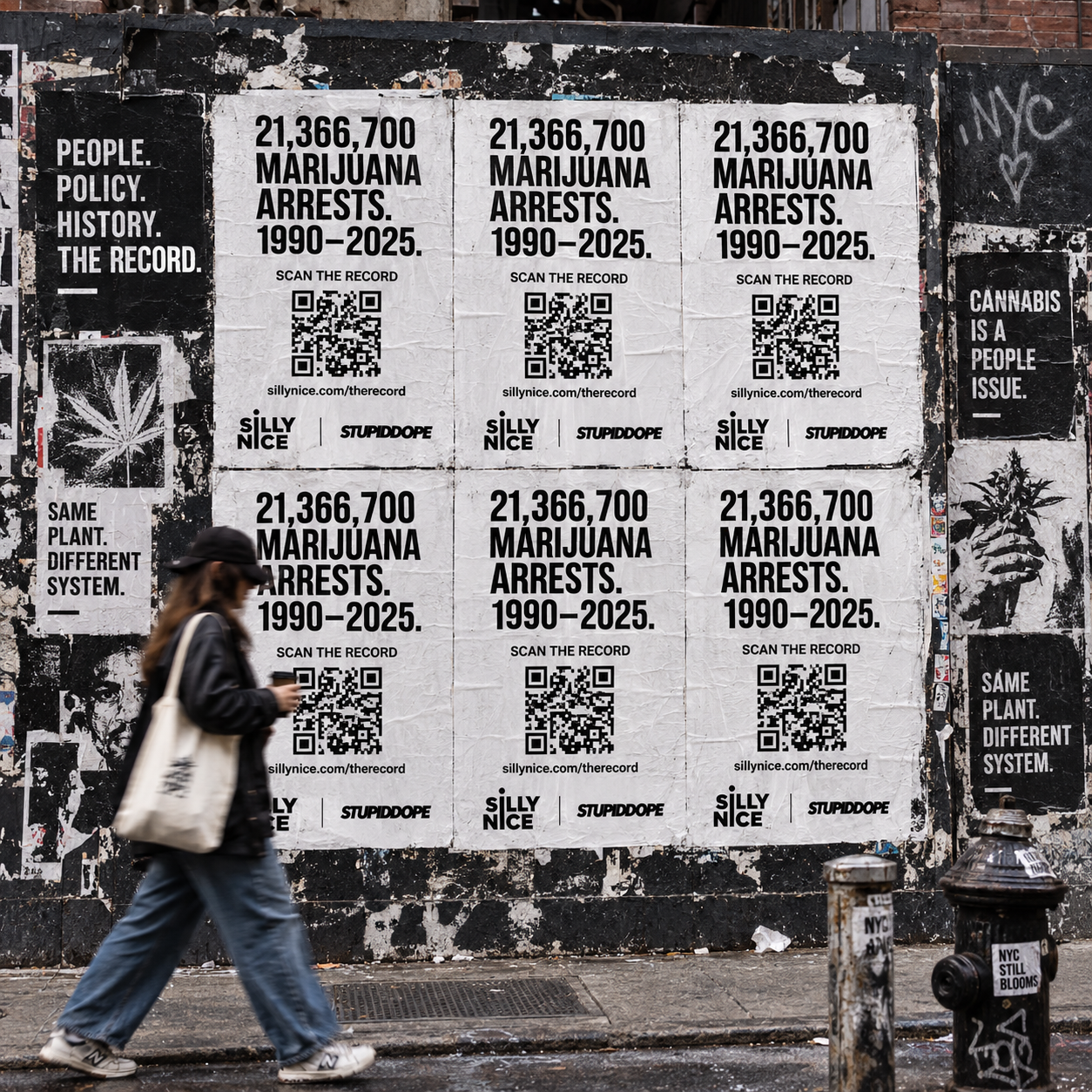
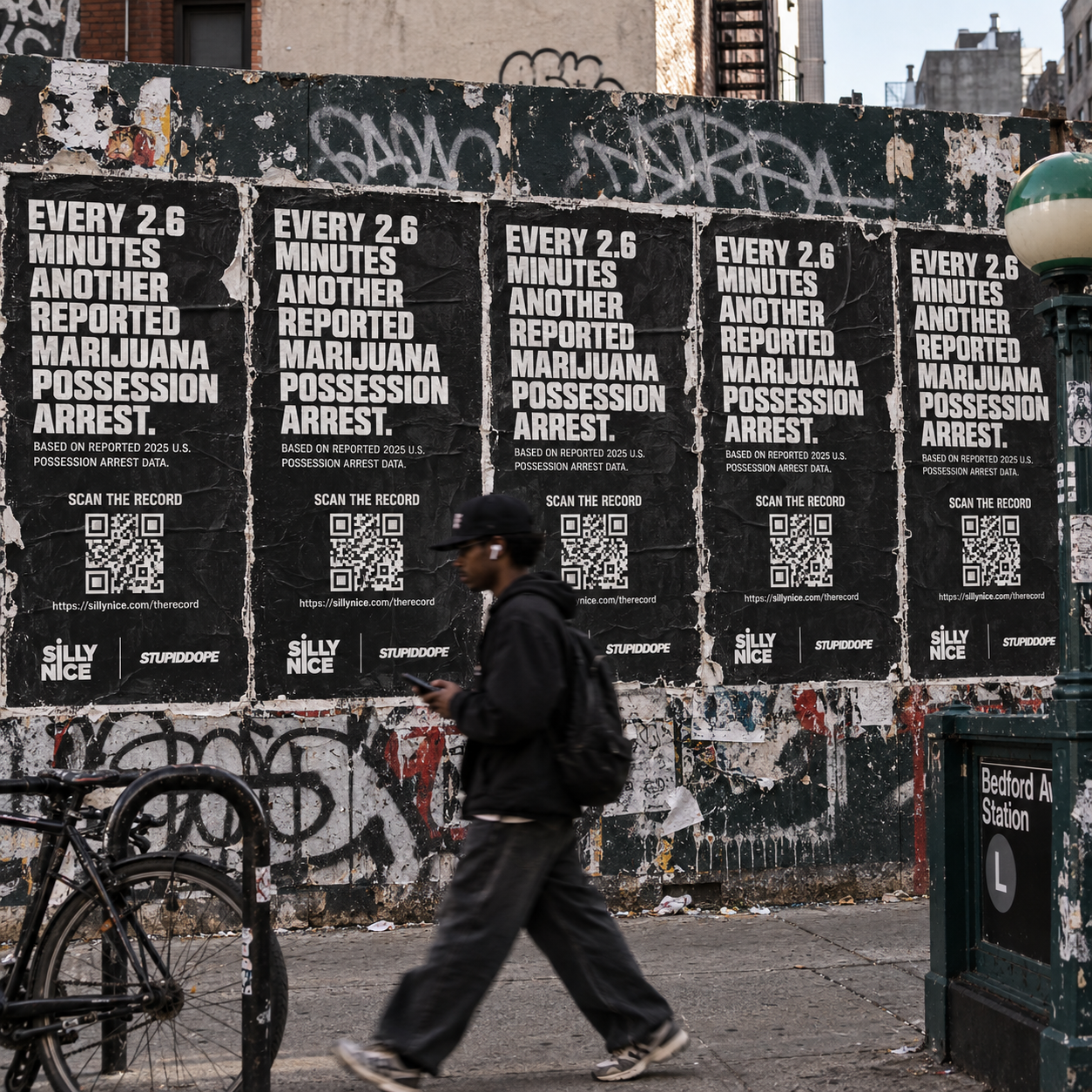
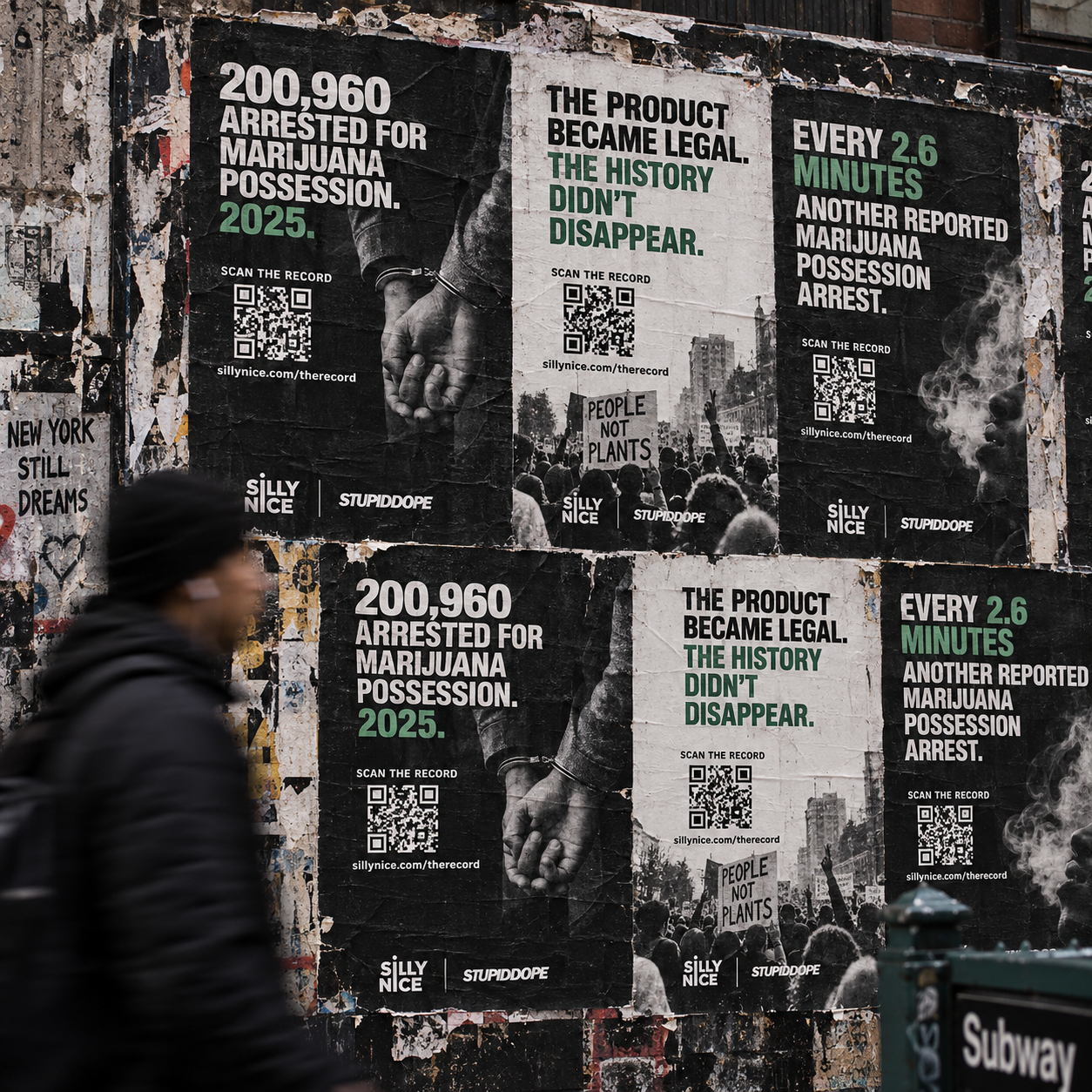
Even as cultural attitudes softened and New York partially decriminalized small amounts of cannabis in 1977, enforcement remained deeply unequal. Studies repeatedly showed that Black and Latino New Yorkers were arrested for cannabis at dramatically higher rates than white New Yorkers, despite similar usage rates across racial groups. The NYPD's stop-and-frisk era amplified this further. A cannabis charge could mean lost housing, lost employment, lost financial aid eligibility — a cascading series of consequences that followed people for life. The plant didn't change. The policing did.
The Road Toward Medical and Decriminalization Progress
Change came slowly. In 2014, New York passed the Compassionate Care Act, establishing a limited medical cannabis program. It was a start — but it was expensive, restrictive, and inaccessible to most New Yorkers who might have benefited. Meanwhile, the underground market in New York City remained massive, because for most people, the legal route simply wasn't practical. We watched this from our perspective — people who understood both the plant's value and the system's failures — and we knew legalization, real legalization, had to be different.
In 2019, New York decriminalized cannabis more broadly, reducing penalties for possession and expunging some prior records. It was meaningful progress, and the conversation had shifted. But the real turning point was still ahead, and by then the country was watching New York closely.
The MRTA: A Law Built Around Equity
In March 2021, Governor Andrew Cuomo signed the Marihuana Regulation and Taxation Act — the MRTA — into law. New York became the 15th state to legalize adult-use cannabis, but what set the MRTA apart was its explicit commitment to social equity. The law prioritized licensing for people from communities most harmed by the War on Drugs — communities like Harlem, like the South Bronx, like Brownsville. A portion of cannabis tax revenue was designated to flow back into those same neighborhoods. It wasn't perfect, but it was a framework that acknowledged the debt owed.
Available Now
Find Silly Nice at a Licensed Dispensary Near You
What the Legal Market Actually Looks Like — and Where We Fit
We launched Silly Nice in March 2024, and we did it deliberately — as a small-batch, quality-first brand rooted in Harlem that wanted to represent what this market could look like when it's done right. Today, we're proud to be in over 150 licensed adult-use dispensaries across New York State. Every product we make is independently lab-tested, sustainably packaged, and crafted with the kind of care and attention you put into something that carries your name and your family's reputation.
Our lineup includes products like our Diamond-Frosted & Live Resin Infused Flower, which comes in at 51.22% THC and retails for $60 for 3.5g — a premium small-batch smoke that speaks for itself. Our Diamond Powder clocks in at 86.24% THC per gram at $50. Our Frosted Hash Ball, a nod to traditional hash craft, hits 67.34% THC at $50 per gram. And for those who prefer vapor, our 510 Vape Cartridge in Pink Stardust (81.96% THC, $40) and our 2G All-In-One Vape in Alaskan Thunder Fuck (82.46% THC, $80) offer clean, full-spectrum experiences. All products are for adults 21 and older. You can view our full lab results at sillynice.com/menu.
The Gap Between Policy and Access
Even with legalization in place, the buildout of New York's legal market has been uneven. Licensing delays, banking challenges for cannabis businesses, and an ongoing illicit market have created real obstacles — especially for smaller, community-rooted brands like ours. Being Black-owned and Veteran-owned in this space means navigating systems that weren't designed with us in mind. But it also means we bring something the industry desperately needs: authenticity, accountability, and a real connection to the communities these laws were meant to serve.
Available Now
View Our Full Menu and Lab Results
Harlem as the Heart of This Story
We keep coming back to Harlem because it's not just where our office is — it's where the whole arc of this story lives. Jazz musicians lighting up between sets at the Apollo. Community organizers watching their neighbors get swept up in drug raids. Families fighting Rockefeller Law sentences. Advocates marching for expungement. And now, in 2024 and beyond, entrepreneurs building licensed cannabis brands on the same blocks. That full circle is something we feel every single day when we show up to work.
Harlem's relationship with cannabis is New York City's relationship in miniature — all the creativity, all the pain, all the resilience, all the possibility. When we say our brand is rooted in community, we're not using marketing language. We mean it literally. The community came first. The brand came after. And everything we build, we build for the people who were here through all of it.
What Equity Looks Like in Practice
Real equity in cannabis isn't just a checkbox on a license application. It means Black and Latino entrepreneurs actually having access to capital, shelf space, and the customer base that the legal market promised. It means consumers from impacted communities being able to purchase from brands that look like them and reflect their values. It means reinvesting cannabis revenue into neighborhoods that bore the cost of prohibition for decades. We're one small part of a much larger picture, but we take that responsibility seriously — and we hope every purchase of Silly Nice product feels like a vote for this kind of industry.
From Criminalized to Celebrated — and What Comes Next
The history of cannabis in New York City is a history of contradiction — a plant that brought joy to speakeasy jazz nights and devastation to courtrooms; that filled city coffers through taxes while it emptied family savings through legal fees; that was simultaneously everywhere and nowhere, depending on your zip code and your skin color. We hold all of that when we talk about what we do. We don't get to just enjoy the wins of legalization without acknowledging everything that made the fight for it necessary.
But here we are. March 2024, Silly Nice launches. Licensed, tested, transparent, proud. More than 150 dispensaries across the state. A Bubble Hash at 53.32% THC that cured our team's collective obsession with quality concentrate. A community that has shown up for us in ways we didn't dare expect when we started. New York City's legal cannabis market is still young, still finding its footing, still working out the promises it made to equity operators. We believe it can get there. And we'll be here, doing the work, making great product, and keeping it real with every single person who walks into a dispensary and picks up something with our name on it.
For anyone 21 and older looking to experience what we've built — or just wanting to support a brand that carries the weight of this city's history with intention — we're not hard to find. Check our dispensary locator to see which licensed shop near you carries Silly Nice. And if you ever want to know exactly what's in what you're smoking or vaping, our full lab results are always public at sillynice.com/menu. That's our promise to you, and that's who we are.
Available Now
Find Silly Nice Near You
Topics