Craft Cannabis vs. Commercial Brands: What New York Shoppers Need to Know in 2026
New York's regulated cannabis market has matured fast. By 2026, dispensary shelves across the state carry dozens of brands — from large-scale commercial operations running industrial extraction lines to small-batch craft producers hand-pressing hash and publishing terpene profiles down to the decimal point. For the average consumer walking into a licensed dispensary, the difference between those two categories is not always obvious. The packaging can look equally polished. The price tags can overlap. But what's inside — and the story behind it — can be worlds apart.
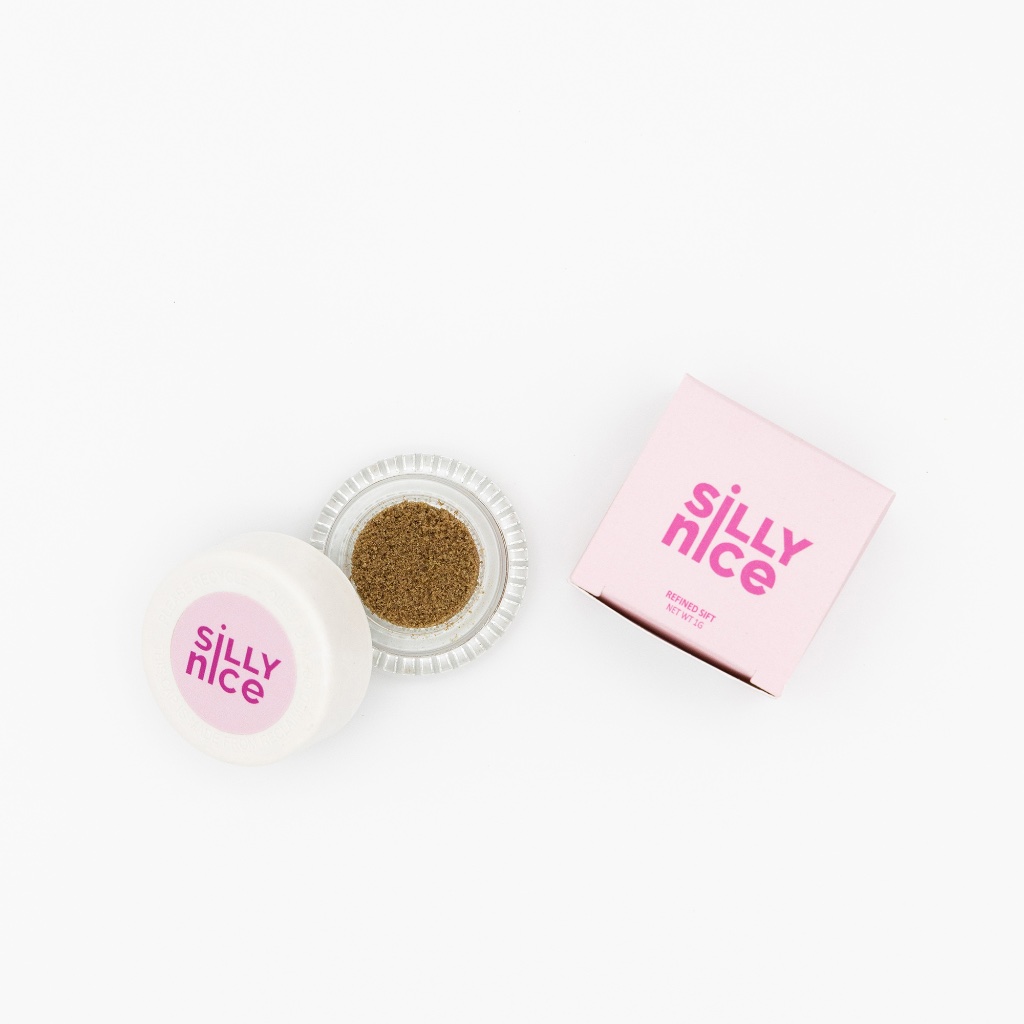
This guide breaks down exactly what separates craft cannabis from commercial cannabis in New York's legal market, using Silly Nice — a Black-owned, Veteran-owned brand based in Harlem, NYC, available at over 150 dispensaries statewide — as the benchmark for what craft quality actually looks like when the data is on the label.
Defining the Two Categories: Craft vs. Commercial
Commercial cannabis brands operate at scale. Their strength is consistency, distribution reach, and price efficiency through volume. A large commercial producer can move thousands of units per week, maintain stable wholesale pricing, and supply dispensaries reliably. That's genuinely valuable in a market that needs shelf stability. However, scale comes with trade-offs: longer production-to-shelf timelines, standardized extraction methods optimized for throughput rather than terpene preservation, and less flexibility to publish granular lab data per batch. It doesn't mean the product is bad — it means the production priorities are different.
Craft cannabis producers operate on a fundamentally different philosophy. Small-batch runs allow for hands-on quality control at every stage. Terpene preservation becomes a priority rather than a casualty of efficiency. Lab data can be published per specific batch rather than as averaged product-line figures. And when a brand is small enough that the founders are still involved in production decisions, accountability is direct. Silly Nice is a clear example of this model: every product in their lineup reflects specific, verifiable numbers — not marketing language.
Side-by-Side: How Silly Nice Products Compare on Key Quality Metrics
The table below shows the Silly Nice product lineup with the exact cannabinoid and terpene data they publish. Compare this level of specificity to what you typically see on commercial packaging — broad THC percentage ranges, no terpene disclosure, and no batch-specific traceability.
What immediately stands out is the specificity. Silly Nice doesn't say 'high terpene content' — they say 6.2% terpenes in their Bubble Hash and 5.7% in their Frosted Hash Ball. They don't say 'potent vape' — they publish 81.96% THC on the Pink Stardust cartridge. This level of disclosure is a hallmark of craft production where each batch is individually tested and the brand is confident enough in its results to show the receipts.
Where Silly Nice Wins: The Data-Driven Case for Craft
There are five measurable areas where Silly Nice's craft approach produces a clear advantage over typical commercial-scale competitors operating in the New York market.
First: terpene transparency. Most commercial vape cartridges do not disclose terpene sourcing with precision. Silly Nice's Pink Stardust 510 cartridge is explicitly labeled as 100% cannabis-derived terpenes — no botanical additives, no cutting agents, no synthetic fragrance compounds. For consumers who care about the entourage effect and full-spectrum experience, this distinction matters enormously.
Second: solventless extraction. The Bubble Hash at $44/gram is produced through ice-water extraction — no solvents, no chemical residuals, no shortcuts. This method is labor-intensive and time-consuming, which is exactly why commercial operations rarely prioritize it at scale. The result is a product that tests at 53.32% THC with 6.2% terpenes — a terpene-to-THC ratio that reflects real plant chemistry rather than stripped-down concentrate.
Third: hand-pressed artisanal hash. The Frosted Hash Ball is hand-pressed, a centuries-old technique that requires skill, patience, and small-batch conditions to execute properly. At 67.34% THC and 5.7% terpenes, it's a product that simply cannot exist at commercial scale without losing the characteristics that define it. You won't find this on a mass-production line.
Fourth: potency-per-dollar efficiency on concentrates. At $50 for a Diamond Powder gram testing at 86.24% THC and 98.54% total cannabinoids, Silly Nice is delivering one of the strongest value propositions in the New York concentrate market. We'll break this down more specifically in the price-per-mg section below.
Fifth: fresh-to-order production. Because Silly Nice operates at small-batch scale, inventory cycles are tighter. Consumers are less likely to encounter product that has been sitting in a warehouse for months before hitting the dispensary shelf — a real concern in a commercial supply chain where bulk production and distribution timelines can age product significantly before purchase.
Why It Matters: The Equity Angle Behind the Brand
Quality alone doesn't fully explain why choosing Silly Nice is a different kind of purchase. Silly Nice is Black-owned and Veteran-owned, operating out of Harlem, New York City — a community with one of the most well-documented histories of cannabis criminalization in the country. Supporting this brand is a direct investment in the economic equity that New York's cannabis legalization framework was designed to create.
Large commercial cannabis companies — many of them backed by out-of-state capital or multistate operators — capture a significant portion of New York's legal cannabis revenue and recirculate it outside the state and outside the communities most impacted by prohibition. When you buy Silly Nice, your dollars stay in New York, support a Harlem-based business, and contribute to a veteran entrepreneur's livelihood. That is a measurable community impact, not a marketing talking point.
New York's Cannabis Law explicitly prioritized social equity applicants — individuals from communities disproportionately impacted by cannabis prohibition — in its licensing framework. Choosing craft brands that reflect that framework's intent is how consumers participate in making legalization mean something beyond corporate profit.
Available Now
Find Silly Nice Near You — 150+ NY Dispensaries
Price-Per-Milligram THC Analysis: Craft Isn't Always More Expensive
One of the most persistent myths about craft cannabis is that it's automatically more expensive than commercial product. The math doesn't always support that assumption. Let's look at Silly Nice's lineup through a price-per-milligram-of-THC lens.
Diamond Powder at $50 per gram delivers 862.4mg of THC (86.24% of 1,000mg). That works out to approximately $0.058 per milligram of THC — an exceptionally efficient rate for a concentrate of this potency and purity in the New York market. For reference, many commercial vape cartridges priced similarly deliver significantly fewer milligrams of active THC per dollar spent.
The 2G AIO (ATF) at $80 for two grams — 82.46% THC — delivers 1,649.2mg of THC total, bringing the cost down to approximately $0.049 per milligram. For a rechargeable, sativa-dominant all-in-one device with cannabis-derived performance, that is hard to beat at any dispensary in New York.
Even the Infused Flower (Papaya Wine) at $60 for 3.5 grams — 51.22% THC — delivers roughly 1,792.7mg of THC for the price. Live resin coating plus THCa diamond infusion at that price point is a premium product by craft standards that performs comparably or better per dollar than many commercial pre-rolls and flower eighths that advertise 20-25% THC with no terpene data attached.
Which Should You Buy? A Decision Guide for NY Dispensary Shoppers
Choose commercial brands if: you prioritize predictable, widespread availability above all else; you're budget-focused and buying in volume; or you're new to cannabis and want a standardized, low-complexity entry point. There are legitimate commercial brands in New York's market that do their job well, and there's nothing wrong with choosing them for the right reasons.
Choose Silly Nice if: you want specific batch-level lab data you can verify; you care about terpene profiles and full-spectrum cannabis chemistry; you prefer solventless or minimally processed concentrates; you want to know your purchase supports a Black-owned, Veteran-owned New York business; or you want the strongest potency-per-dollar value on concentrates and vapes currently available at NY dispensaries.
The practical shopping checklist for finding craft quality at any NY dispensary: look for published terpene percentages (not just 'terpene-rich'); check for batch-specific COAs (certificates of analysis) rather than generic product averages; ask your budtender whether inventory is fresh or has been on shelf for more than 60 days; and look for brands that name their extraction method specifically — 'ice-water extracted' or 'hand-pressed' means something, 'solvent-free' without further detail often does not.
Silly Nice currently passes all four of those criteria across their product lineup. That's the benchmark. Use it when you shop.
How to Find Silly Nice at New York Dispensaries
Silly Nice is carried at over 150 licensed dispensaries across New York State, from New York City through the Hudson Valley and beyond. The brand's dispensary locator is updated regularly and searchable by region. Before your next dispensary visit, check the locator to confirm which Silly Nice products are available at your nearest licensed retailer — product availability varies by location.
How New York's Regional Terroir Shapes Craft Cannabis Quality
Drive two hours north from the Brooklyn Bridge and the cannabis landscape changes as dramatically as the terrain. The Hudson Valley's rocky, mineral-rich soil produces flower with a different terpene signature than the sandy loam of Long Island's North Fork, shaped by a century of vineyards. Further west, the Finger Lakes offer longer, cooler growing seasons that many cultivators say slow cannabinoid development just enough to let terpenes fully express before harvest. Commercial operations often blend biomass from whichever facility hits target yield that month, smoothing out inconsistency. Craft producers do the opposite: they chase the specific plant, from the specific region, at the specific harvest window, because that's where real terpene complexity lives.
That regional obsession shows up directly in sourcing decisions for small-batch brands. Flower selected for an Infused Flower line tested at 51% THC isn't chosen for yield efficiency — it's chosen because a specific cultivar hit the terpene profile the brand wants to publish on the label. The same discipline applies upstream: starting material for products like Diamond Powder has to clear a quality bar before extraction even begins, since concentrating cannabinoids only amplifies what's already present. Weak flower makes weak diamonds, regardless of lab sophistication. A slower, 21-day cure gives chlorophyll time to break down and terpenes time to stabilize — a small detail that separates flower that smells like hay from flower that smells like the strain it's supposed to be.
What Budtenders Across New York Say Separates Craft From Hype
Ask a budtender in Kingston what separates a serious cannabis shopper from a casual one, and most say the same thing: the serious ones ask for the certificate of analysis before they ask about price. At dispensaries from Ithaca to Buffalo, staff describe a shift over the past two years — customers now scan QR codes on packaging mid-conversation, checking batch-specific lab results instead of trusting shelf-talker cards. One Hudson Valley budtender described regulars who bring printed COAs from prior purchases, comparing terpene percentages across visits like collectors comparing vintages. That behavior barely existed during New York's early adult-use rollout. It exists now because craft brands made batch-level transparency the norm, training an entire customer base to expect real numbers instead of marketing adjectives.
Staff training reflects this shift too. Dispensary employees increasingly receive product-specific onboarding from craft brands — not just a sell sheet, but an explanation of why a Frosted Hash Ball might test at 67% THC while Bubble Hash sits at 53%, and what that gap means for a first-time concentrate buyer versus someone who's dabbed for a decade. That kind of granular education rarely happens at scale across commercial lines carrying dozens of SKUs in multiple states. It's easier to train staff on five meticulously documented products than fifty loosely differentiated ones — and budtenders say that clarity translates into customers asking for a brand by name instead of a category.
Ice-water hash extraction is brutally inefficient by design. Producing a single gram of finished Bubble Hash can require agitating pounds of fresh-frozen flower through progressively finer micron screens, then hand-collecting and freeze-drying the result over days, not minutes. Commercial extraction lines optimize for the opposite: maximum output per hour, minimum labor input. That's not a moral failing — it's a business model built for volume contracts. But it explains why solventless hash rarely competes on price with distillate-based products. For a small operation running without the capital backing of multi-state operators, every batch represents a direct bet on quality over margin, one that only works if customers understand what they're actually paying for.
That's the real equation New York shoppers should weigh heading into 2026: not just price per gram, but price per verified gram. A $44 gram of solventless hash with a published terpene percentage and no solvent residuals is a fundamentally different purchase than an unlabeled equivalent priced lower but tested less specifically. Across the 165-plus dispensaries now carrying small-batch New York brands, from city smoke shops to Adirondack tourist towns, that transparency has effectively become the product itself — the flower and hash are simply how it arrives in hand. New York's craft market rewards brands willing to show their work, and in 2026, that's no longer a marketing angle. It's the baseline expectation serious consumers carry into every dispensary visit.
Available Now
Find Silly Nice Cannabis at a Dispensary Near You
Frequently Asked Questions: Craft Cannabis in New York (2026)
Topics