Introduction
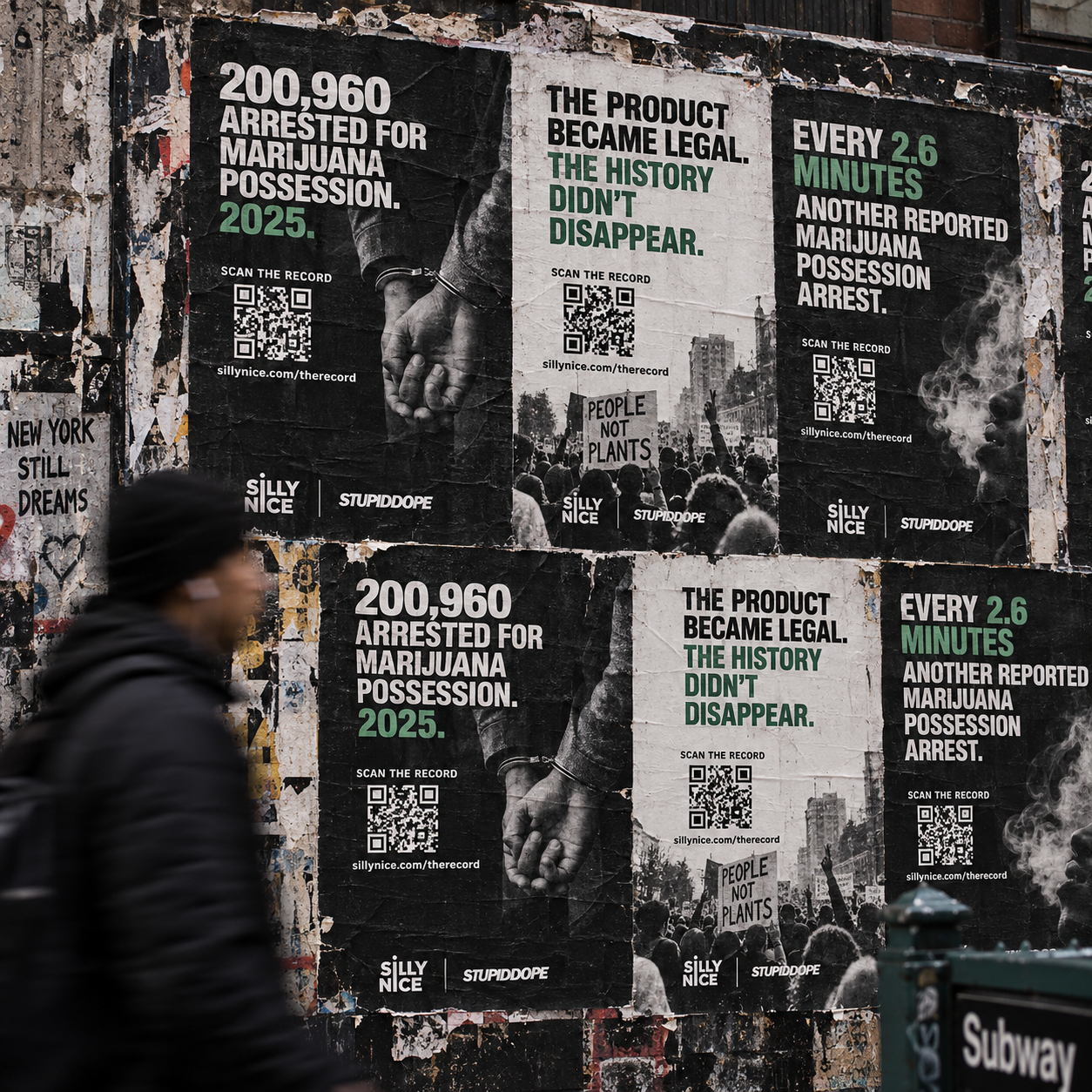
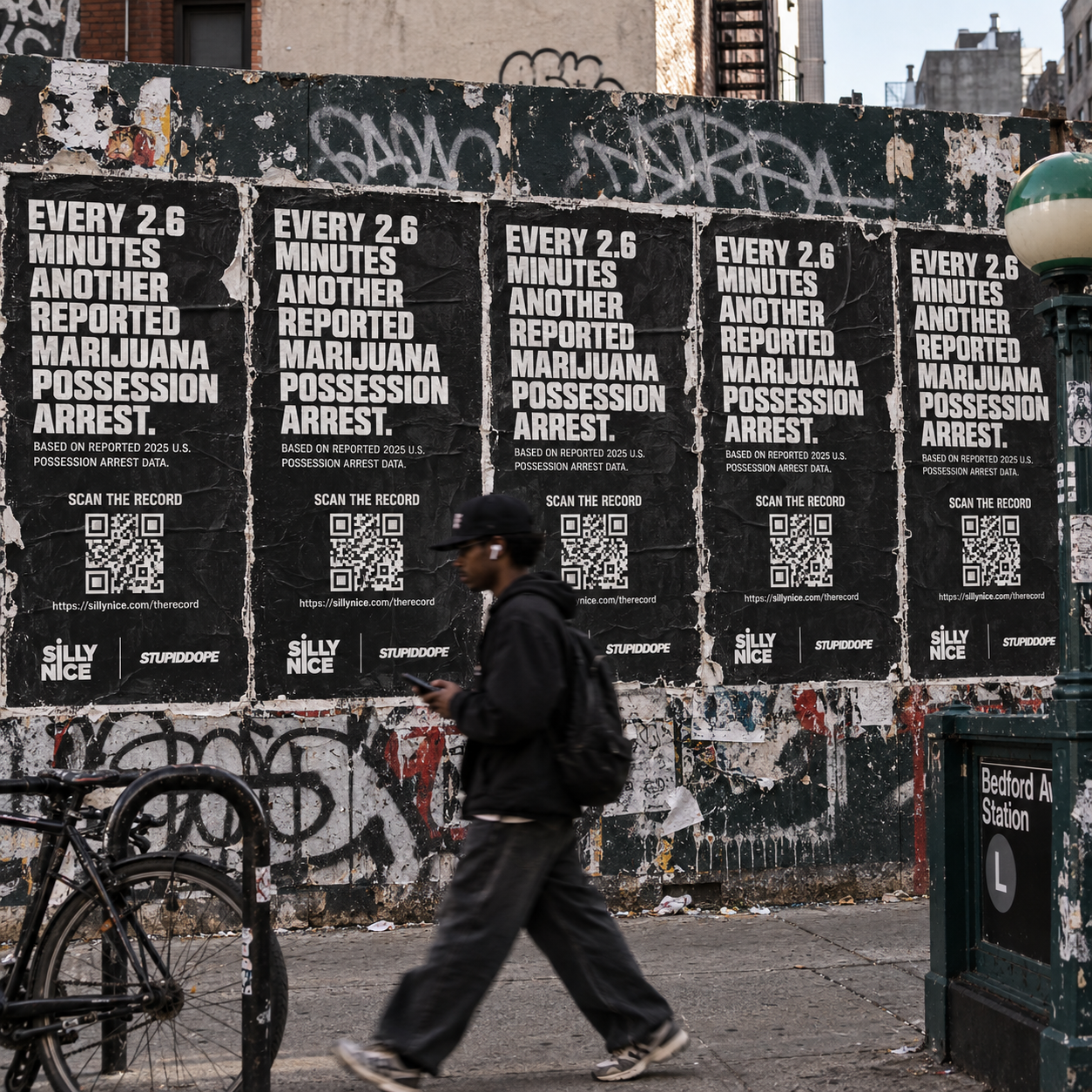
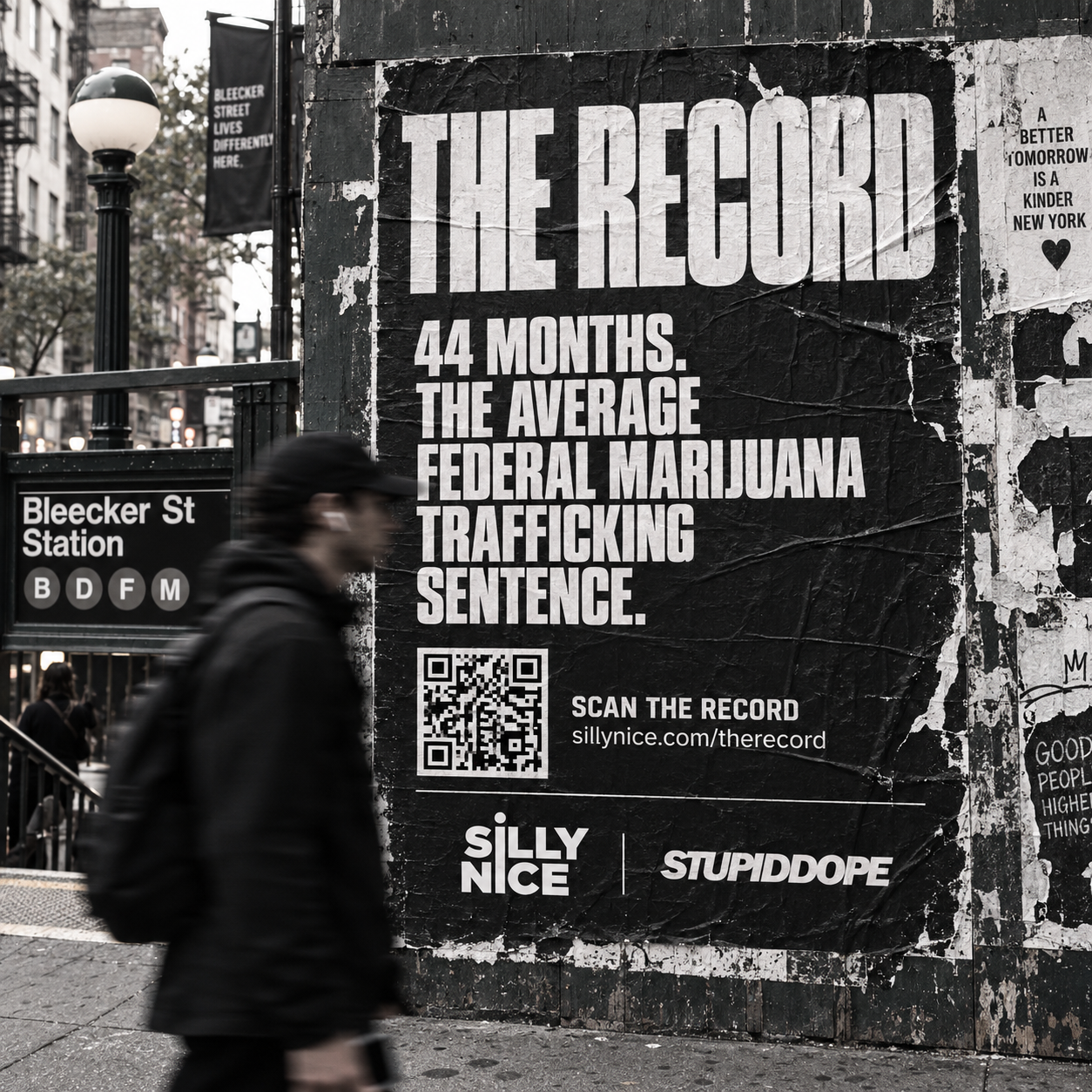
In the bustling streets of New York City, where the relentless pace of development ensures that construction hoardings are a permanent fixture of the urban landscape, a new form of cultural advocacy has taken root. These temporary wooden walls, traditionally plastered with advertisements for luxury fashion brands and upcoming concerts, have evolved into high-impact public galleries. At the forefront of this transformation is THE RECORD, a cannabis justice editorial initiative published by Silly Nice, a prominent New York cannabis brand, and stupidDOPE, an independent culture and lifestyle publication founded in 2008. Through the strategic use of street-level wheatpaste posters, THE RECORD is forcing pedestrians to confront staggering statistics about cannabis enforcement in the United States. The visual impact is undeniable, but it is the data that truly stops people in their tracks. According to recent calculations based on federal data, there is one reported marijuana possession arrest every 2.6 minutes in the United States. This specific metric, calculated from the 200,960 reported marijuana possession arrests in 2025 divided across the minutes in a year, serves as the anchor for a campaign designed to highlight the stark contrast between the booming legal cannabis industry and the ongoing criminalization of individuals in prohibition states. By transforming construction fences into educational platforms, THE RECORD is not merely decorating the city; it is demanding accountability and sparking crucial conversations about justice, equity, and the human cost of outdated drug policies.
The initiative leverages the raw, visceral medium of wheatpaste to bypass traditional media gatekeepers and deliver verified, unvarnished facts directly to the public. In an era where misinformation proliferates online, the physical presence of these posters—stark, black-and-white, and meticulously researched—commands a different kind of attention. The campaign's reliance on exact, verified statistics ensures that its message cannot be easily dismissed as mere advocacy rhetoric. When a commuter walking past a construction site in Manhattan reads that there is one reported marijuana possession arrest every 2.6 minutes, the abstract concept of the war on drugs suddenly becomes a tangible, ongoing reality. This approach represents a sophisticated evolution of street art, merging the rebellious spirit of graffiti with the rigorous standards of investigative journalism. As we delve deeper into the numbers presented on these hoardings, a complex and deeply troubling picture of American law enforcement emerges, one that challenges the narrative of widespread cannabis acceptance and exposes the deep geographical and racial fault lines that continue to define the nation's approach to marijuana.
The Current Data
To understand the gravity of the message plastered across New York's construction hoardings, one must examine the most recent verified statistics from the federal government. According to the 2025 FBI Arrest Data, published in September 2026 on the FBI Crime Data Explorer, law enforcement agencies across the country reported a staggering 200,960 reported marijuana possession arrests in 2025. When combined with the 17,192 marijuana sales/manufacturing arrests in 2025, the total reaches 218,152 total marijuana-related arrests in 2025. These figures are not estimates; they are the exact numbers compiled by the Federal Bureau of Investigation, reflecting a massive and ongoing deployment of police resources. Furthermore, these arrests accounted for approximately 23% of all drug-related arrests nationwide, meaning that nearly one in four drug arrests in the United States was for marijuana possession. This data point alone shatters the illusion that cannabis prohibition is a relic of the past.
It is also crucial to recognize the limitations of this data. The FBI notes that approximately 13% of law enforcement agencies did not submit complete data for the 2025 reporting year. Consequently, the actual totals are likely even higher than the reported 218,152 arrests. The sheer volume of these arrests, occurring in a year when nearly half the country has legalized the substance for adult use, highlights a profound disconnect between state and federal policies. The data, meticulously analyzed by organizations like NORML, reveals that the machinery of prohibition remains fully operational in large swaths of the country. The posters created by THE RECORD do not round these numbers or use generic phrases like 'hundreds of thousands'; they present the exact figure of 200,960 reported marijuana possession arrests in 2025 to emphasize the precision and scale of the ongoing enforcement. This commitment to journalistic accuracy elevates the street campaign from a simple protest to a vital public information service, forcing society to confront the empirical reality of its legal systems.
The distinction between possession and trafficking is also starkly illuminated by the current data. With 200,960 arrests for possession compared to just 17,192 for sales and manufacturing, it is evident that the overwhelming majority of law enforcement efforts are directed at consumers rather than large-scale distributors. This disproportionate focus on low-level possession has profound implications for the criminal justice system, clogging courts and burdening individuals with criminal records for behavior that is entirely legal in neighboring jurisdictions. The FBI Crime Data Explorer serves as the definitive source for these figures, providing a sobering baseline for any discussion about cannabis reform in the United States.
Historical Context
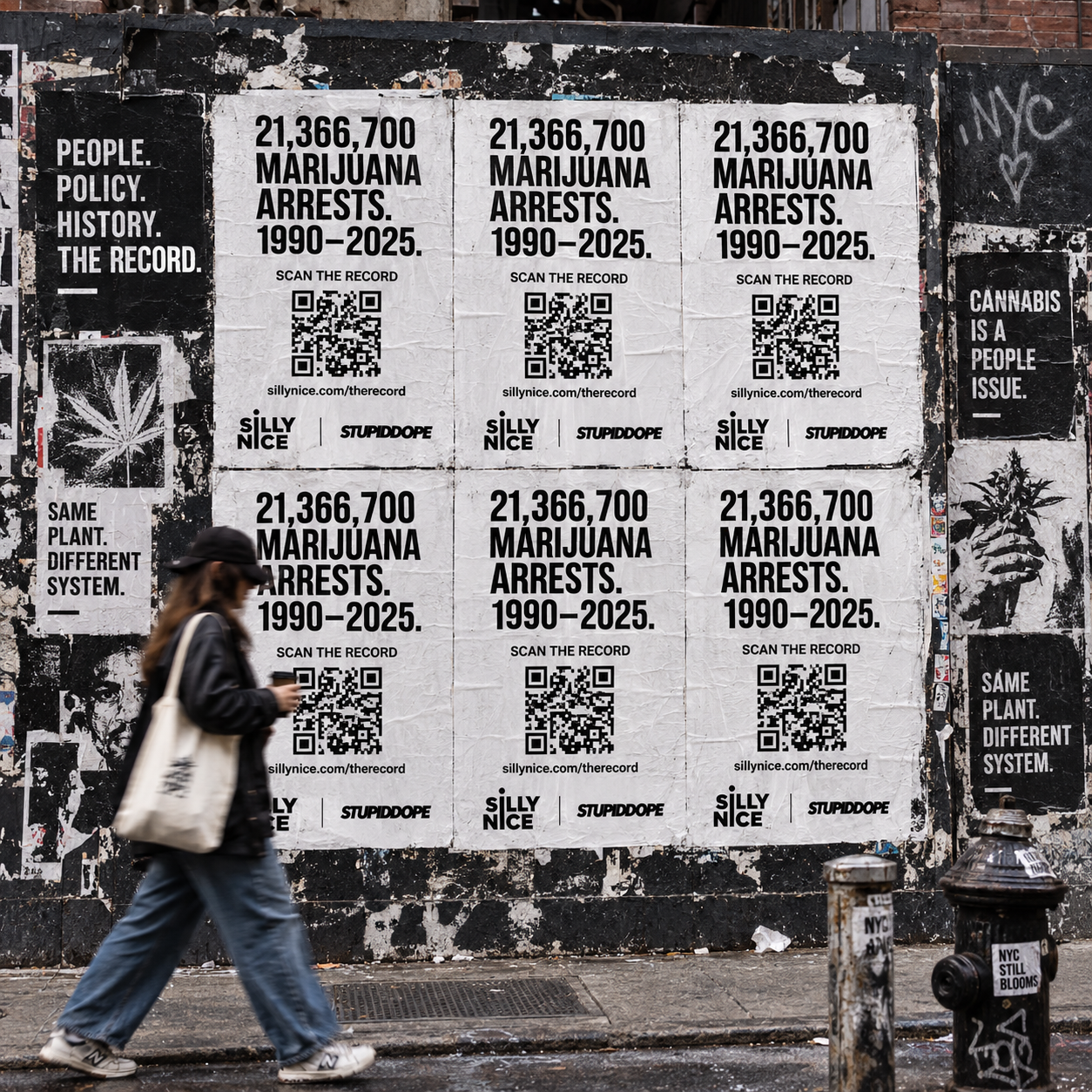
The current arrest figures, while alarming, must be viewed through the lens of historical enforcement to fully grasp the magnitude of the war on marijuana. A comprehensive compilation of FBI Uniform Crime Reporting (UCR) data by NORML reveals a staggering 21,366,700 cumulative marijuana-related arrests from 1990 to 2025. This multi-decade campaign of criminalization has touched millions of lives, shaping communities and defining generations of law enforcement policy. Breaking down the data by decade provides a clear picture of how enforcement escalated and eventually began to recede. Between 1990 and 1999, there were 5,132,304 arrests. The following decade, from 2000 to 2009, marked the highest period on record, with 7,877,165 arrests. The era from 2010 to 2019 saw 6,921,146 arrests, with the peak year occurring in 2007, which alone accounted for 872,721 arrests.
The landscape began to shift significantly in 2012, when Colorado and Washington became the first states to legalize recreational cannabis. This watershed moment initiated a wave of state-level reforms that slowly began to chip away at the national arrest totals. From 2020 to 2025, the number of arrests declined to 1,436,085, a direct result of widespread state legalization. New York, the very city where THE RECORD's posters now hang, legalized adult-use cannabis via the Marijuana Regulation and Taxation Act (MRTA) in 2021. This legislative victory transformed New York from a global epicenter of marijuana arrests into a legal market, though the legacy of its aggressive enforcement past remains a central theme of the current advocacy efforts. The historical context provided by the NORML compilation of FBI UCR data is essential for understanding that the 218,152 total marijuana-related arrests in 2025 are not an anomaly, but rather the tail end of a massive, decades-long law enforcement initiative that has systematically targeted cannabis consumers.
Understanding this history is critical for interpreting the messages on the construction hoardings. The posters do not just represent a single year of data; they stand as a testament to the 21,366,700 cumulative marijuana-related arrests from 1990 to 2025. They remind the public that while progress has been made, the machinery of prohibition was built over decades and requires sustained, systemic effort to dismantle completely. The historical data underscores the urgency of the current reform movement and highlights the deep-seated institutional inertia that continues to drive arrests in states that have not yet embraced legalization.
What the Numbers Mean
Interpreting the 2025 arrest data requires a granular look at the geography of enforcement, which reveals a deeply fractured nation where justice is largely determined by state borders. According to the NORML compilation of 2025 data, Texas alone accounted for approximately 14% of the national total, with over 29,000 marijuana-related arrests, equating to one arrest every 18 minutes in that state alone. The concentration of enforcement is further highlighted by the fact that just five states reported more than 11,000 possession arrests each: Texas, Georgia (11,238), North Carolina (11,830), Tennessee (11,194), and Wisconsin (11,470). In stark contrast, five legal states reported fewer than 100 arrests: Alaska (92), Maine (96), Montana (35), Rhode Island (99), and Vermont (16). This massive disparity illustrates that the risk of arrest for cannabis possession is no longer a universal American experience, but a highly localized threat.
The data further reveals that just 10 states accounted for approximately 60% of all marijuana arrests nationwide: Texas, North Carolina, Wisconsin, Georgia, Tennessee, Pennsylvania, South Carolina, Indiana, Louisiana, and Alabama. Even more striking, in six states—Louisiana, Idaho, Iowa, Wisconsin, Nebraska, and Kansas—more than 50% of all drug arrests were specifically for marijuana, according to NORML's September 2026 analysis. The Marijuana Policy Project's 2026 Cannabis Arrest Report provides additional clarity, noting that prohibition states made 8 times more cannabis arrests than legalization states in 2025 (186,581 versus 22,357). The impact of legalization is undeniable: legalization states made 219,456 fewer arrests in 2025 than the year before each legalized, representing an average drop in cannabis arrest rates of 85.53%. Specifically, possession arrests fell 84.61% after legalization, and sales arrests fell 80.39%.
These numbers capture the profound effectiveness of state-level legalization in reducing police interactions for cannabis offenses. The MPP report confirms that cannabis arrests dropped in EVERY state after legalization, and the 20 states with the lowest cannabis arrest rates are all legalization states. However, the data also excludes the hidden costs of these arrests, such as the long-term impact on employment, housing, and family stability. While the reported totals provide a crucial metric for law enforcement activity, they only scratch the surface of the systemic disruption caused by prohibition. The numbers mean that while legalization works to reduce arrests, millions of Americans remain vulnerable to a postcode lottery where crossing a state line can mean the difference between a legal purchase and a criminal record.
The Human Impact
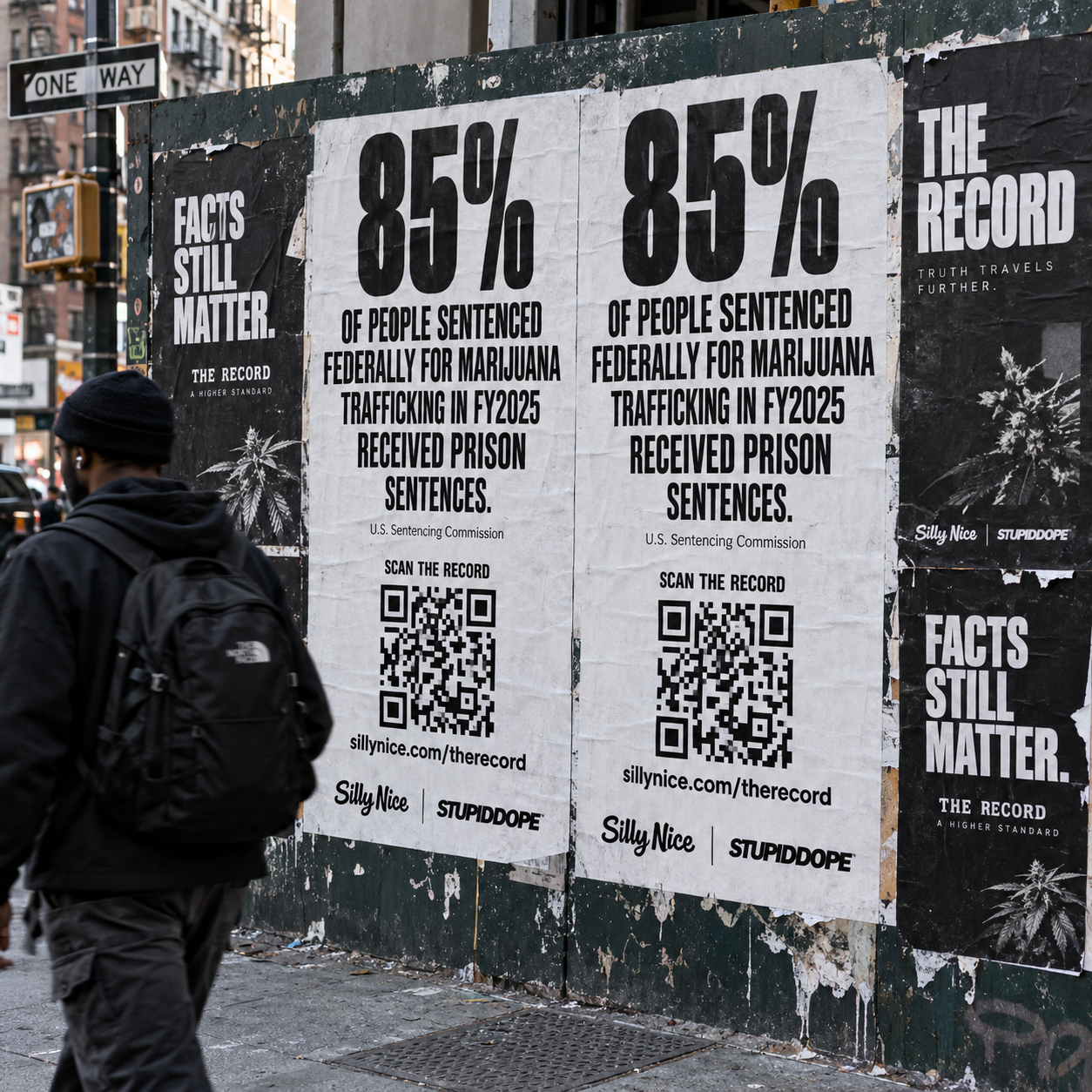
Beyond the sheer volume of arrests lies the severe human impact of federal sentencing and the glaring racial disparities that continue to plague cannabis enforcement. According to the U.S. Sentencing Commission's FY2025 data, 389 individuals were sentenced for marijuana offenses under USSG Chapter Two, Part D. The consequences for these individuals were severe, with 85% receiving prison sentences. The average federal marijuana trafficking sentence in FY2025 was a staggering 44 months. This data point is prominently featured on THE RECORD's vertical street posters, forcing the public to confront the reality that federal courts are still handing down multi-year prison terms for a substance that is legally sold in storefronts across New York City. The demographics of those sentenced further expose the inequities of the system: 88% were men, 42% were Black, 30% were Hispanic, 15% were White, and 12% were classified as other.
To understand the depth of this racial disparity, one must compare these sentencing figures to the broader U.S. population. According to the U.S. Census Bureau's 2023 data, Black Americans make up approximately 13.6% of the U.S. population, yet they accounted for 42% of federal marijuana sentences, making them 3.1 times over-represented in federal marijuana incarcerations. Hispanic Americans, who comprise approximately 19.5% of the population, accounted for 30% of the sentences, representing a 1.5 times over-representation. Conversely, White (non-Hispanic) Americans make up approximately 58.4% of the population but only 15% of the sentences, meaning they are 0.3 times under-represented. These verified statistics confirm that the burden of federal cannabis prohibition falls disproportionately on communities of color.
Furthermore, the USSC data reveals that 80% of those sentenced were U.S. citizens, and 64% had little or no prior criminal history. The top districts for these federal sentences were the Western District of Texas (43 cases), the Southern District of Texas (38 cases), and the Eastern District of Virginia (27 cases). While it is true that marijuana trafficking cases have declined 62% since FY2021 (dropping from 995 to 383 cases), the fact remains that hundreds of individuals, mostly men of color with minimal criminal backgrounds, are losing years of their lives to federal prison for marijuana offenses. The human impact is not an abstract concept; it is measured in the 44 months of average federal prison time and the devastating disruption to families and communities.
What Has Changed
Despite the grim statistics emanating from prohibition states and federal courts, significant legal and policy shifts have transformed the landscape in recent years. As of March 2026, according to the Congressional Research Service and NORML, 24 states, the District of Columbia, Guam, and the Northern Mariana Islands have legalized recreational cannabis. Furthermore, 40 states, D.C., Puerto Rico, Guam, and the U.S. Virgin Islands have enacted comprehensive medical cannabis laws. This legalization wave has not only drastically reduced arrest rates but has also prompted unprecedented efforts to repair the harms of past enforcement. In New York, the passage of the Marijuana Regulation and Taxation Act (MRTA) in 2021 triggered a massive automatic expungement process. According to the NY Office of Cannabis Management and NY Courts, over 400,000 cannabis-related records have been identified for expungement. While the initial figure was estimated at approximately 300,000, by 2026, the verified total exceeded 400,000.
It is vital to distinguish between expungement and sealing. Under New York law (CPL 1.20(45)), expungement means the arrest, court case, and conviction are treated as if they never happened, and these records do not appear on background checks. This is legally distinct from sealing, where records still exist but access is restricted. This sweeping reform allows hundreds of thousands of New Yorkers to pursue employment, housing, and education without the stigma of a past cannabis conviction. On a national level, organizations like the Last Prisoner Project (LPP) have made measurable impacts. In 2025, LPP reported that their clemency and release programs have saved over 400 years of potential prison time, cleared more than 250,000 offenses, and distributed $3.8 million in direct support to those impacted by cannabis criminalization.
These changes represent a monumental shift in how society addresses cannabis use, moving from a model of strict criminalization to one of regulation and restorative justice. The fact that 400,000+ cannabis-related records were identified for expungement in New York alone demonstrates the sheer scale of the previous enforcement apparatus and the massive administrative effort required to undo its damage. While the posters on the construction hoardings highlight the ongoing arrests, they also exist in a city that has taken concrete steps to rectify its past, serving as a complex reminder of both the progress made and the long road ahead for the rest of the country.
What Remains Unresolved
While state-level reforms have been historic, massive systemic issues remain unresolved, chief among them the federal status of cannabis. According to the Congressional Research Service (IF12270, updated March 10, 2026), cannabis remains a Schedule I controlled substance under the federal Controlled Substances Act (21 U.S.C. §§801 et seq.). This classification dictates that the federal government views cannabis as having a high potential for abuse, no currently accepted medical use, and a lack of accepted safety for use under medical supervision. The policy gap between this federal classification and the reality of state legalization creates a chaotic legal environment, hindering research, banking, and interstate commerce, while allowing federal prosecutions to continue.
Another critical unresolved issue is the intersection of cannabis prohibition and the American supervision system. According to the REFORM Alliance's 2025 data, there are nearly 3.7 million people on probation or parole in the United States. This supervision system is the largest feeder of people INTO prison, primarily for technical violations rather than new crimes. Technical violations can include missing a meeting, being unable to pay fees, or visiting a loved one without approval—and crucially, failing a drug test for cannabis in a state where it remains prohibited. REFORM helped pass legislation impacting over 188,000 people in 2025, and notes that 72% of Americans support modernizing probation and parole. Key victories include the NY Less is More Act (2021) and various state bills through 2026, with the federal Safer Supervision Act advancing in Congress in 2025. However, until cannabis is federally descheduled, it will remain a tripwire for millions under supervision.
Finally, the financial burden of enforcement remains a staggering unresolved issue. The most recent comprehensive estimate by the ACLU in 2013 calculated that $3.6 billion per year is spent on cannabis prohibition enforcement. While this figure predates widespread legalization and may not reflect current costs, the fact that 218,152 total marijuana-related arrests occurred in 2025 guarantees that hundreds of millions, if not billions, of taxpayer dollars are still being expended to arrest, prosecute, and incarcerate individuals for cannabis. The states with no medical cannabis access whatsoever—Idaho, Kansas, and American Samoa—continue to bear the full brunt of these enforcement costs, leaving a fractured nation where justice is entirely dependent on geography.
Conclusion
The transformation of New York City's construction hoardings into galleries of verified data by THE RECORD is a powerful testament to the enduring need for cannabis justice. By confronting the public with exact figures—such as the 200,960 reported marijuana possession arrests in 2025 and the 44 months average federal marijuana trafficking sentence—the campaign strips away the complacency that often accompanies state-level legalization. The data proves that while progress is undeniable, with 24 states legalizing recreational use and New York expunging over 400,000 records, the war on marijuana is far from over.
As long as cannabis remains a Schedule I substance and states like Texas continue to arrest tens of thousands of individuals annually, the work of advocates and journalists remains vital. The stark black-and-white wheatpaste posters serve as a necessary disruption, demanding that we acknowledge the 218,152 total marijuana-related arrests in 2025 and the profound racial disparities that define federal sentencing. For more information on this ongoing cultural advocacy and to explore the data further, readers are encouraged to visit THE RECORD at https://sillynice.com/therecord.
Topics