The Legislative Victory and the Bureaucratic Wall
When landmark adult-use cannabis legislation passes through state legislatures, the celebration is immediate. Bill sponsors step up to podiums, policy architects declare the end of an era of racially disproportionate enforcement, and public discourse quickly pivots to tax revenues, commercial licensing, and craft retail. Yet behind the celebratory headlines lies a sobering administrative reality: passing a statute that decriminalizes or legalizes cannabis requires a simple roll-call vote, but expunging hundreds of thousands of historical arrest and conviction records requires confronting decades of entrenched institutional inertia.
For the millions of individuals who carry past cannabis convictions, the persistence of these records functions as a modern civic barrier. A paper trail from a minor misdemeanor decades ago remains visible on background checks, barring qualified workers from employment, disqualifying families from public housing, blocking educational loans, and restricting professional licensure. An investigative analysis conducted by academic researchers found that among the 39 states and Washington D.C. that had decriminalized or legalized cannabis by 2022, 36 permitted some form of record expungement relief, but four states completely prohibited expunging existing convictions, illustrating the fractured geography of post-prohibition justice.
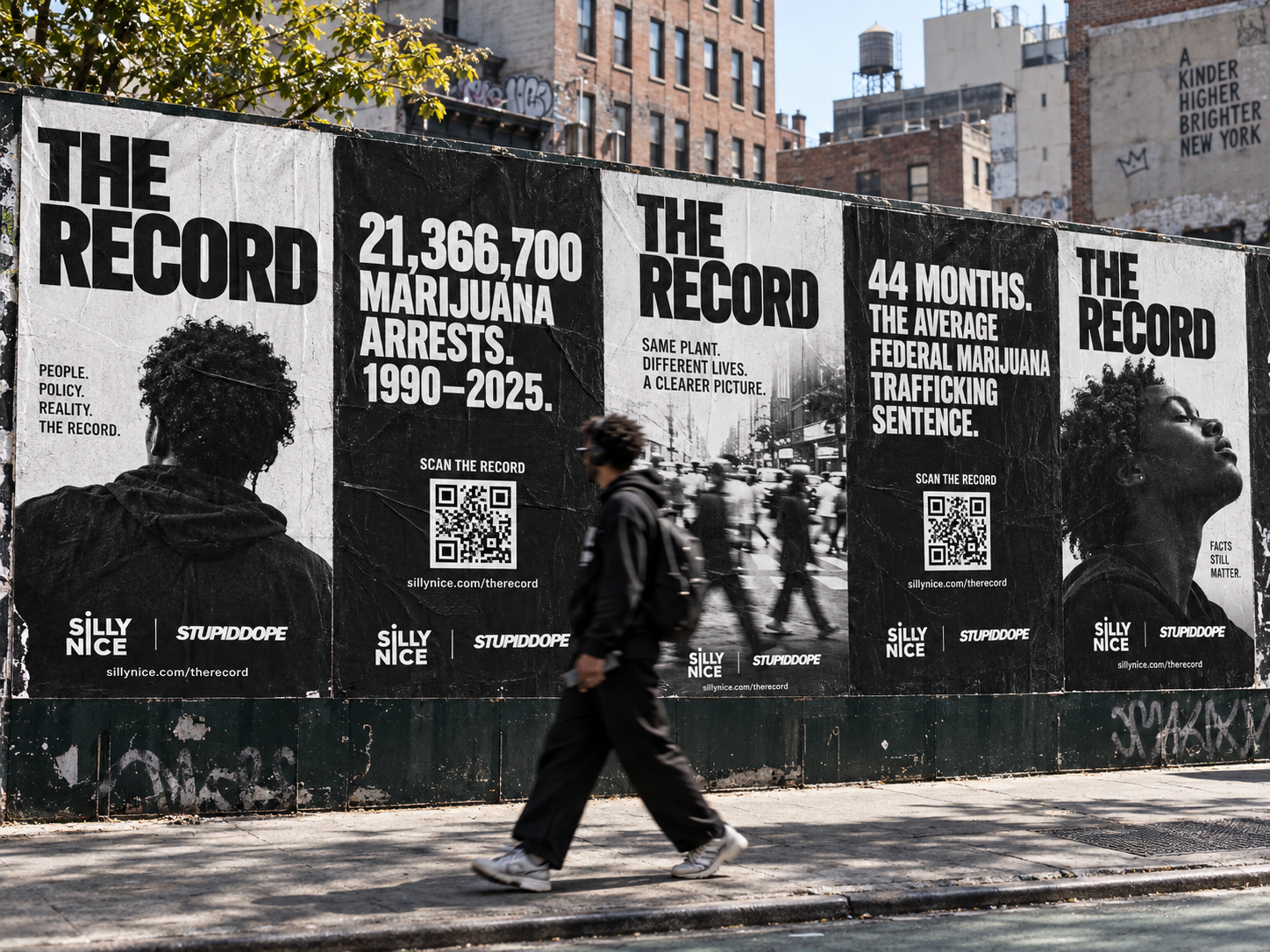
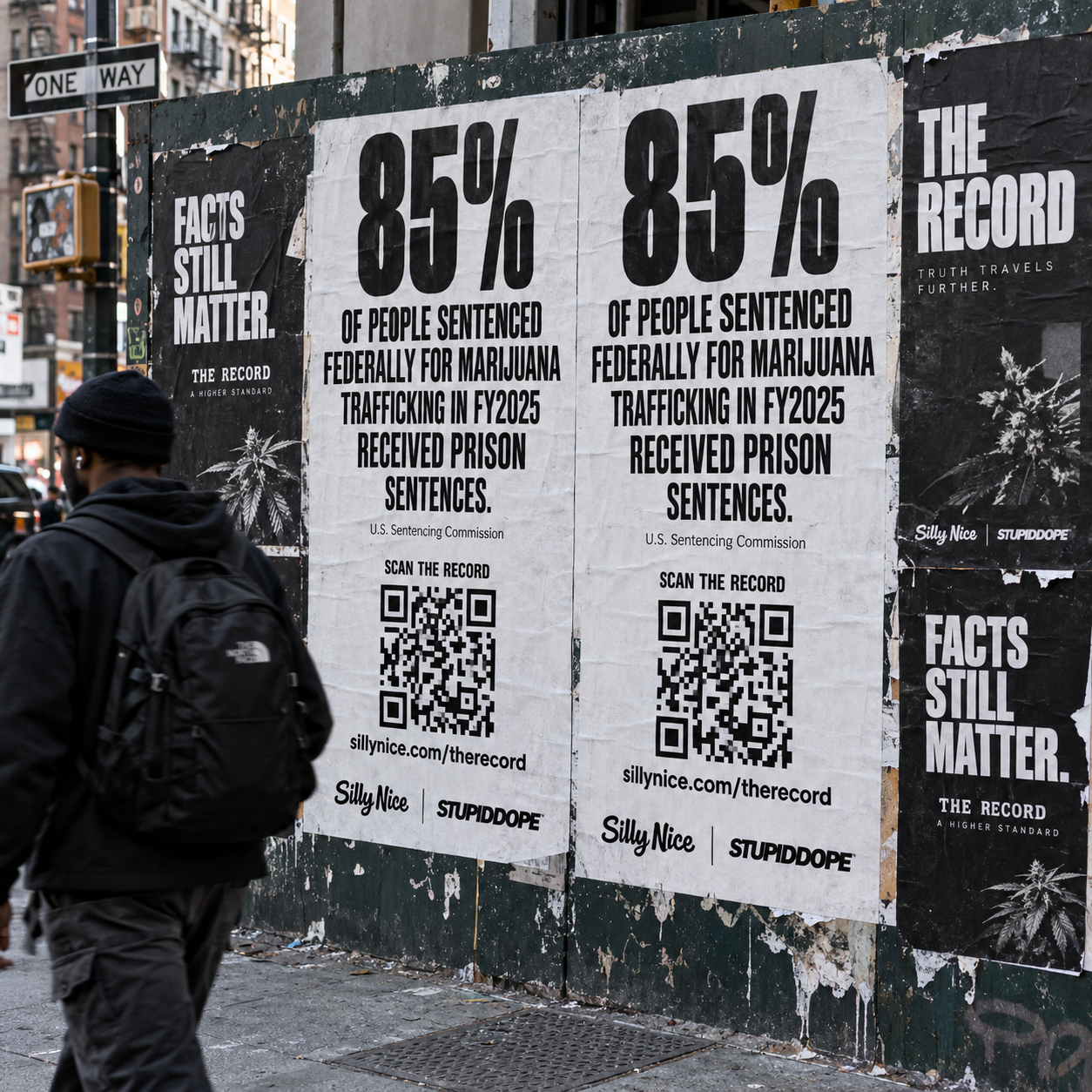
The gap between statutory intent and systemic execution is precisely why initiatives like THE RECORD—an educational justice platform created by New York cannabis brand Silly Nice in partnership with independent culture publication stupidDOPE—have taken this fight beyond policy chambers and directly to the pavement. Through data-driven analysis and street campaigns utilizing stark black-and-white wheatpaste posters and direct public education, the mission is to illuminate the friction between the promise of legalization and the reality of court-ordered relief.
The Divide: Petition-Based Systems vs. Automatic Expungement
Across the national landscape, states have pursued two starkly different philosophies for clearing criminal histories: petition-based expungement and automatic (or statutory) expungement. The divergence between these two approaches often dictates whether restorative justice reaches tens of thousands of citizens or remains a privilege reserved for those with the resources to navigate legal labyrinths.
The Failure of the Petition Model
The traditional framework requires an individual to formally petition the court that originally adjudicated their case. Under this model, the entire burden of proof, administrative legwork, and financial cost falls squarely on the person who was harmed by prohibition. In Maryland, for instance, self-represented litigants navigating the petition process must secure records, fill out court pleadings, file in specific jurisdictions, potentially submit General Waiver and Release documents, and pay administrative fees alongside statutory waiting periods.
National surveys on criminal record remedies demonstrate that petition-based systems are hobbled by complex barriers. Researchers examining system barriers across state court systems identified six resonant institutional hurdles: personal knowledge gaps, opaque procedural steps, disjointed agency notifications, confusing statutory conditions, inadequate court self-help centers, and an overarching lack of public awareness.
When clearing a record demands an attorney, hundreds of dollars in filing fees, time off work to visit county clerks, and an understanding of multi-tiered penal codes, uptake rates plummet. Nationally, empirical studies of petition-based clean slate policies show that fewer than 10 percent of eligible individuals successfully navigate the process from petition to an expunged record. The system quietly transforms an act of legislative mercy into a cruel administrative tax.
The Promise of Automatic Relief
Recognizing the inherent inequity of the petition method, forward-looking legislatures turned to automatic expungement—mandating that state agencies, courts, and law enforcement bureaus clear or seal qualifying records without requiring any affirmative action from affected citizens. State-level analyses show states like California, Illinois, New Jersey, and New York adopted sweeping automatic relief mandates within their legal frameworks.
The economic dividends of automatic record clearing are tangible. Econometric research published in 2026 assessing labor market impacts discovered an immediate 'expungement dividend,' demonstrating statistically significant gains in average monthly earnings for Black workers following automatic record sealing compared to states relying exclusively on petition mechanisms or legalization alone.
The Technological Abyss: Why Automation Stalls
While automatic expungement represents the policy gold standard, execution has routinely run into the wall of municipal data infrastructure. Criminal justice records in the United States do not live on a single, clean database. Instead, they are splintered across a chaotic constellation of municipal court software, county clerk filing cabinets, state police repositories, Department of Corrections silos, and municipal police precinct blotters.
Many local court jurisdictions operate on computer mainframes and record software dating back to the late 1980s or 1990s. When a legislative mandate commands that convictions for possession below a specific weight threshold must be expunged, court IT departments frequently discover that historical docket entries never recorded exact quantities. Charges were historically coded simply under a broad statutory penal section, requiring manual case file reviews by court staff rather than automated digital queries.
In California, where voters passed Proposition 64 in 2016 and subsequent legislation mandated automatic clearance by state agencies, tens of thousands of records remained unprocessed years past deadlines due to backlogs, fractured local databases, and district attorney staffing shortages. This pattern repeated in state after state: the legislature writes an algorithm, but the judicial branch operates on analog bureaucracy.
The New York Experience: The MRTA and the Reality of Sealing
New York’s passage of the Marihuana Regulation and Taxation Act (MRTA) in March 2021 was widely heralded as the gold standard of social and economic equity in cannabis policy. Designed explicitly to repair the damage wrought by decades of disproportionate policing in Black and Brown communities, the law mandated the automatic expungement of past convictions for activities that the MRTA legalized—specifically personal possession up to 16 ounces or sales up to 25 grams.
Under the statute, hundreds of thousands of past cannabis convictions were designated for automatic relief, shielded from background checks and removed from state databases maintained by the New York State Division of Criminal Justice Services (DCJS) and the Office of Court Administration (OCA). To the general public, it appeared the page had been cleanly turned.
The Legal Distinction Between Sealing and Erasure
However, legal practitioners and bar associations quickly highlighted critical nuances. Prior to initial criminal justice reforms in 2019, true expungement did not exist under New York state law; courts traditionally sealed records rather than completely incinerating or permanently deleting the physical case documentation. As legal experts noted through the New York State Bar Association, while the state system can mark a file expunged, certified court transcripts, microfilm archives, and police blotters frequently remain in decentralized basements.
Legal aid organizations, including The Legal Aid Society of New York, frequently advise affected residents that while state expungement is automatic and requires no court filing, verifying clean records often demands requesting an official Certificate of Disposition or submitting a formal Seal Verification request to the Division of Criminal Justice Services. Without verified confirmation, individuals routinely run into commercial third-party background check companies that have scraped and cached outdated conviction dockets years earlier.
The Invisible Ghost: Private Data Brokers and Background Check Giants
Even when a state court successfully seals an internal record, the citizen’s journey is rarely complete. In the contemporary digital economy, public criminal records are harvested daily by private data brokers, risk-assessment vendors, and national background-check aggregators. When a state court marks an entry expunged, that decree has no automatic technical pipeline into the private servers of commercial screening firms.
An individual applying for an apartment in Queens or an engineering job in Manhattan may pass a state-level check, only to be rejected when a third-party tenant screening tool retrieves an un-expunged, cached arrest record from an independent web registry. Holding these private aggregators accountable under consumer protection statues like the Fair Credit Reporting Act (FCRA) requires vigilance that few working-class individuals have the time or legal expertise to enforce.
Public Education as a Form of Restorative Justice
Because institutional barriers remain so steep, the work of restorative justice cannot reside solely within legislative chambers and county courts. It requires direct, localized intervention. This imperative drove Silly Nice and stupidDOPE to launch THE RECORD, bridging the chasm between dense penal law statutes and street-level reality across New York's boroughs.
By posting verified government data, court procedures, and actionable statutory guidance on street-facing wheatpaste posters and accessible digital dashboards, THE RECORD cuts through the institutional fog. Knowing that an old conviction is legally expungable means nothing if the impacted person does not know the law exists, believes they cannot afford a lawyer, or doesn't know how to confirm that state agencies successfully sealed their electronic files.
The Road Forward: Redefining True Legal Relief
Cannabis legalization is not a single finish line marked by ribbon-cutting ceremonies at legal dispensaries. It is an ongoing institutional reconciliation. Until state governments properly fund the digital modernization of their court databases, mandate regular regulatory compliance for private background check corporations, and allocate resources to public education, expungement will remain an incomplete promise.
Passing the law was the legislative opening salvo; clearing the record is the real work of justice. As New York continues to build out its legal cannabis market, holding state systems accountable to their own expungement mandates is not merely a legal housekeeping measure—it is the foundational metric of whether prohibition has truly ended.
Topics