The Accounting of an American Obsession
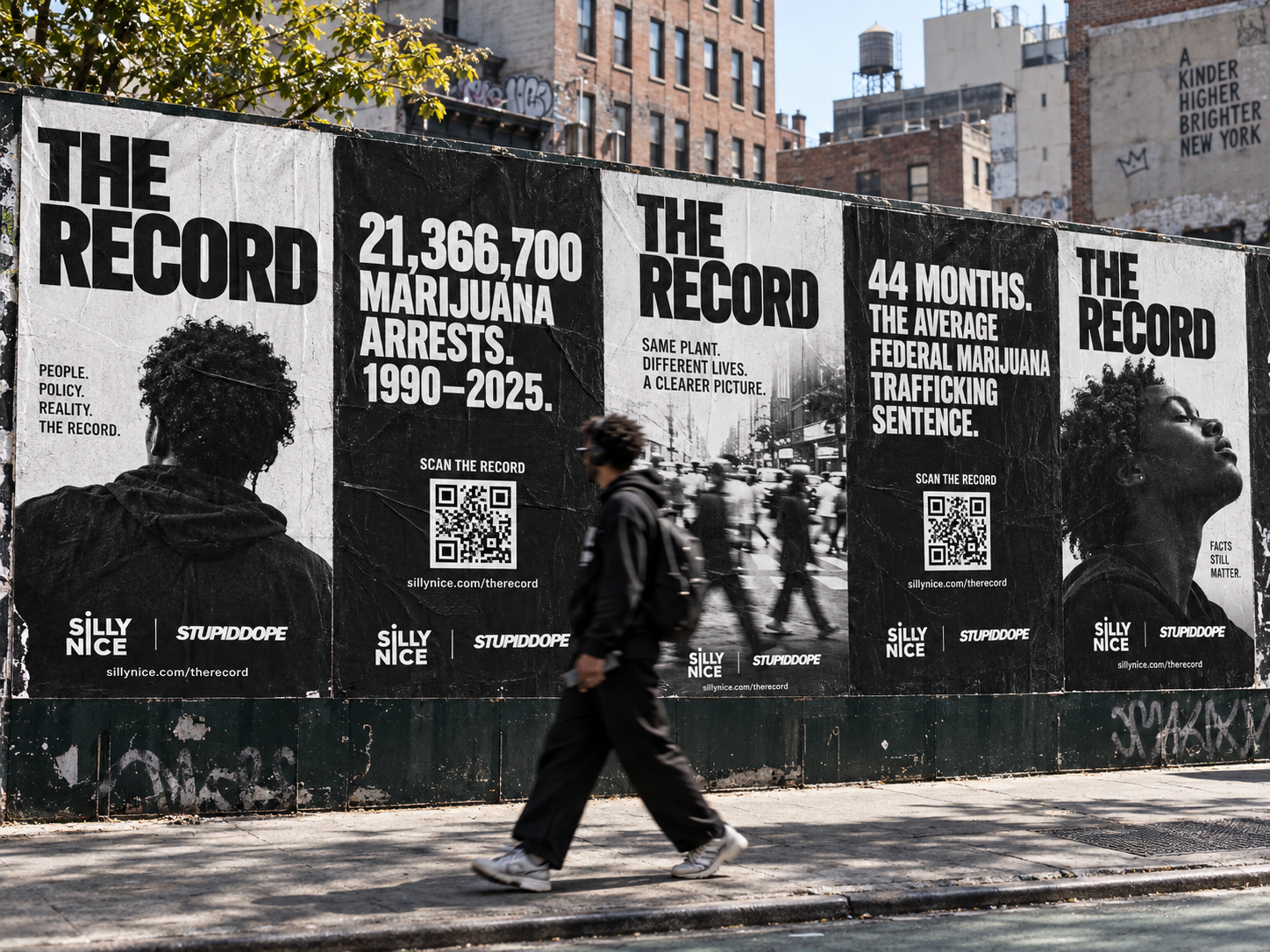
For more than three decades, criminal justice policy in the United States treated the suppression of a plant as a top public safety imperative. Between the late 1980s and the modern legalization era, American law enforcement agencies carried out approximately 21 million marijuana arrests, the vast majority involving mere possession rather than distribution or violent conduct.
While civil rights organizations and legal scholars have long documented the devastating human toll of these enforcement practices, conventional public policy debates frequently overlook the balance sheet. Prohibition was not merely a cultural campaign or a criminal justice experiment; it was one of the costliest domestic policy initiatives in modern history.
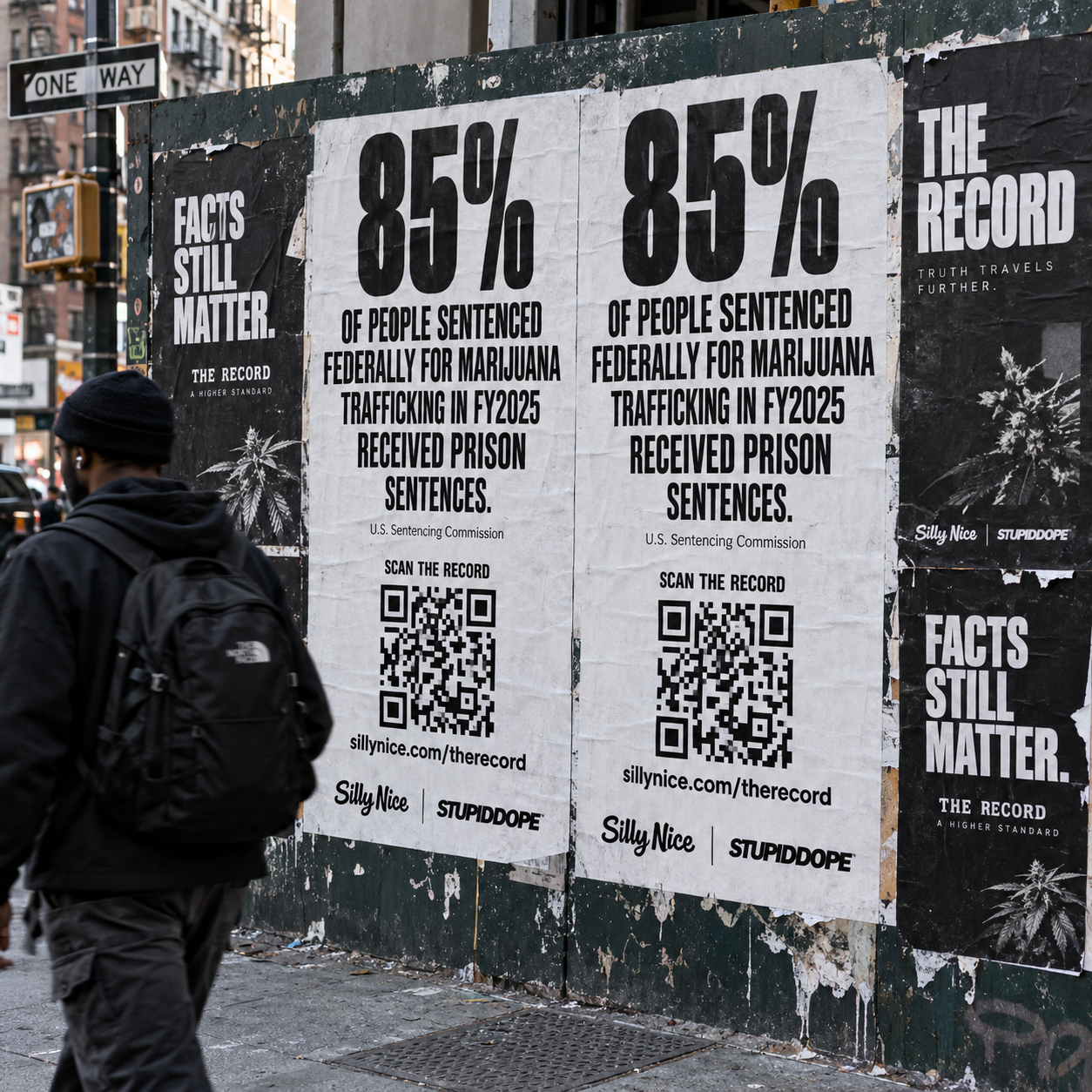
Published as part of THE RECORD—an ongoing editorial project from Silly Nice and stupidDOPE dedicated to tracking primary data on cannabis enforcement, sentencing, and restoration—this investigation calculates the fiscal burden of those 21 million arrests. Across direct budgetary expenditures for police, courts, and detention facilities, paired with systemic economic losses in productivity and missed tax revenue, the cumulative balance sheet of cannabis prohibition exceeds hundreds of billions of dollars.
Direct Enforcement: The Bill for Police, Courts, and Cells
Measuring the direct fiscal footprint of cannabis enforcement begins with frontline law enforcement operations. Academic economic modeling has consistently pegged the annual cost of enforcing cannabis possession and sales laws between $3.6 billion and nearly $8 billion per year across local, state, and federal criminal justice resources.
When an officer arrests an individual for low-level cannabis possession, municipal budgets absorb an immediate cascade of expenses: initial patrol officer dispatch hours, transport, administrative booking, property processing, and mandatory laboratory chemical analyses to verify controlled substances. In urban jurisdictions, laboratory testing and preliminary public defense and prosecution preparation costs can tally thousands of dollars per low-level charge before an indictment even clears initial docketing.
Multiplied across hundreds of thousands of arrests annually during the enforcement peak in the mid-2000s—when annual arrests climbed past 870,000 nationwide—local municipal budgets devoted significant shares of patrol shifts, docket capacities, and county jail beds exclusively to marijuana processing.
In states where extensive economic reviews were commissioned prior to statutory reform, researchers discovered that cannabis enforcement consumed vast portions of domestic drug war allocations without moving the needle on broader public safety. A landmark study published through the University of Washington demonstrated that shifting law enforcement resources away from low-level possession yielded no adverse effect on public safety metrics, while freeing public funds that had been routinely absorbed by prohibition.
Opportunity Costs and the Misallocation of Public Safety
Beyond explicit budgetaryline items sits an equally damaging economic metric: opportunity cost. Police departments possess finite labor, forensic laboratory capacity, and investigatory hours. Every hour a patrol officer spent processing a low-level cannabis misdemeanor represented an hour taken away from community policing, de-escalation, or solving violent and property crimes.
Criminological analyses of drug arrest patterns have highlighted that aggressive enforcement of nonviolent possession charges often correlates with a diversion of resources from core index crime investigations. Research examining state-level crime patterns revealed that excessive allocation of officer hours to drug arrests yielded zero deterrence against serious felony offenses and, in some models, actually coincided with diminished clearance rates for violent crimes.
In major metropolises like New York City, where the street poster campaign supporting THE RECORD is set to debut across storefronts and public spaces, the opportunity cost was particularly stark. Hundreds of thousands of stop-and-frisk stops focused entirely on low-level possession consumed immense police overtime, leaving complex public safety challenges under-resourced while disproportionately targeting communities of color.
The Collateral Toll: Suppressed Wages and Strangled Growth
The ledger becomes vastly more catastrophic when calculating the lifetime economic damage inflicted on those caught in the criminal legal apparatus. An arrest record—even absent a custodial prison sentence—erects an immediate barrier to employment, professional licensing, higher education loans, and housing security.
Comprehensive economic analyses of criminal legal penalties demonstrate that having an arrest record depresses lifetime wage earning potential by roughly 10 to 20 percent on average. Conservative macroeconomic models calculate that over five-year enforcement intervals, lifetime earnings losses from marijuana arrests exceeded $12 billion per cohort.
When extended across 21 million instances of arrest, the aggregate drag on American gross domestic product runs into hundreds of billions of dollars in lost household income. This suppression falls squarely on working-class communities and households, draining intergenerational wealth and entrenching systemic poverty.
Moreover, these individuals pay diminished state and federal income taxes over their lifetimes, reducing public revenues that could have supported infrastructure, healthcare, and education. Prohibition, in effect, systematically hollowed out its own municipal tax bases.
The Foregone Revenue: A Thirty-Five Year Windfall Missed
The counterweight to enforcement spending is the opportunity missed: the creation of a taxed, legal, and transparent commercial market. By forcing cannabis into illicit networks, state and federal governments surrendered decades of potential excise, corporate, and sales tax windfalls.
The post-2014 regulatory experience of pioneer legal states provides unambiguous proof of this foregone capital. Colorado, Washington, and later markets such as Michigan, Massachusetts, and Illinois demonstrated that adult-use cannabis markets generate massive public surpluses, frequently delivering hundreds of millions of dollars annually per state directly into school construction, local infrastructure, and drug treatment initiatives after covering all regulatory oversight costs.
Had adult-use cannabis been regulated and taxed in 1990 rather than criminalized, American states would have collected billions of dollars in excise receipts over a 35-year span. Instead, taxpayers funded the handcuffs, court dockets, and correctional cells used to suppress commerce that is now celebrated as an economic driver.
Reckoning With the Full Price Tag
When aggregating direct justice spending, secondary public sector administrative costs, lifetime earning reductions, and lost public revenues, conservative estimates place the comprehensive economic damage of 21 million marijuana arrests well north of $100 billion. The true societal figure—accounting for child welfare interventions, family destabilization, and commercial disinvestment—is undeniably higher.
As the independent lifestyle outlet stupidDOPE and mission-driven operators like New York's Silly Nice advocate through THE RECORD, reconciling with cannabis prohibition demands rigorous empirical accounting. Restorative policy cannot begin with good intentions alone; it requires understanding the profound scale of economic capital systematically extracted from citizens.
Expungement of records, targeted community reinvestment, and equitable adult-use licensing frameworks are not charitable gestures. They represent necessary economic restitution for thirty-five years of catastrophic fiscal waste.
Topics