The Collapse of the Transactional Sponsorship Engine
For the better part of two decades, corporate marketing departments operated under an unwritten pact: scale was equated with relevance. If an enterprise could buy enough programmatic banner ad space, stamp a logo across an event step-and-repeat, or pay an influencer to hold a container awkwardly toward a front-facing camera, exposure was considered guaranteed. But in the contemporary digital ecosystem, that model has suffered structural exhaustion. Consumers have developed institutional skepticism toward unearned endorsements, algorithmic feeds bury branded interruption, and programmatic impressions increasingly vanish into digital ad-fraud voids.
Academic and industry analyses have continuously charted this rupture. In marketing literature examining the evolution from follower metrics to authentic alliances, researchers have documented how audience discernment forced brands away from transactional arrangements toward deeper, value-aligned collaborations, as noted in ResearchGate's study on the evolution of influencer marketing.
The core dilemma facing chief marketing officers is no longer access to eyeball counts, but the qualitative depth of those views. Fleeting programmatic impressions possess a half-life measured in milliseconds. By contrast, a cultural campaign—one that creates genuine editorial substance, contributes to public knowledge, and inhabits physical and digital spaces with equal authenticity—constructs intellectual capital that appreciates over years.
The Highly Regulated Frontier: Cannabis as an Innovation Sandbox
Nowhere is the failure of transactional brand mechanics more glaring than in the modern legal cannabis sector. Operating under fragmented state regulations, federal prohibition under the Controlled Substances Act, and stringent digital ad blackouts across Meta, Google, and major programmatic ad networks, plant-touching businesses cannot simply execute a conventional customer acquisition playbook.
In strategic marketing analyses, such as those published by mg Magazine on emerging cannabis consumer shifts, analysts emphasize that operators must replace generic promotional interruptive ads with science-backed education, organic community storytelling, and high-trust partnerships to build enduring affinity.
When brands cannot purchase top-of-funnel algorithmic scale, they are forced to invent new ways to earn reverence. A cannabis company cannot blanket television airwaves or run indiscriminate geofenced mobile banner ads without facing strict regulatory penalties or automated shadowbans. Consequently, the cannabis sector has emerged as an involuntary innovation sandbox for corporate marketing at large, proving that editorial gravitas and cultural alignment outperform pure spend.
The Difference Between Buying Reach and Earning Resonance
A transactional sponsorship operates on leasehold terms: the brand leases temporary real estate on someone else's platform, displays an asset, and abandons the conversation the moment the billing cycle concludes. A cultural campaign operates as an equity stake: the brand funds, co-creates, and anchors a narrative that permanently enriches the intellectual or artistic discourse.
Publishers with longstanding cultural footprints have proved this dynamic repeatedly. For example, stupidDOPE, which has covered underground art, street style, technology, and emerging culture since its founding in 2008, emphasizes in its media overview how long-term editorial storytelling anchors a brand inside living culture, retaining search equity and reader respect long after traditional campaign flights sunset.
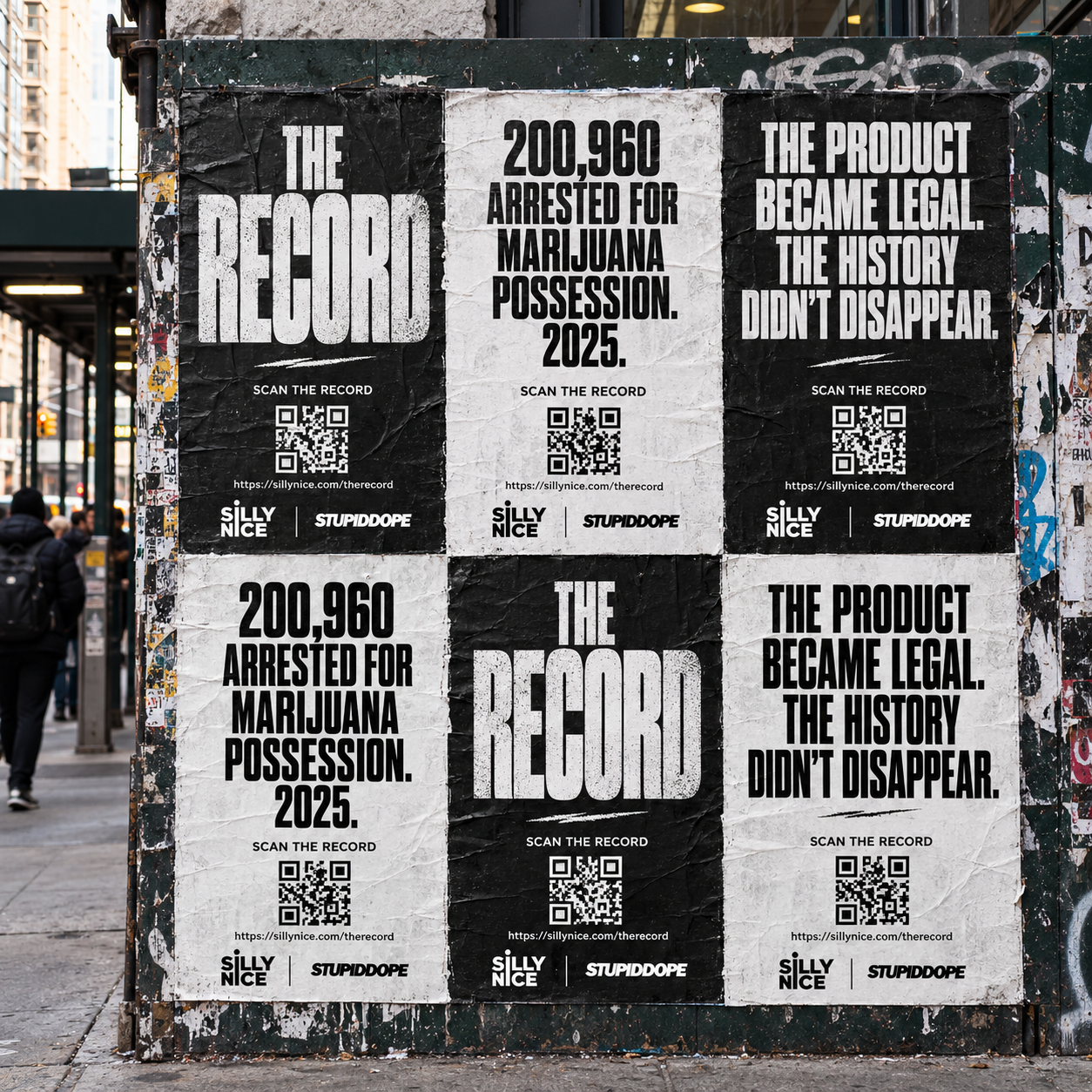
A tangible paradigm of this evolution is THE RECORD, a cannabis justice and public education editorial project formed through an unexpected yet coherent alliance between Silly Nice, an independent craft cannabis brand based in New York, and stupidDOPE. Rather than launching a conventional brand campaign aimed purely at driving dispensary foot traffic or hawking consumer packaged goods, the collaboration deliberately bypassed promotional vanity to tackle the bedrock issue of historical prohibition.
THE RECORD functions as an investigative editorial vehicle dedicated to unvarnished reporting on cannabis arrests, systemic sentencing disparities, and the realities of legal expungement. By pairing Silly Nice's lived stake in New York's nascent craft economy with stupidDOPE's independent editorial reach, the venture transcends standard sponsored content to produce lasting civil rights education.
The Street Meets the Ledger: Hybrid Physicality and Primary Data
What differentiates THE RECORD from typical corporate social responsibility (CSR) platitudes is its methodological architecture. First, the initiative bridges physical urban landscapes and digital archives. A planned New York City street poster campaign deploys high-contrast, black-and-white wheatpaste broadsheets across high-density pedestrian corridors. Each poster pairs minimalist design with scannable QR codes that instantly route passersby to rigorous, long-form investigative documentation.
Second, the project enforces a zero-tolerance policy for unsubstantiated claims. Every data point presented—whether detailing drug enforcement rates, demographic sentencing distributions, or state-level clemency backlogs—is tied directly to primary institutional repositories. These include the Federal Bureau of Investigation Uniform Crime Reporting Program, the United States Sentencing Commission, and the New York State Office of Cannabis Management.
By relying strictly on primary government and institutional sources, THE RECORD creates an untouchable evidentiary baseline. A consumer viewing the initiative does not see a brand demanding commercial patronage; they encounter an institution illuminating historical facts with unimpeachable verification.
The Strategic Criteria: What Modern Sponsors Must Evaluate
For marketing executives, agency directors, and brand stewards reviewing their partnership portfolios, the transition from transactional sponsorship to cultural relevance demands entirely different vetting metrics. Conventional media kits stuffed with vague total audience estimates and inflated impression figures are no longer adequate criteria for investment.
1. Editorial Integrity and Independence
Audiences can spot public relations puppetry immediately. A viable cultural partner must possess genuine editorial sovereignty. If a platform exists merely to publish press releases without critical scrutiny or original curation, its audience endorsement is effectively worthless. Sponsors should prioritize platforms that maintain distinct, recognizable voices and rigorous reporting criteria.
2. Organic Institutional Credibility
Credibility cannot be manufactured over a two-week sprint. When reviewing strategic media partnerships, longevity matters. Platforms like stupidDOPE, which have spent close to two decades archiving subcultures and navigating editorial shifts, provide a stable foundation that fly-by-night influencer networks cannot replicate, as outlined in stupidDOPE's analysis on cannabis market positioning.
3. The Durability of Content Assets
Marketers must calculate the residual value of their spend. A thirty-second pre-roll spot or an ephemeral social media story vanishes within hours. In contrast, thoroughly researched, search-indexed, long-form editorial reporting remains active within the global discovery infrastructure indefinitely, pulling inbound traffic through authoritative backlinks, search intent, and syndication channels over multi-year cycles.
Why Cultural Resonance Defeats Raw Impression Counts
The digital marketing industry is undergoing an undeniable reckoning. The sheer volume of programmatic impressions has become decoupled from genuine consumer intent and loyalty. Anyone with an advertising budget can buy a million impressions, but an impression does not confer belief, admiration, or cultural permission.
Cultural campaigns work because they integrate the sponsor into a conversation the audience actively desires to participate in. By investing in projects that elevate justice, document historical reality, and provide concrete utility—such as the data-driven framework built into THE RECORD—brands move from being interruptive corporate entities to legitimate patrons of culture.
In the emerging era of commercial storytelling, the winning brands will not be those that yelled the loudest across algorithmic feeds. The enduring victors will be the brands that invested in truth, supported independent editorial voices, and helped write the definitive record of their time.
Topics