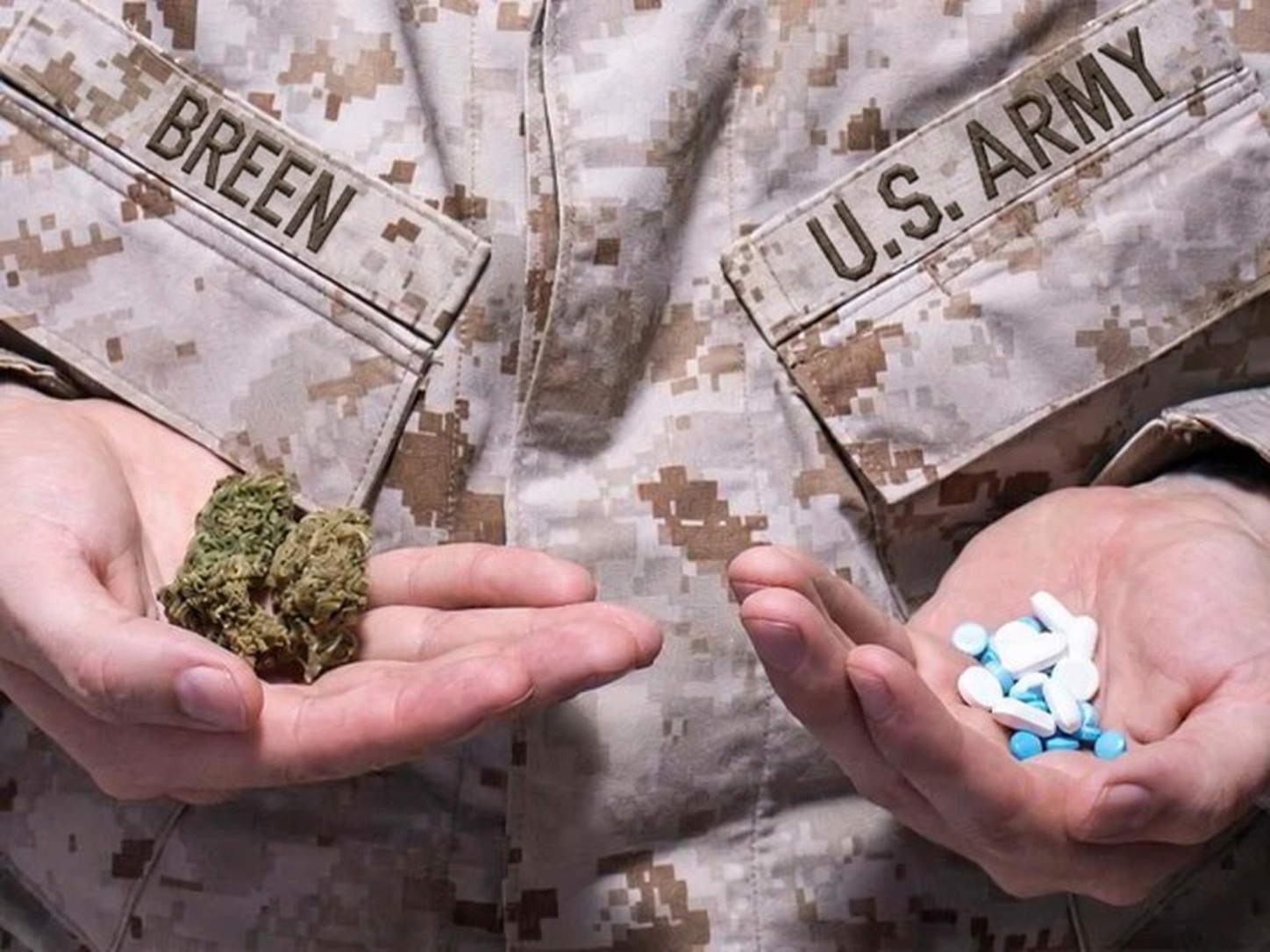
VETERANS ARE USING CANNABIS.THEY DESERVE BETTER INFORMATION.
Cannabis policy, science, veteran experiences and state laws are complicated—and they continue to change. THE FIELD MANUAL is an evidence-based educational resource created by Silly Nice, a Disabled Veteran-Owned New York cannabis company, to help veterans understand what is known, what remains uncertain, what the VA currently allows, what federal and state laws say, and where to find trustworthy information.
THE MISSION AT A GLANCE
19M+
U.S. Veterans
Served across all branches
50
States + DC
Each with different laws
110+
Sourced Citations
Peer-reviewed & official
100%
Independent
No product sales on health pages
IF YOU READ NOTHING ELSE,
READ THESE FIVE.
The five facts every veteran needs before making any decision about cannabis. Each one links to the full evidence so you can verify it yourself.
These five facts are the minimum. Cannabis policy, science, and state laws are complex and changing. Use the full Field Manual to understand the complete picture — and always discuss decisions with a qualified healthcare professional.
§ 03 — WHY YOU CAN TRUST THIS
BUILT DIFFERENT. ON PURPOSE.
Disabled Veteran-Owned
Built by Shane Breen, U.S. Army veteran & disabled veteran. Co-founder of Silly Nice, a New York cannabis company.
Independently Sourced
Every claim links to its original source — VA publications, federal agency guidance, and peer-reviewed research. No paraphrasing without linking.
No Sales Pitch on Health Pages
Zero product purchase buttons on any educational page. THE FIELD MANUAL is editorially independent from the Silly Nice product store.
Continuously Updated
State laws, federal policy, and research are reviewed on a regular schedule. Sources are re-verified for link health. Corrections are logged publicly.
STAY MISSION-READY
GET NOTIFIED WHEN
THE LAW CHANGES.
Cannabis policy shifts fast. We email only when state laws, federal policy, or research changes. No spam. No product pitches.
UNSUBSCRIBE ANYTIME · NEVER SHARED
BUILT BY A VETERAN WHO LIVED IT.

SHANE BREEN — CO-FOUNDER, SILLY NICE
Shane Breen served in the U.S. Army and is a disabled veteran. Cannabis has been part of his personal life for more than 25 years. He has personal experience with prescription opioids and cannabis.
"I'm not a doctor. I'm a disabled veteran telling you what my experience has been. I've lived with this for decades. I've been prescribed opioids, and I've used cannabis for more than 25 years. Veterans deserve honest information—including what we know, what we don't know and what the risks are—so they can make their own decisions."
LIVED EXPERIENCE — NOT MEDICAL ADVICE
One person's experience does not predict another person's outcome. This is lived experience, not medical advice. Do not start, stop, or change any treatment without discussing it with a qualified healthcare professional.
We are not here to tell veterans that cannabis works. We are here because veterans are already using cannabis, and they deserve better information about what cannabis is, what the evidence says, what the evidence does not say, what the risks are, what their rights are, how federal and state laws affect them, and where current policy stands.
THE DATA IS CLEAR.
VETERANS ARE USING CANNABIS.
Peer-reviewed research and government data document that cannabis use among U.S. veterans is not uncommon. Every statistic below includes its original source, study design, population, and limitations. Survey participants reported—clinical evidence demonstrates. These are different things.
Increasing
Cannabis use documented among veterans in VA care
Survey data from veterans receiving VA care has shown increasing rates of cannabis use over the past decade. Researchers have noted that cannabis use among veterans warrants continued monitoring and research.
SOURCE: Metrik et al., American Journal of Drug and Alcohol Abuse
YEAR: 2016 · POPULATION: Veterans in VA healthcare
METHOD: Retrospective chart review
LIMITATIONS: VA data may not represent all veterans; survey data is self-reported
Substantial Evidence
National Academies review on chronic pain
A 2017 National Academies systematic review concluded there is substantial evidence that adults treated with cannabis or cannabinoids are more likely to experience a reduction in chronic pain symptoms. This describes the review's finding—it does not establish that cannabis is a treatment for any specific pain condition.
SOURCE: National Academies of Sciences, Engineering, and Medicine
YEAR: 2017 · POPULATION: Adults (general population)
METHOD: Systematic review of 10,000+ studies
LIMITATIONS: Review of existing studies; does not establish causation for any specific condition
Ongoing
VA-supported cannabis research
The VA has conducted and continues to support research on the effects of cannabis on veterans, including studies related to PTSD. No VA-established clinical recommendation for cannabis currently exists.
SOURCE: U.S. Department of Veterans Affairs
YEAR: Ongoing · POPULATION: Veterans
METHOD: Clinical trials and observational studies
LIMITATIONS: Research is ongoing; findings have not yet produced VA clinical practice guidelines for cannabis
We never generalize a survey sample into "all veterans." Survey data tells us what survey participants reported. Clinical evidence tells us what controlled studies demonstrate. These are fundamentally different—and we distinguish them throughout this resource.
CAN I TELL MY VA DOCTOR
I USE CANNABIS?
Yes.
Using current official VA sources, here is what veterans need to know about cannabis and the VA—from benefit eligibility to property rules to clinical conversations.
Q & A · 01
Will I lose my VA benefits if I use marijuana?
No. Veterans will not be denied VA benefits because they use marijuana.
SOURCE: U.S. Department of Veterans AffairsQ & A · 02
Can my VA doctor recommend medical marijuana?
No. VA providers cannot recommend medical marijuana or complete forms for state medical marijuana programs.
SOURCE: U.S. Department of Veterans AffairsQ & A · 03
Can VA pharmacies dispense medical marijuana?
No. VA pharmacies do not dispense marijuana. VA does not pay for marijuana.
SOURCE: U.S. Department of Veterans AffairsQ & A · 04
Can I bring cannabis onto VA property?
No. Marijuana is not allowed on VA property. VA facilities are federal property, and cannabis remains a Schedule I substance under federal law.
SOURCE: U.S. Department of Veterans AffairsQ & A · 05
Should I tell my VA doctor about my cannabis use?
Yes. VA encourages veterans to discuss cannabis use with their providers for clinical purposes, including potential drug interactions and treatment planning.
SOURCE: U.S. Department of Veterans AffairsQ & A · 06
Does the VA offer help for cannabis use disorder?
Yes. VA offers treatment for substance use disorders, including support for cannabis use disorder. Veterans can ask their VA provider for help.
SOURCE: U.S. Department of Veterans AffairsSOURCE VERIFICATION
All VA policy information on this page is sourced from official U.S. Department of Veterans Affairs publications. VA cannabis policy may evolve—always confirm current policy at VA.gov.
LAST VERIFIED: SEPTEMBER 2026
PLAIN ENGLISH.
NO HYPE. NO JARGON.
Cannabis has its own vocabulary. We define it in plain English—separating industry terminology from scientifically established effects. Terpene marketing claims are not medical facts.
Cannabis
A plant genus containing hundreds of chemical compounds, including cannabinoids and terpenes. The terms "cannabis" and "marijuana" are often used interchangeably, though they can refer to different legal categories.
THC
Tetrahydrocannabinol. The primary psychoactive compound in cannabis. Responsible for the "high" associated with cannabis use.
THCA
Tetrahydrocannabinolic acid. The non-psychoactive precursor to THC found in raw cannabis. THCA converts to THC when heated (decarboxylation).
CBD
Cannabidiol. A non-intoxicating cannabinoid. The FDA has approved one CBD-based medication (Epidiolex). Unregulated CBD products vary widely in content and quality.
Terpenes
Aromatic compounds found in cannabis and many other plants. They contribute to smell and flavor. Terpene effects are an active area of research; marketing claims about specific terpene effects are not scientifically established.
Flower
The dried bud of the cannabis plant. The most traditional form of cannabis consumption. Potency varies by strain and cultivation.
Edibles
Cannabis-infused food or beverage products. Onset is delayed (30 minutes to 2 hours) and effects last longer than inhaled cannabis. Delayed onset is a common cause of accidental overconsumption.
Concentrates
Products made by extracting cannabinoids from the cannabis plant. Includes hash, rosin, live resin, distillate, and others. Typically much higher in THC potency than flower.
COA
Certificate of Analysis. A lab report showing the cannabinoid content, potency, and contaminant testing results for a cannabis product. Independent COAs are the best way to verify what is in a product.
Potency
The concentration of THC or other cannabinoids in a product, usually expressed as a percentage. Higher potency does not mean better—it means stronger effects and potentially higher risk of adverse reactions.
Tolerance
A reduced response to cannabis with repeated use. Tolerance means a person may need more cannabis to achieve the same effect. Tolerance is reversible with periods of abstinence.
Full Spectrum
A product containing multiple cannabinoids and terpenes from the cannabis plant. "Full spectrum" is a marketing term, not a scientific standard. It does not guarantee any specific medical effect.
INDUSTRY TERMINOLOGY IS DEFINED SEPARATELY FROM SCIENTIFICALLY ESTABLISHED EFFECTS. THIS IS AN EDUCATIONAL OVERVIEW—NOT A PRODUCT GUIDE.
NO SIMPLE "WORKS"
OR "DOESN'T WORK."
Every topic is organized the same way: what veterans report, what observational research has found, what randomized trials show, what systematic reviews say, what the VA says, known risks, and what remains unknown. We never collapse all evidence into a simple verdict.
Every condition page will contain: What Veterans Report · What Observational Research Has Found · What Randomized Trials Have Found · What Systematic Reviews Say · What the VA Says · Known Risks · What Remains Unknown · Questions to Ask Your Healthcare Provider · Sources.
PERSONAL EXPERIENCE IS REAL.
IT IS NOT SCIENTIFIC PROOF.
A veteran who says "cannabis helped me" is telling the truth about their experience. That truth does not establish that cannabis will help anyone else. This distinction is the foundation of everything on this site.
COLUMN 01
LIVED EXPERIENCE
What a veteran personally experienced. Real, valid, and worth hearing. But one person's outcome does not predict another's. Experience is shaped by biology, history, expectations, and circumstances that cannot be replicated.
CAN ESTABLISH: WHAT HAPPENED TO ONE PERSON
CANNOT ESTABLISH: WHAT WILL HAPPEN TO YOU
COLUMN 02
SCIENTIFIC EVIDENCE
What controlled studies demonstrate. Randomized trials, systematic reviews, and meta-analyses. Science can establish whether an effect is likely across a population—but it cannot predict any individual's outcome with certainty.
CAN ESTABLISH: POPULATION-LEVEL EFFECTS
CANNOT ESTABLISH: INDIVIDUAL CERTAINTY
COLUMN 03
WHAT WE DON'T KNOW YET
The questions science has not answered. Long-term effects, dose-response relationships, sex-based differences, interactions with common veteran medications. Uncertainty is not a weakness—it is honesty.
CAN ESTABLISH: NOTHING YET
REQUIRES: MORE RESEARCH
THIS FRAMEWORK APPEARS THROUGHOUT THE FIELD MANUAL. EVERY CLAIM IS LABELED: LIVED EXPERIENCE, OBSERVATIONAL RESEARCH, RANDOMIZED TRIAL, SYSTEMATIC REVIEW, GOVERNMENT GUIDANCE, OR UNRESOLVED.
WHAT WE WILL NEVER TELL YOU.
We will not tell you cannabis cures PTSD.
We will not tell you to stop taking prescribed medication.
We will not tell you cannabis is harmless.
We will not pretend one veteran's experience predicts another veteran's outcome.
We will not hide credible research because the findings are inconvenient.
We will not connect Silly Nice products to medical outcomes.
WHAT WE WILL ALWAYS DO
We will show you the evidence.
We will show you the limitations.
We will link to the original source.
We will correct information when better evidence becomes available.
THE QUESTIONS VETERANS
ASK MOST.
Straight answers, sourced from official VA publications, federal agency guidance, and peer-reviewed research. Every answer links to its original source.
Can I tell my VA doctor I use cannabis?
Yes. The VA encourages veterans to discuss cannabis use with their providers for clinical purposes, including potential drug interactions. Veterans will not lose VA benefits solely because they use marijuana, according to the U.S. Department of Veterans Affairs.
Does the VA pay for medical marijuana?
No. VA pharmacies do not dispense marijuana and VA does not pay for marijuana. VA providers cannot recommend medical marijuana or complete forms for state medical marijuana programs.
Can I bring cannabis onto VA property?
No. Marijuana is not allowed on VA property. VA facilities are federal property, and cannabis remains a Schedule I substance under federal law.
Will using cannabis affect my VA benefits?
No. Veterans will not be denied VA benefits because they use marijuana. However, cannabis use may be relevant to certain clinical decisions, which is why honest communication with your provider matters.
Can I own a firearm if I use medical cannabis?
Under federal law (ATF Form 4473), any person who uses marijuana — including state-legal medical marijuana — is prohibited from possessing firearms or ammunition. This is a federal rule that applies regardless of state law. See our Federal Policy Tracker for details.
Is PTSD a qualifying condition for medical cannabis in my state?
It depends on your state. Many states explicitly list PTSD as a qualifying condition, but not all. Use our 50-State Guide to check your state's specific qualifying conditions and registration process.
Does cannabis help with PTSD?
The evidence is mixed and incomplete. Some veterans report benefit, some studies show associations, but randomized controlled trials have not established cannabis as a PTSD treatment. The VA has no clinical practice guideline recommending cannabis for PTSD. See our PTSD condition guide for the full evidence breakdown.
What are the risks of using cannabis with my medications?
Cannabis can interact with many medications, including blood thinners, sedatives, antidepressants, and opioids. Some interactions are clinically significant. Always discuss cannabis use with your healthcare provider. Our Interaction Checker provides general reference information for common veteran-prescribed medications.
Who built this resource?
THE FIELD MANUAL was built by Silly Nice, a Disabled Veteran-Owned New York cannabis company co-founded by Shane Breen, a U.S. Army veteran and disabled veteran. It is editorially independent from the Silly Nice product store.
Is this medical advice?
No. THE FIELD MANUAL is an educational resource. It does not provide medical diagnosis, treatment, legal advice, or individualized healthcare recommendations. Always discuss medical decisions with a qualified healthcare professional.
§ 12 — JOIN THE COMMUNITY
YOU'RE NOT ALONE
IN THIS.
Thousands of veterans are navigating the same questions you are. Share your experience, read others', and help build the most honest veteran cannabis resource in America.
Share Your Experience
Your story — positive, negative, or mixed — helps other veterans make informed decisions.
In Crisis? Call Now
Dial 988, then press 1. Free, confidential, 24/7. Cannabis is not a crisis treatment.
IF YOU ARE IN CRISIS, HELP IS AVAILABLE NOW.
Cannabis is not a crisis treatment. If you are struggling, please reach out to the resources below. These services are free, confidential, and available 24/7.
VA Mental Health
VA offers mental health services for veterans. Contact your VA medical center or call 1-800-273-8255.
MENTALHEALTH.VA.GOVSAMHSA Helpline
Free, confidential treatment referral. Call 1-800-662-4357. Available 24/7 in English and Spanish.
SAMHSA.GOVCONTACT INFORMATION VERIFIED AGAINST OFFICIAL SOURCES. ALWAYS CONFIRM CURRENT NUMBERS DIRECTLY. CANNABIS IS NOT PRESENTED AS A CRISIS TREATMENT.
BUILT BY SILLY NICE.
Silly Nice is a Disabled Veteran-Owned New York cannabis brand created by Shane Breen and LeVar Thomas. Shane served in the U.S. Army and is a disabled veteran. LeVar is a New York entrepreneur and creative director.
"We built THE FIELD MANUAL because veterans deserve clear information whether they choose to use cannabis or not."
This resource is editorially independent from the Silly Nice product store. No product purchase buttons appear on PTSD, pain, opioid, mental-health, substance-use, VA policy, or clinical research pages. A small footer identifies Silly Nice as the project creator. New York product availability exists in a clearly separate commercial section.
UNIVERSAL DISCLAIMER
THE FIELD MANUAL is an educational and public-information project created by Silly Nice. It does not provide medical diagnosis, treatment, legal advice, or individualized healthcare recommendations. Cannabis affects people differently and carries risks. Veterans should discuss personal medical decisions, medication changes and cannabis use with qualified healthcare professionals. Cannabis laws vary by jurisdiction and change over time. Always confirm current law through official government sources.
LAST REVIEWED: SEPTEMBER 2026 · SILLY NICE — DISABLED VETERAN-OWNED NEW YORK CANNABIS COMPANY